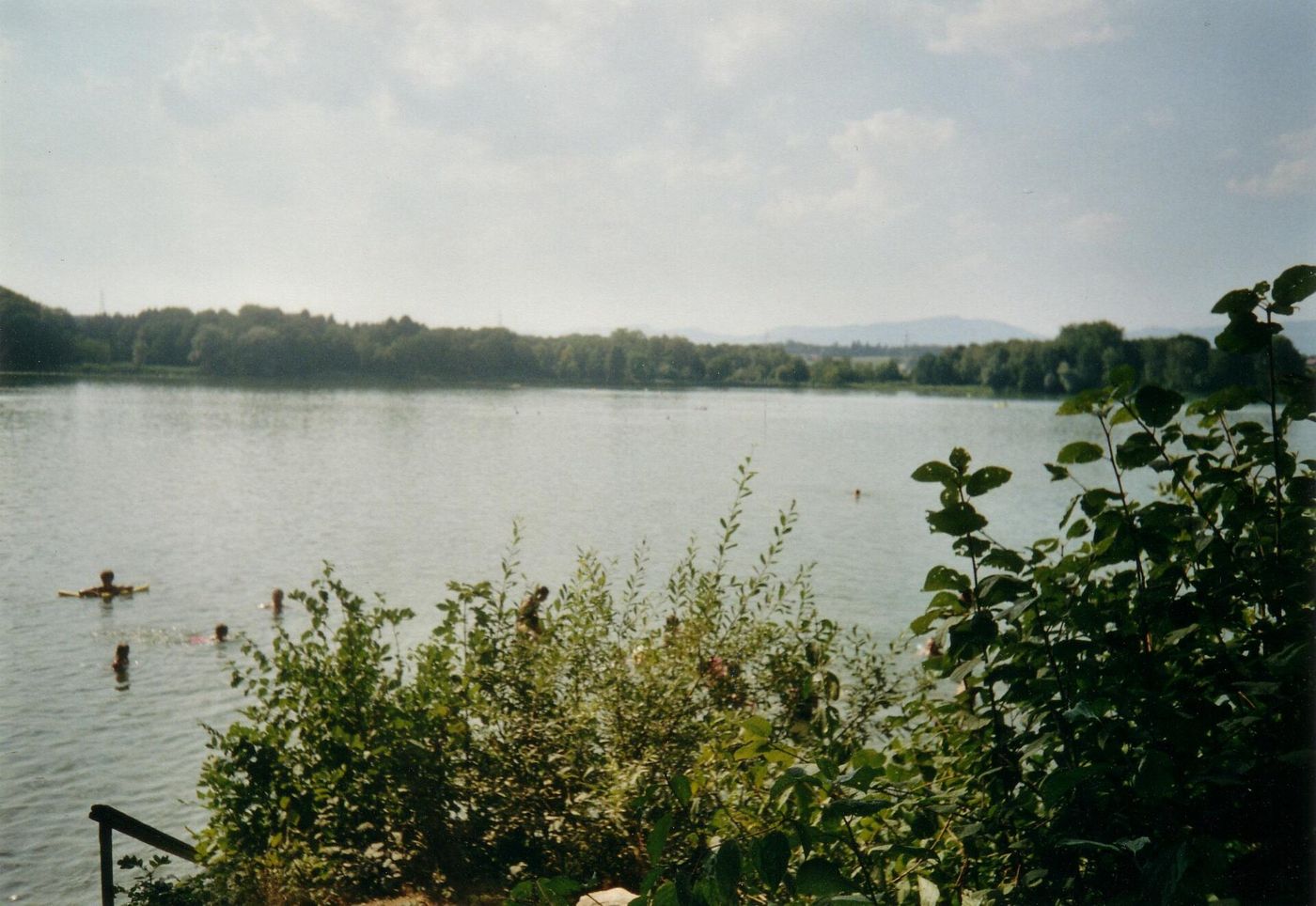
BERN, Switzerland — For a century, archaeologists have assumed that farming arrived on the Swiss plateau as a package: people, crops and livestock together, moving up the river valleys from the Mediterranean and the Danube. A column of mud pulled from the bottom of a small lake near Bern now suggests the package may have been opened in stages.
Analyzing DNA preserved in a 14-meter sediment core from Lake Burgäschi, researchers at the University of Bern and Uppsala University found genetic traces of domestic sheep and goats in layers dated to about 4,600 B.C. The first signs of cultivated wheat and barley appear roughly 300 years later. The study was published Thursday in Science Advances.
“Somebody was walking animals through these forests before anybody was planting anything,” said Lena Oberholzer, a paleogeneticist at the University of Bern who led the work. “Whether they stayed, or came seasonally and left, we cannot yet say. But they were here.”
Sedimentary DNA — fragments shed by plants and animals and washed into a lake — has become a powerful tool over the past decade, because it records organisms that leave no bones or pollen. The team identified more than 1,200 species across the core, including a sharp rise in dung-associated fungi in the same layers as the sheep DNA, which the authors say is independent evidence of grazing herds.
The oldest known lakeside villages in Switzerland date to about 4,300 B.C. Tomasz Wierzbicki, an archaeologist at Uppsala and a co-author, said the new data fits a pattern emerging elsewhere in Europe, in which mobile herders moved into upland regions ahead of settled farming. “The Alps are a barrier if you carry seed,” he said. “They are a pasture if you carry a stick.”
Other specialists urged caution. Beatrice Lanfranchi, who studies Neolithic Europe at the University of Zurich and was not involved in the study, noted that a single core, however rich, records one valley. “It is a beautiful result and I believe the dates,” she said. “I would like to see it in three more lakes before we rewrite the chapter.”
Dr. Oberholzer agreed, and said cores from two lakes in the canton of Zug would be analyzed next year. The Burgäschi core, she added, holds other surprises still being examined, including a brief return of forest cover around 3,700 B.C. that may mark an abandonment of the area.
“The lake kept notes on everyone who came through,” she said. “We are only on the first page.”
A version of this article appears in print on Oct. 11, 2026, Section A, Page 13 of the European edition with the headline: DNA From a Swiss Lake Bed Suggests Herders Reached the Alps Centuries Before Farmers.