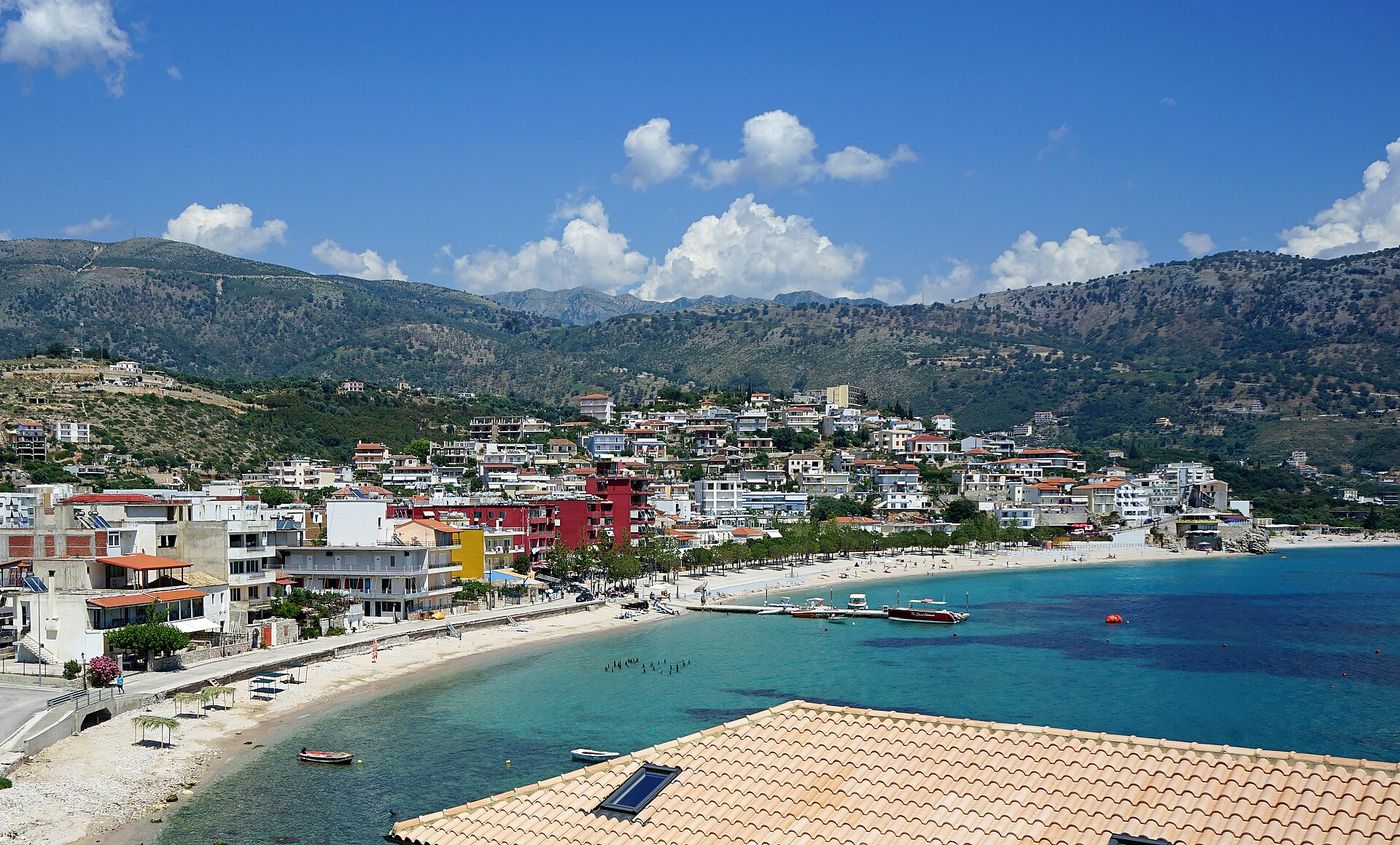
HIMARË, Albania — The beach below the village of Gjipe is reached by a 40-minute walk down a canyon, and for most of the past two decades the reward at the bottom was a cove with a few dozen people, a man selling cold beer from a cooler and the kind of water that photographs badly because nobody believes it. This summer, on the busiest days, the cove held 1,200 people, and the man with the cooler had a kiosk, a generator and a line.
“We are not complaining that people come,” said Dhimitër Kokalari, 58, who runs a 14-room guesthouse in Himarë and has watched the coast change from the terrace where he serves breakfast. “We are asking what happens when they all come at once, to the same five beaches, in the same six weeks.”
Albania received 11.7 million foreign visitors in 2025, a figure that has nearly tripled since 2019, according to the national tourism agency, and the southern coast between Vlorë and Sarandë absorbed much of the growth. Prices followed. A sunbed at the better-known beaches, 500 lek a few years ago, was 3,000 to 5,000 lek this August, about 30 to 50 euros, a rate that locals point out exceeds much of Greece across the strait.
In September, the municipality of Himarë, which covers 30 kilometers of the coast, adopted a set of rules that would have been unthinkable five years ago: a cap on beach concessions at 40 percent of each beach’s surface, a registration system for the roughly 4,000 short-term rentals in the area, of which officials estimate fewer than half paid tax last year, and a ban on new construction within 100 meters of the shore in three villages. A trial shuttle bus along the coastal road, where the summer traffic jam stretched to 12 kilometers in August, will start next June.
“We looked at what happened in Croatia and in Montenegro, and we decided we would rather have the argument now than in 10 years,” said the municipality’s tourism director, Ermira Zhupa. “The coast is the only thing we have. If we sell all of it, we will have nothing to sell.”
For visitors, the Riviera remains, by the standards of the Mediterranean, extraordinary. The road from Llogara Pass descends 1,000 meters through pine forest to a coast of white pebble coves and villages of stone houses, some abandoned, with Greek and Albanian spoken in roughly equal measure. Outside July and August, the beaches empty, guesthouse rates fall by half, and the sea stays warm into October. A room with a view in Himarë this week was 45 euros.
Not everyone welcomes the restrictions. Developers who bought land in the boom have called the construction ban expropriation, and three lawsuits are pending. Some younger residents, who left for Greece or Italy in the lean years and came back to open bars, worry about losing a season. “The rules are good. The timing is terrible,” said Klodian Beqiri, 31, who returned from Athens in 2022 and now runs a beach bar in Dhërmi. “Let us earn for five years, then regulate.”
Mr. Kokalari, at his guesthouse, was not persuaded. “Everyone who says five years means forever,” he said. “I have seen forever. It is called Sarandë.”
A version of this article appears in print on Oct. 12, 2026, Section A, Page 7 of the European edition with the headline: The Albanian Riviera Was Europe’s Last Cheap Coast. Now It Is Writing Rules..