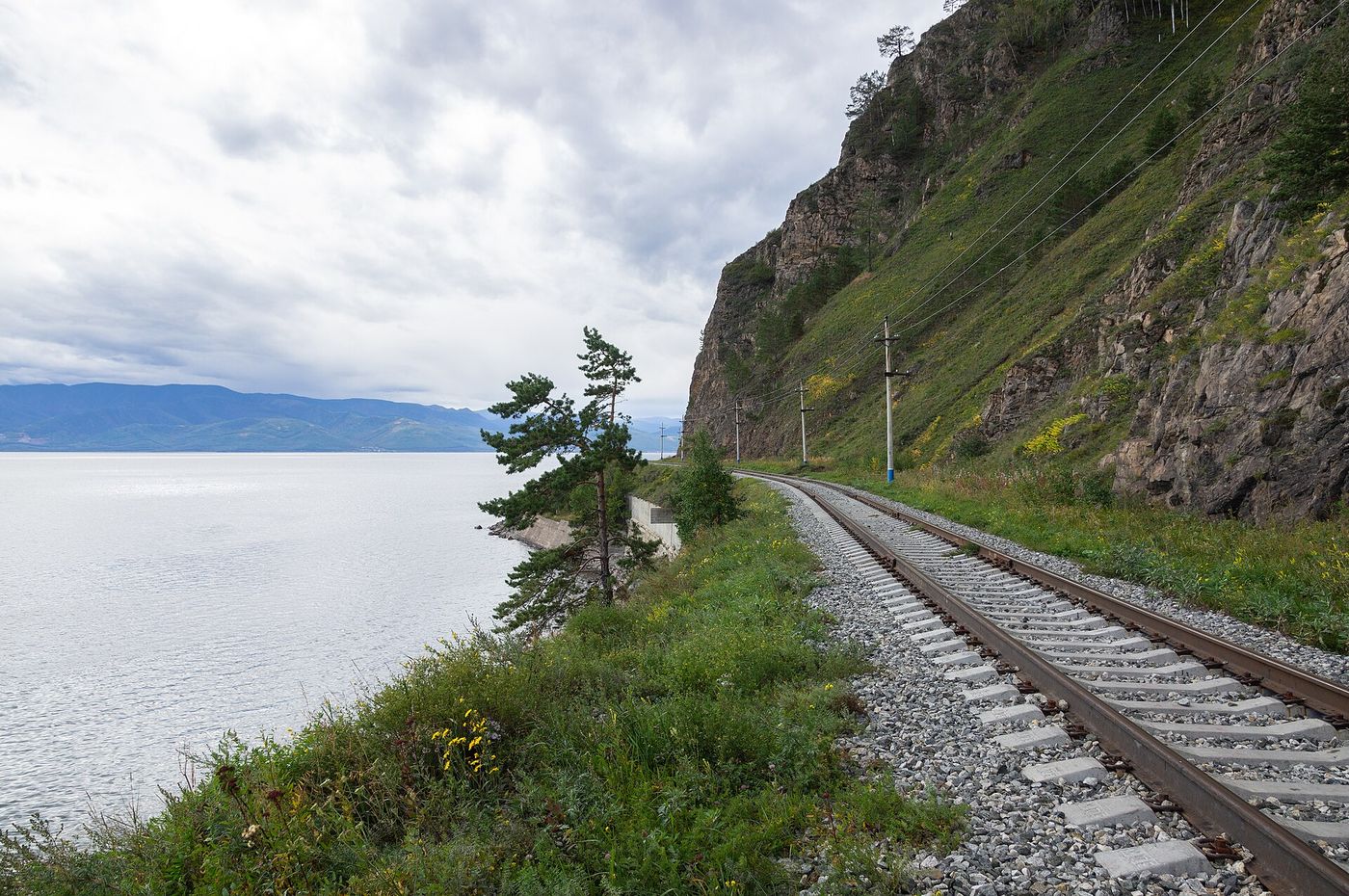
KAUNAS, Lithuania — A sleek blue-and-white train pulled out of Kaunas station at 9:04 a.m. on Saturday and, 42 minutes later, arrived at the Polish border town of Trakiszki, completing the first passenger run on Rail Baltica, the European-gauge railway that is meant to end the Baltic states’ dependence on Soviet-era tracks oriented toward Moscow.
The 95-kilometer section, built for speeds of up to 249 kilometers an hour, is the first operational piece of a line that is planned to stretch 870 kilometers from Tallinn through Riga and Kaunas to the Polish frontier, where it meets the standard-gauge network used in most of the European Union. The full line, originally promised for 2026, is now not expected before 2032, and its cost has swelled to about 24 billion euros, or $26 billion, more than four times the estimate when the project was approved.
“Today is the day the Baltic states are physically connected to Europe,” said Lithuania’s transport minister, Aurelija Petrauskienė, at a ceremony in Kaunas attended by officials from Latvia, Estonia, Poland and the European Commission. “Everything after this is a question of kilometers, not of direction.”
The project has become a matter of security as much as transport since 2022. NATO planners have repeatedly flagged the Baltic rail gap as a weakness: military equipment arriving from Germany or Poland must currently be unloaded and transferred to Russian-gauge wagons at the border, a process that can take days. The new line is being built to carry freight trains up to 1,050 meters long and axle loads sufficient for armored vehicles.
Critics have focused on the cost and pace. Lithuania’s state audit office found last year that the project’s management company had changed its route specifications 14 times, and Latvia’s section, which runs through Riga and its airport, has been delayed by land acquisition disputes and a 2024 corruption inquiry. “This is a necessary project that has been managed as if it were optional,” said Dr. Rasa Juknevičienė, a transport economist at Vilnius University, who said the Baltic governments had underestimated both the engineering and the politics.
For passengers, the immediate benefit is modest. The new section connects to Polish trains at Trakiszki, cutting the journey from Kaunas to Warsaw from about eight hours to roughly five, with a transfer. Direct trains are expected once Poland completes upgrades on its side next year.
Among the first passengers on Saturday was Vytautas Šimkus, 71, a retired railway engineer who had worked on the Soviet-gauge network for 38 years. “I spent my career on tracks that pointed the wrong way,” he said, looking out at the pine forest. “I wanted to ride the first one that points the right way.”
A version of this article appears in print on Oct. 11, 2026, Section A, Page 10 of the European edition with the headline: First Stretch of Rail Baltica Opens Between Kaunas and the Polish Border.