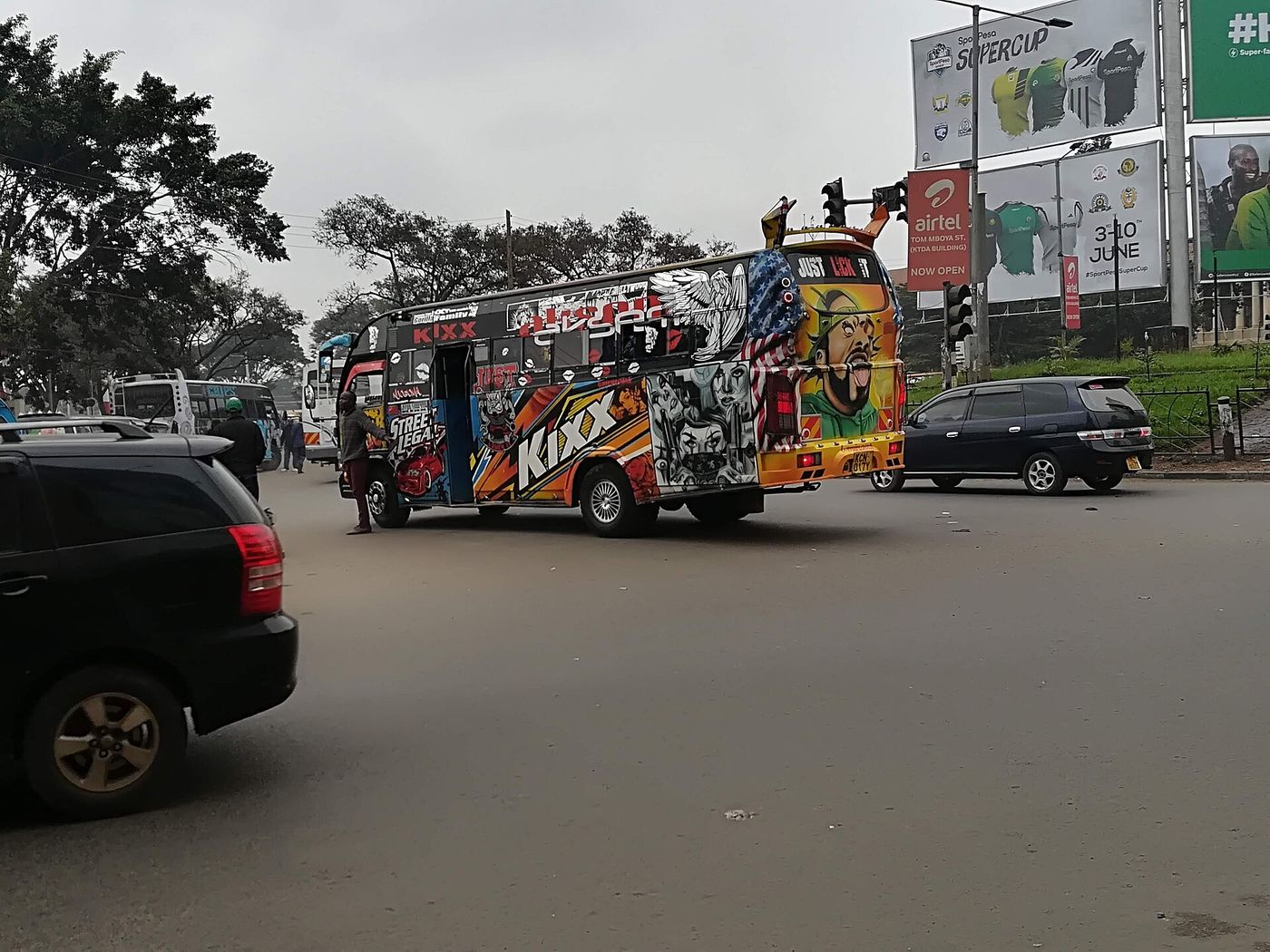
NAIROBI, Kenya — Nairobi’s first fleet of 300 electric buses began carrying passengers on Saturday along a 27-kilometer corridor from the Jomo Kenyatta International Airport to the central business district, the most ambitious attempt yet to impose order on a public transport system dominated by thousands of privately owned, loudly decorated minibuses known as matatus.
The buses, assembled at a plant in Mombasa from components imported from China, seat 60 passengers, charge in about 45 minutes and are expected to cut operating costs by roughly 40 percent compared with diesel vehicles, according to the Nairobi Metropolitan Services, the agency running the project. Fares are fixed at 50 Kenyan shillings, about 39 cents, roughly a third less than what matatus typically charge during rush hour.
“For the first time, a Nairobi commuter will know when the bus is coming, what it costs and that the driver is not racing the vehicle next to him,” said the agency’s director, Grace Wambui Otieno, at a launch ceremony attended by the governor of Nairobi County.
Kenya generates more than 90 percent of its electricity from renewable sources, mostly geothermal and hydropower, making it an unusually strong case for electric transport. Transport accounts for about 13 percent of the country’s emissions, and Nairobi’s roughly 20,000 matatus are responsible for a large share of the city’s particulate pollution, according to a 2024 study by the University of Nairobi.
The matatu industry, which employs an estimated 350,000 people nationally and has deep political connections, has watched the project warily. “They are using taxpayer money to compete with businesses that have served this city for 50 years,” said Simon Kimutai Chege, chairman of the Matatu Owners Association. He said his members had been promised a role in operating the new buses and had instead been offered “a seminar.” The association has threatened a strike if the corridor is extended.
The project has also faced practical challenges. Charging depots at Embakasi and Kenyatta Avenue were completed six months late, and the dedicated bus lane along Mombasa Road is already being encroached on by cars and motorcycle taxis. On Saturday, police officers stood at intervals waving traffic out of the lane.
Passengers were largely delighted. “Quiet, cold, and nobody is hanging out the door shouting,” said Beatrice Achieng, 32, a nurse who commutes from Embakasi. “Fifty shillings. I will take this every day.” A few rows back, James Mwangi, 27, a matatu conductor riding to see the competition, was less sure. “It is nice,” he admitted. “But where is the music?”
The agency said a second corridor, along Thika Road, would open in 2027.
A version of this article appears in print on Oct. 11, 2026, Section A, Page 2 of the European edition with the headline: Nairobi Puts 300 Electric Buses on the Road, Challenging the City’s Chaotic Minibus Culture.