LYON, France — The audience arrives at 10 in the morning with cushions. By the time it leaves, past 10 at night, it has watched a man fall in love three times, lose his grandmother, go to war in absentia and, finally, decide to write the book it has just spent the day watching. In between there is lunch, served in the foyer, and a dinner of soup and bread.
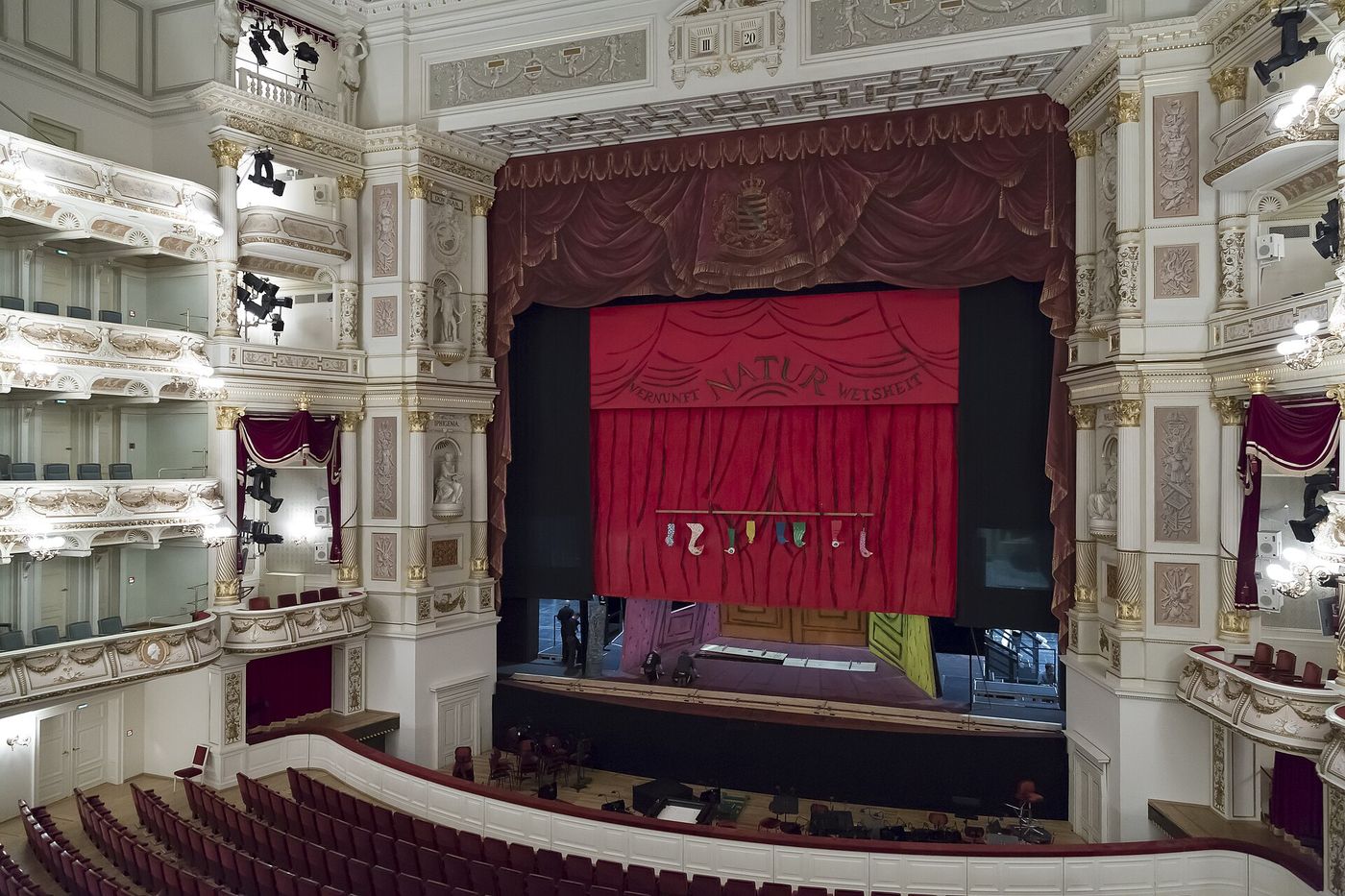
“Le Temps retrouvé en douze heures” — “Time Regained in Twelve Hours” — opened last weekend at the Théâtre des Célestins and runs on Saturdays and Sundays through November. All 16 performances sold out in a week. The director, Clémence Vautrin, 39, has distilled Marcel Proust’s seven-volume novel into roughly 11 hours of stage time with 14 actors, a revolving platform and no intermissions longer than 40 minutes.
“Everyone says Proust is unadaptable because nothing happens,” Ms. Vautrin said during a rehearsal break. “That is wrong. Everything happens. It just happens inside a sentence. So we stage the sentence.”
The result is less a play than a day spent in the company of a book. Long passages are spoken directly to the audience by a narrator who ages, over the hours, from a boy waiting for his mother’s kiss to a man at a party realizing that everyone he knew has become old. Three actors share the role. The famous madeleine appears in the first hour and is handed, in the thousands, to the audience at dusk.
Thierry Pasquier, 68, a retired engineer from Grenoble, attended last Sunday and said he had read the novel twice, over the course of about 15 years. “I thought I would be bored by hour four,” he said. “Instead I was crying at hour nine. It turns out that if you stay in the room long enough, the time passing is the performance.”
The production is also drawing a younger audience than the Célestins is accustomed to; the theater said about 30 percent of ticket holders are under 30. Inès Belkacem, 19, a literature student, came with four classmates. “We have been assigned the first volume,” she said. “This felt more honest than the summary.”
Critics have been mostly admiring, with reservations about the pace of the middle hours. The daily Le Progrès called it “exhausting and necessary.” The theater is in talks to bring the production to Brussels and Geneva next year.
Ms. Vautrin said the long form had changed her understanding of her own job. “Theater usually asks you to pay attention for two hours,” she said. “This asks you to live somewhere for a day. People, it turns out, want to be asked.”
A version of this article appears in print on Oct. 11, 2026, Section C, Page 9 of the European edition with the headline: Twelve Hours, 14 Actors and One Very Long Sentence: Lyon Stages Proust as a Marathon.