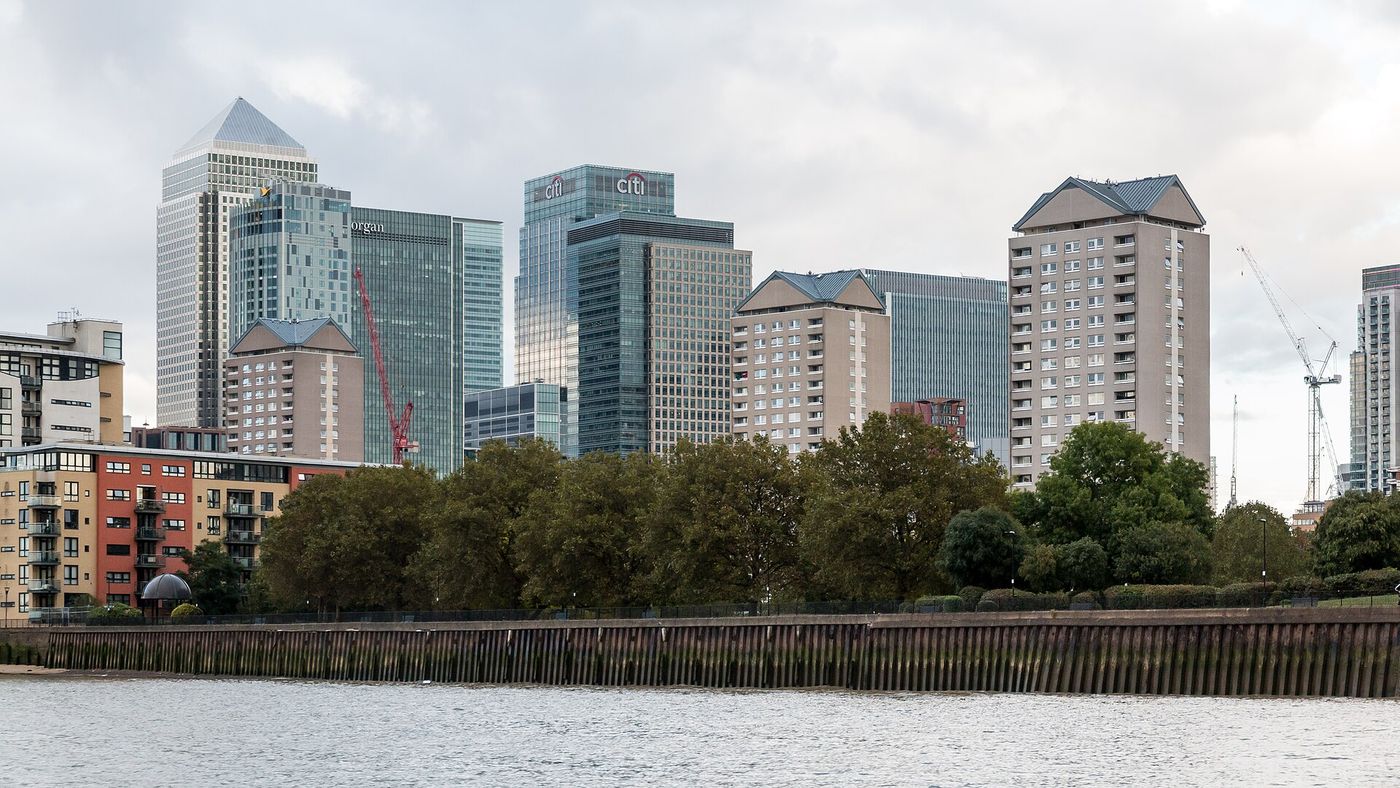
LONDON — On the 14th floor of a 1991 office tower in London’s Docklands, the carpet tiles have been pulled up, the suspended ceilings torn out, and the view across the Thames is being divided by stud walls into what will be 310 one- and two-bedroom apartments. The building, vacant since its last tenant left for a newer tower in 2024, is one of 94 London office buildings now in the process of becoming housing, according to data released Friday by the property consultancy Knight Frank.
Planning applications to convert offices to residential use in London have more than tripled since 2023, the firm said, as the city’s office vacancy rate reached 11.2 percent overall and above 20 percent in Docklands and parts of the City fringe, levels not seen since the early 1990s. The conversions in the pipeline would yield about 18,000 homes, equal to about half a year of the city’s total housing construction.
“For a certain kind of building, the choice has become stark: convert it, or watch it sit empty while the service charges eat you alive,” said Imogen Blackwood, head of residential development research at Knight Frank. “The buildings that work are 1980s and 1990s stock, with narrow floors, lots of windows and a location nobody fashionable wants to work in anymore.”
The trend reflects a bifurcation in the office market that has persisted since the pandemic. New or recently refurbished buildings with high environmental ratings in the West End and the core of the City are fully let and commanding record rents, while older buildings struggle to find tenants at any price. Occupiers have shrunk their footprints as hybrid working has settled at an average of about 2.8 days a week in the office, according to surveys by the Centre for Cities.
Conversions remain difficult. Deep office floors leave apartments without natural light; plumbing and ventilation must be rebuilt from scratch; and minimum space and daylight standards introduced in 2021 rule out many of the cheapest schemes. Developers say conversion costs run from 2,500 to 4,000 pounds per square meter, about $3,300 to $5,300, compared with roughly 3,500 pounds for new construction, and that the economics work only when the building can be bought at a steep discount.
“We paid 38 percent of what the previous owner paid in 2017,” said Rupert Hale, the development director at the firm converting the Docklands tower, who declined to name the purchase price. “At that number, it works. At the 2017 number, you would be better off demolishing it.”
Housing campaigners welcomed the trend cautiously. “Every home helps, but these are mostly small flats at market rents in places with no schools and few shops,” said Priya Nair of the London Tenants Federation. “It is not where London’s housing crisis is.” About 11 percent of the units in the current pipeline are designated affordable, below the 35 percent the mayor’s office targets for new construction.
The first residents of the Docklands tower are due to move in next autumn.
A version of this article appears in print on Oct. 11, 2026, Section B, Page 9 of the European edition with the headline: London Landlords Turn Empty Offices Into Apartments as Vacancies Hit a 30-Year High.