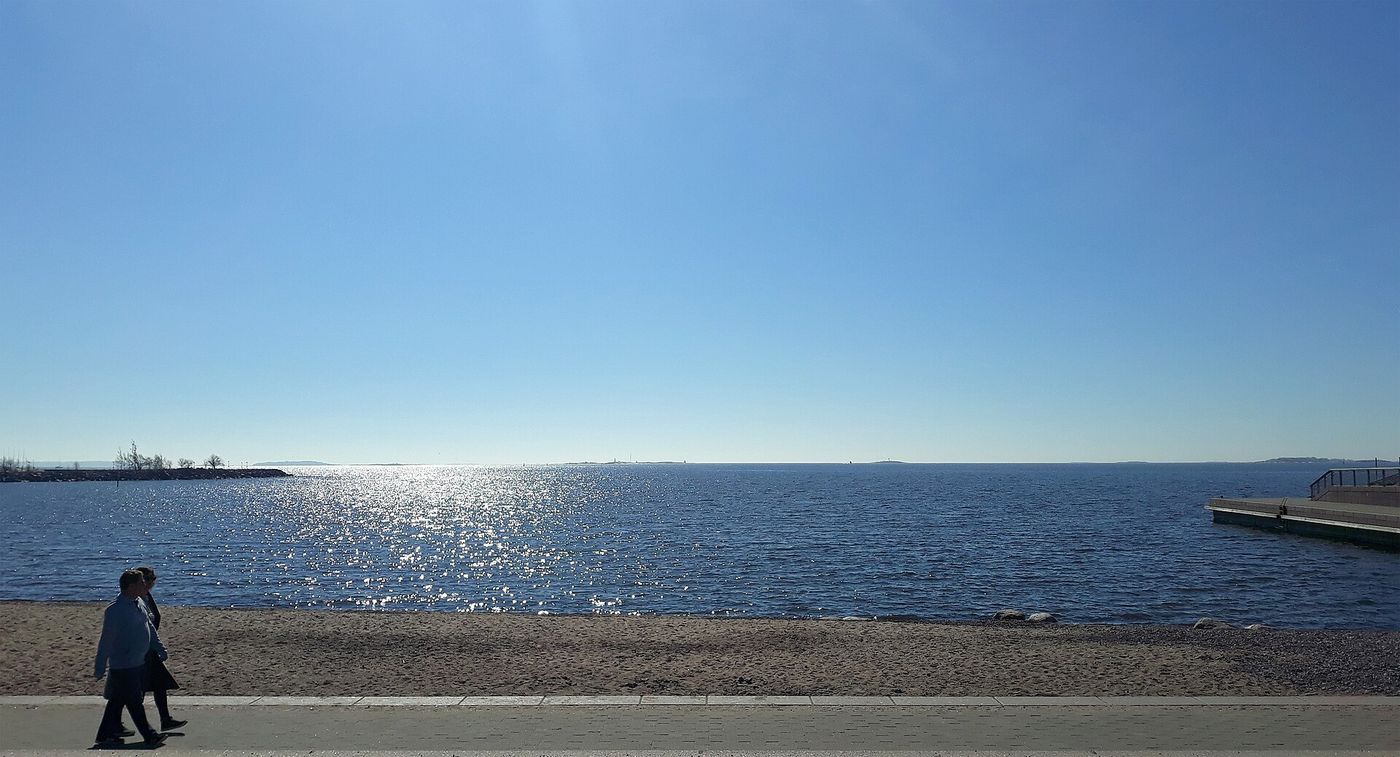
HELSINKI, Finland — At 7 p.m. on a Friday in October, the sea off Helsinki’s southern shore is 11 degrees Celsius, the sky is already black and the wooden deck of Sauna Kaskisaari is full of people in bathing suits, steaming, waiting for their turn to jump in.
“Ten years ago my parents would have said this was a thing old men did in the suburbs,” said Elina Virtanen, 29, a software designer, wrapped in a towel between sessions. “Now I cannot get a Friday slot unless I book on Monday.”
Finland has an estimated 3 million saunas for 5.6 million people, but the public sauna — a paid, communal bathhouse open to anyone — had nearly vanished by the 1990s as apartments acquired their own. Helsinki had more than 100 in the 1950s and fewer than 10 by 2010. Since 2021, nine new public saunas have opened in the capital, most of them on the water, and the city’s tourism office says sauna visits by foreign visitors have more than tripled.
Sauna Kaskisaari, which opened in May on a former coast guard pier, is typical of the new wave: three wood-fired rooms, a cold-plunge ladder into the Baltic, a bar serving beer and salted licorice, and a design that would not be out of place in an architecture magazine. Admission is 22 euros. It is run by Pekka Rautiainen, 44, a former restaurateur who said he had expected a niche business and got a queue.
“We planned for 300 visitors a day in summer,” he said. “We are doing 450 in October. People come after work, they come on dates, they come with their colleagues instead of going to a bar. The sauna has become the third place.”
The revival has a cultural dimension. Finnish sauna culture was added to UNESCO’s list of intangible heritage in 2020, and a generation that grew up with private saunas has rediscovered the social version — with modifications. The new saunas are mixed-sex, swimsuits are required, and conversation, once frowned upon in the hot room, is tolerated. Purists grumble. “It is a nightclub with steam,” said Reijo Hämäläinen, 71, a regular at one of the city’s surviving old-style saunas in Kallio, where men and women bathe separately and in silence. “But I will admit they are keeping the fire going.”
Visitors from abroad make up about a third of the clientele at the waterfront saunas, the operators say. Carolin Steinbrecher, 34, from Munich, was on her third visit of a four-day trip. “We came for the design museum,” she said. “We have mostly been in here.”
Mr. Rautiainen is already planning a second pier. “The sea is cold, the room is hot, and that is the whole product,” he said. “It turns out it never stopped working. We just stopped building the rooms.”
A version of this article appears in print on Oct. 11, 2026, Section C, Page 11 of the European edition with the headline: In Helsinki, the Public Sauna Is Back, and It Is Younger, Louder and Booked Out.