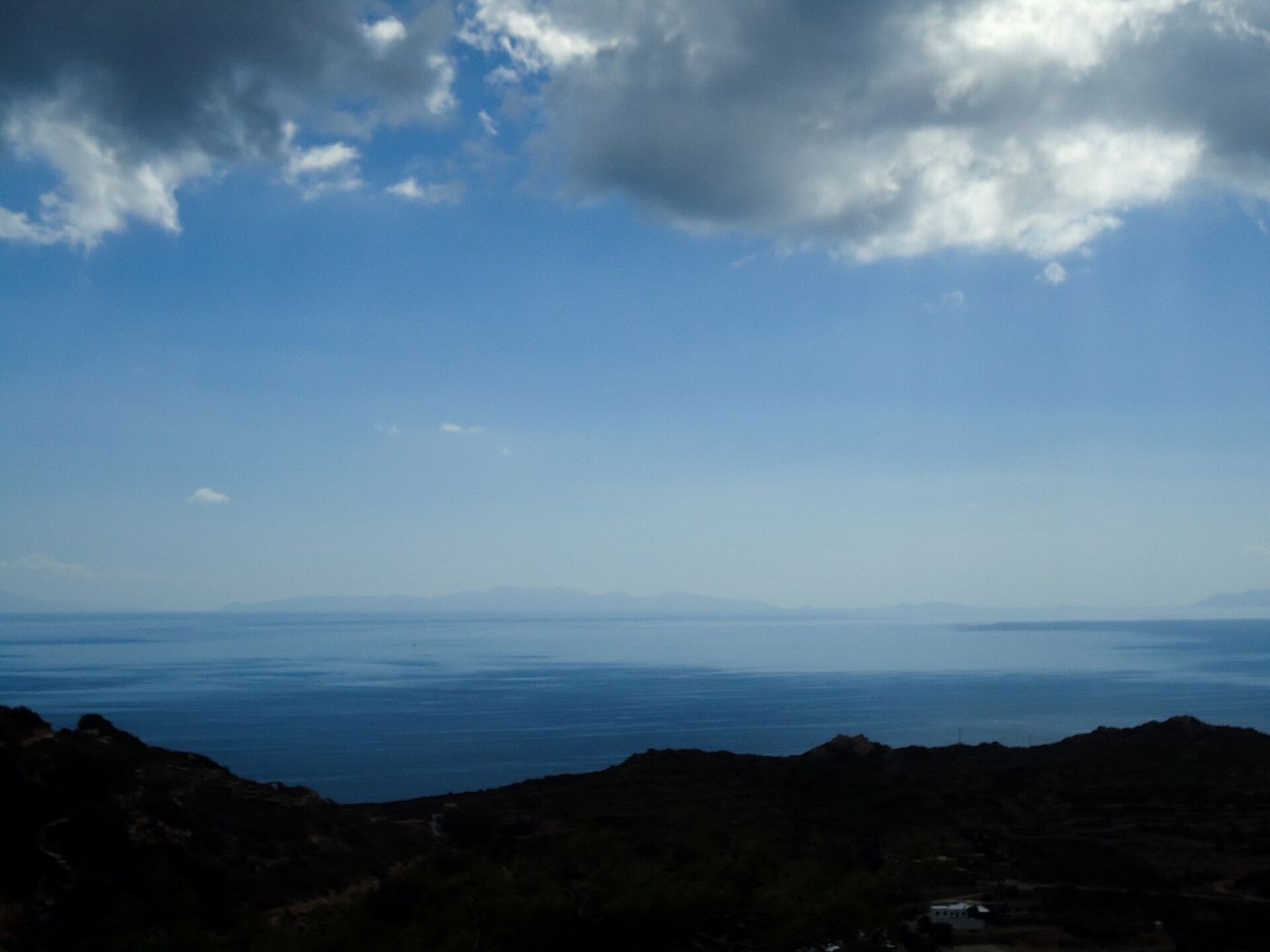
APOLLONIA, Greece — The tanker arrives before dawn, a rust-streaked vessel from the mainland port of Lavrio, and by the time the first coffee is poured in the harbor cafes its hoses are pumping 3,000 cubic meters of water into the island’s mains. It comes on Mondays, Wednesdays and Fridays. Without it, the mayor says, the taps on Sifnos would run dry in about 11 days.
“We have become an island that imports water the way it imports beer,” said Nikos Varvaritis, the mayor of this Cycladic island of 2,700 permanent residents, which swells to perhaps 20,000 in August. “It is humiliating and it is expensive, and this October it is also the only option.”
Two consecutive winters have failed to deliver rain. The island received about 180 millimeters last year against a long-term average of 450, according to the Hellenic National Meteorological Service, and the winter before was little better. The reservoir in the hills above Apollonia, built in 1998 and holding 450,000 cubic meters when full, stood at 9 percent on Friday. The boreholes that supplement it have turned brackish as the water table has fallen and seawater has crept in.
Shipped water costs the municipality about 11 euros per cubic meter, Mr. Varvaritis said, most of it reimbursed by the national government under an emergency program that now covers 14 Aegean islands, up from 6 in 2023. Desalinated water, by comparison, costs roughly 80 cents per cubic meter to produce. A 2,000-cubic-meter-a-day desalination plant for Sifnos was approved in 2024 and is scheduled to open in the spring of 2027.
“Every island mayor in the Aegean has the same plant in the same drawer,” said Eleni Kourmouli, who runs a 14-room hotel in the port of Kamares and serves on the island’s water committee. “What we need is for the drawer to be opened faster.” In August, she said, she asked guests to limit showers to three minutes and removed the bathtub from her best room.
A spokeswoman for Greece’s Ministry of Environment and Energy, Ioanna Tsakiri, said the government had allocated 310 million euros to island water infrastructure through 2028 and was reviewing the permitting process, which currently takes about three years. “We understand the frustration,” she said. “We are also building in a country where the sea is protected and the coastline is contested, and that takes time.”
Scientists say the drought is consistent with long-term projections for the eastern Mediterranean, where winters are expected to grow shorter and rainfall more erratic. “The Cyclades were always marginal,” said Kostas Papanikolaou, a hydrologist at the National Technical University of Athens. “Marginal places are where the change shows first.”
At the harbor on Friday, as the tanker cast off, a fisherman named Yiorgos Prokos watched it go. “My father built cisterns,” he said. “I think we are going back to cisterns.”
A version of this article appears in print on Oct. 11, 2026, Section A, Page 15 of the European edition with the headline: On a Greek Island, Water Now Comes by Ship, Three Times a Week.