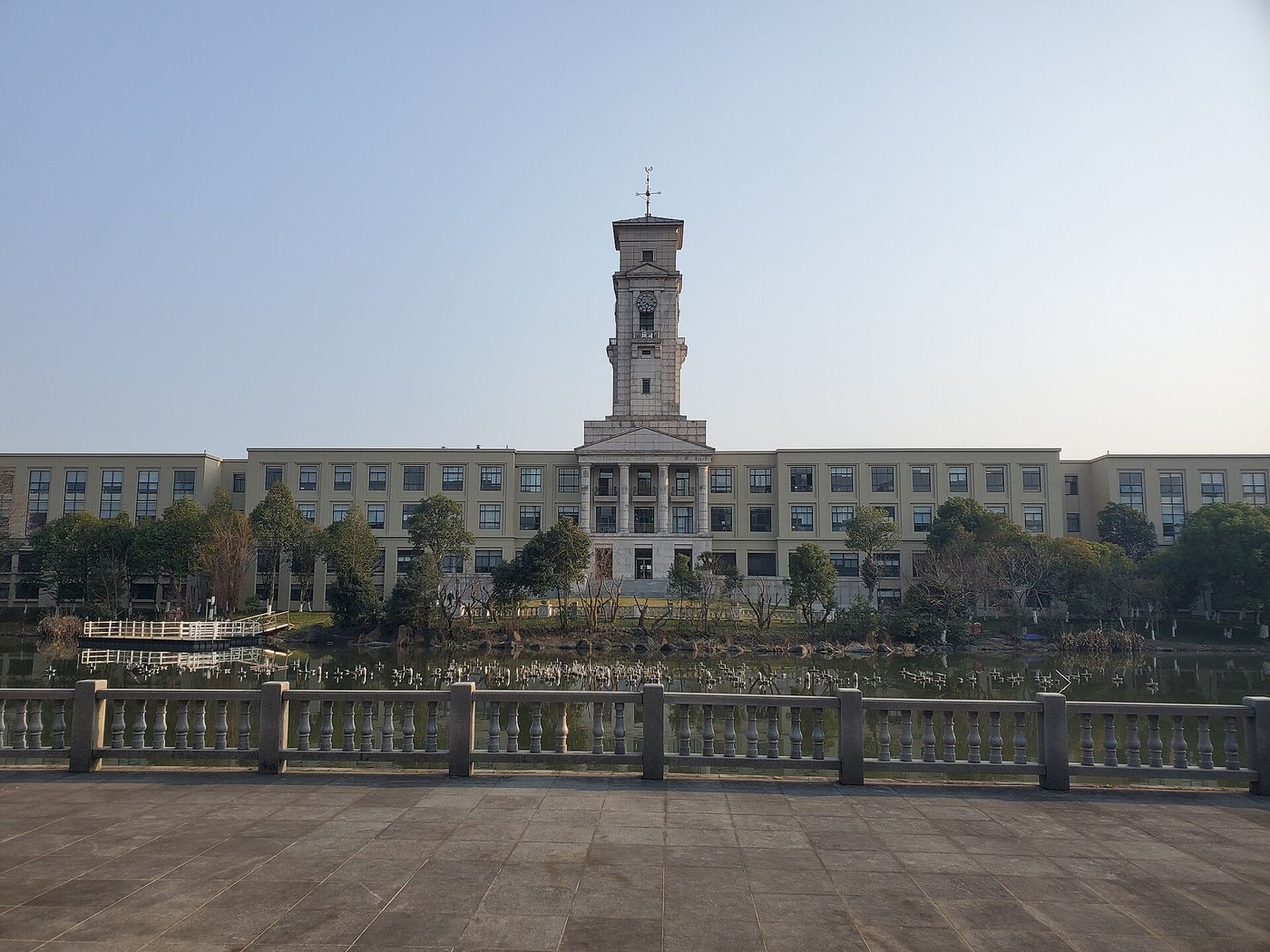
NOTTINGHAM, England — Three universities in the English Midlands will merge into a single institution by 2028, their governing councils announced on Thursday, the first consolidation of its kind in a sector that regulators have warned faces a wave of insolvencies as international student numbers fall and tuition fees fail to keep pace with costs.
The University of Mercia, Trent Valley University and the smaller University of Fenland, with a combined 61,000 students and 8,400 staff, will become the University of the East Midlands under a plan backed by the Department for Education with a 140 million pound restructuring loan. About 900 posts will go, the universities said, and at least 40 degree programs with low enrollment, including several in modern languages, physics and music, will close or be offered at only one of the three campuses.
“Two of us would not have survived three more years on current trends, and the third would have been alone in a region with no partners left,” said Prof. Alison Pembridge, the vice chancellor of Mercia, who will lead the merged institution. “This is not a marriage of equals and it is not a rescue. It is the only arrangement under which all three campuses stay open.”
England’s universities have been squeezed from two directions. Domestic tuition fees, capped at 9,250 pounds a year from 2017 until a small increase last year, have lost about a third of their value to inflation. Universities covered the gap by recruiting international students, who pay two to three times more; a tightening of visa rules in 2024 and competition from Australia and Canada have since cut new international enrollments by 28 percent across the sector, and by more than half at mid-ranking institutions like the three merging here.
The Office for Students, the regulator, said in its annual financial report in May that 45 percent of universities expected to run deficits this year and that “a number” could not meet their obligations without intervention. It has declined to name them. The government has said it will not bail out individual institutions, but the restructuring loan for the Midlands merger suggests it will fund consolidation.
Staff unions reacted with fury. “They are calling 900 redundancies a merger because ‘closure’ tests badly with applicants,” said Dr. Gareth Howells, who represents Trent Valley’s branch of the University and College Union. The union has called a strike ballot and asked the government to raise domestic fees in line with inflation, a step ministers have avoided as politically toxic. Dr. Howells noted that the three universities’ combined debt, about 480 million pounds, mostly for student accommodation and buildings put up during the expansion of the 2010s, would be carried by the merged institution. “The buildings are the reason they cannot pay the staff,” he said.
Students were more ambivalent. Priya Shah, a third-year nursing student at Fenland, said she worried less about the name on her degree than about her course surviving. “They said nursing is safe because the N.H.S. needs it,” she said. “My flatmate does French. Nobody has said French is safe.”
Prof. Pembridge said the merged university would “concentrate strength” in engineering, health sciences and business, the fields that draw the most domestic applicants. Analysts said at least a dozen other institutions were in talks of some kind. “The Midlands has gone first,” said one university finance consultant, speaking on condition of anonymity to discuss clients. “It will not be last, and the next ones will have less time to do it gracefully.”
A version of this article appears in print on Oct. 12, 2026, Section A, Page 7 of the European edition with the headline: Three English Universities Agree to Merge, the First Forced Consolidation of a Sector in Financial Trouble.