NARVA, Estonia — Jelena Kuznetsova has taught second grade in Narva for 26 years, all of them in Russian. This autumn, for the second year, she greets her 7-year-olds in Estonian, a language she learned in her 40s and in which, she says, she still dreams only occasionally. “I tell the children that we are learning together,” she said. “It is not entirely a teaching strategy.”
Narva, a city on the Russian border where 96 percent of residents speak Russian as their first language, is the hardest test of a 2022 law that is moving every school in Estonia to teaching in Estonian, grade by grade, starting with kindergarten and the first and fourth grades in 2024 and reaching all grades by 2030. The government framed the policy as a matter of national cohesion and, after the invasion of Ukraine, of security. In Narva it has meant a scramble for teachers who can meet the required C1 level of Estonian, a standard roughly equal to a strong university graduate’s command of a foreign language.
Figures from the education ministry show that 140 of Narva’s 610 schoolteachers did not meet the language requirement at the start of this school year, down from 260 a year earlier. Of those who fell short, 71 are on temporary contracts while they study, 48 have been moved to roles that do not involve classroom teaching, and 21 have left the profession. Teachers who reach C1 receive a one-time bonus of 4,000 euros from the state, and those who move to Narva from elsewhere in Estonia receive a relocation grant of 10,000 euros and a subsidized apartment.
“We will not pretend that the transition is painless in Narva. We say that it is necessary and that we will pay for it,” said Kristi Tamm, the deputy secretary general for schools at the education ministry in Tallinn. The ministry has sent 54 teachers from Estonian-speaking regions to the city, most on three-year contracts, and funded intensive language courses that 310 Narva teachers have completed. Ms. Tamm said test results from last spring showed that first-graders taught in Estonian in Narva scored within 8 percent of the national average in reading, a gap smaller than the ministry had expected.
Parents are divided, though more quietly than in 2022, when the law passed. Dmitri Volkov, an electrician whose son entered fourth grade in September, said he had opposed the policy and still thought it was imposed from the capital without resources. “But my son is going to live in Estonia, and the jobs are in Estonian,” he said. “I did not learn it. I did not need to, then. He needs to.” A survey by the city in June found that 58 percent of parents supported the transition in principle and 71 percent said their school lacked enough qualified teachers.
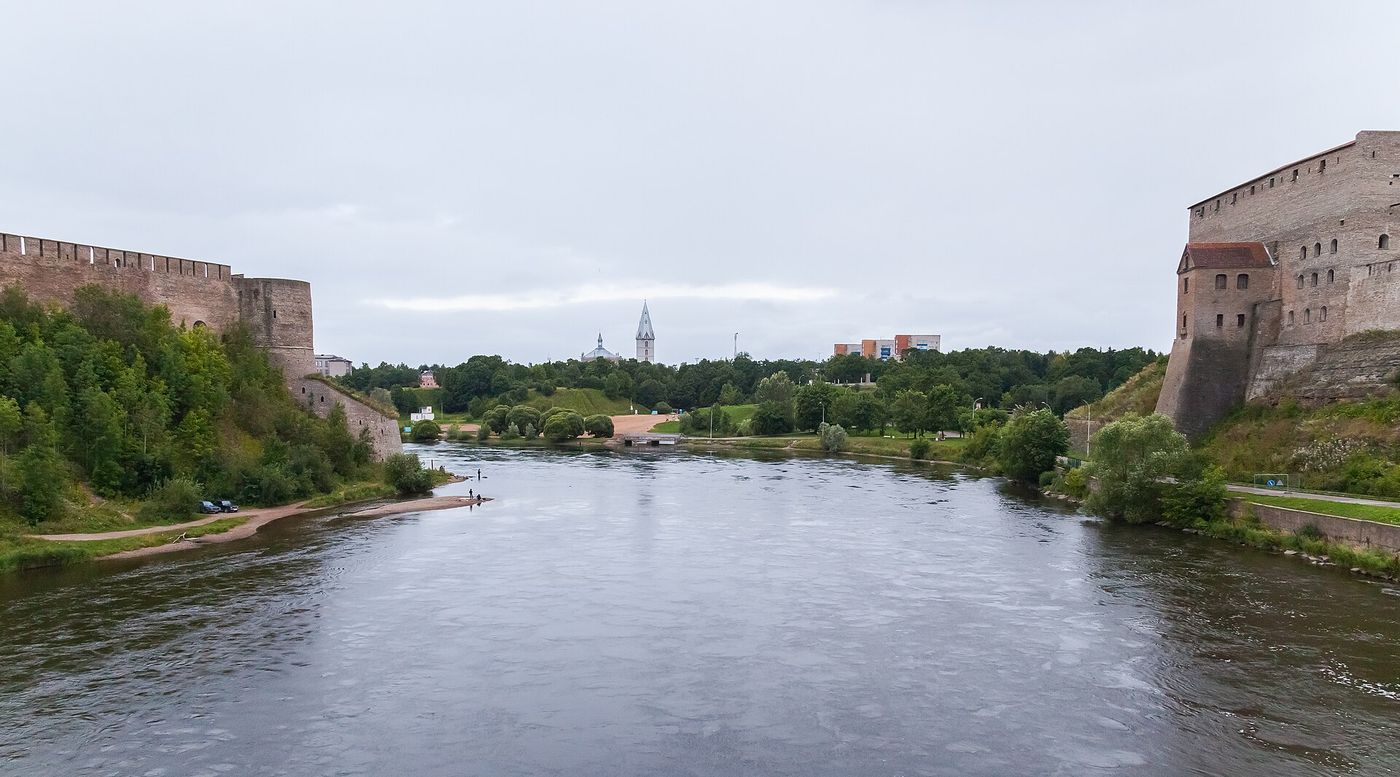
The city’s largest secondary school, with 1,100 pupils, has lost 19 teachers in two years, its principal said, and is covering mathematics in two grades with a teacher who commutes from Tartu, 180 kilometers away, three days a week. Several Narva families have sent children to a Russian-language private school across the river in Ivangorod, Russia, a choice that has become harder since the border crossing was restricted to pedestrians.
Ms. Kuznetsova passed her C1 exam in June on her second attempt. She said her pupils corrected her pronunciation, which she had decided to treat as a sign the policy was working. “They are not afraid of the language,” she said. “That is the difference between them and us.”
A version of this article appears in print on Oct. 12, 2026, Section A, Page 10 of the European edition with the headline: In Narva, Where Nearly Everyone Speaks Russian, the Second Year of Estonian-Only Classrooms Begins.