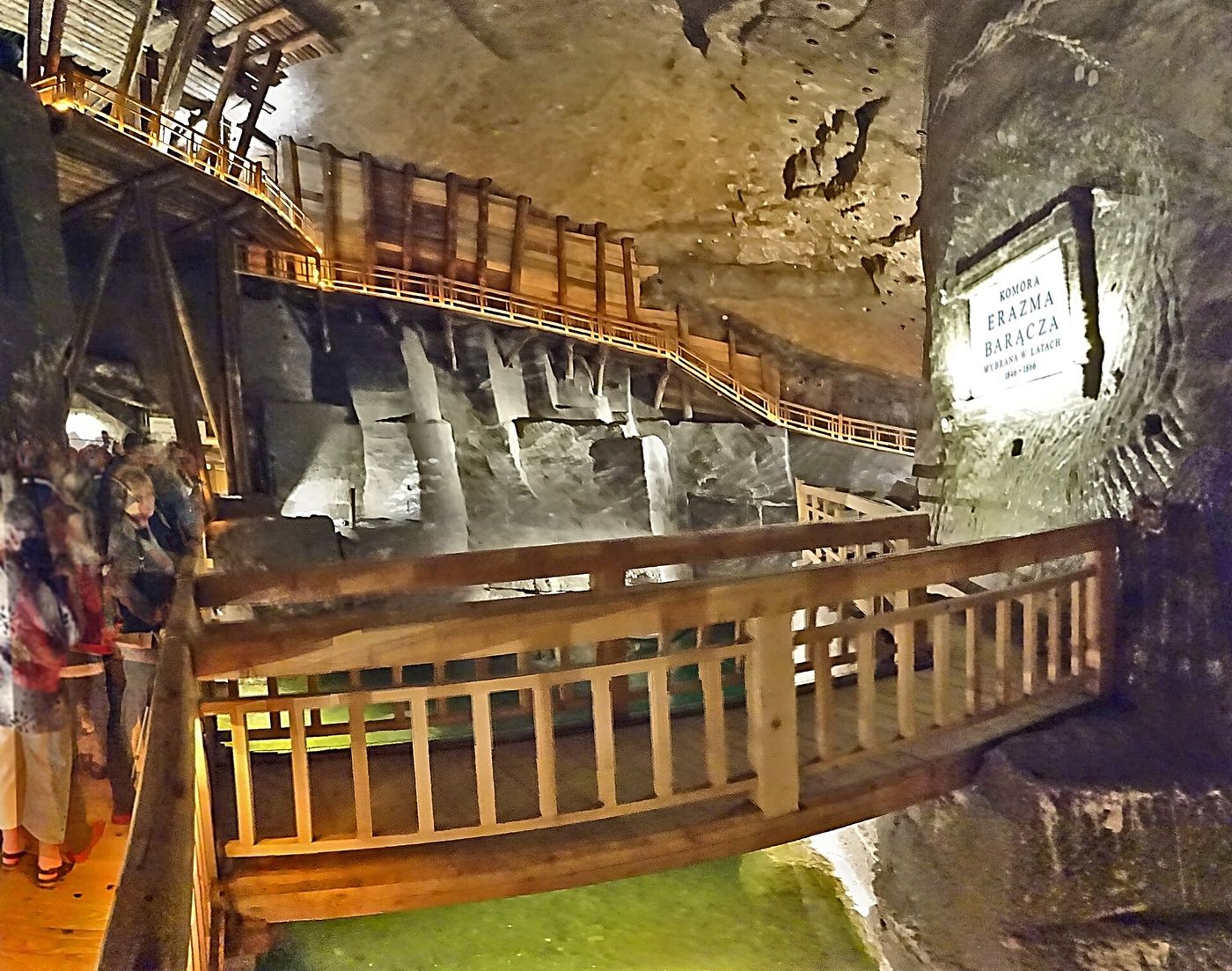
KRAKOW, Poland — At one in the morning on Sunday, 135 meters below the surface of the earth, about 3,000 people stood in a chamber carved from rock salt and listened to a Lithuanian composer play a single chord on a church organ for 40 minutes. When it ended, they cheered as if it had been a stadium show.
The concert, in the Wieliczka salt mine outside Krakow, closed this year’s Unsound festival, a week of experimental, electronic, and otherwise uncategorizable music that has run in the city since 2003 and has become, somewhat to the surprise of its founders, one of the largest events of its kind in Europe. This year’s edition, which ran from Oct. 5 to Oct. 12, sold about 22,000 tickets across 60 events, a record, and the organizers say the audience has changed as much as the numbers.
“In 2019 the median age of a ticket holder was 36,” said Magda Wróbel, the festival’s program director. “This year it was 26. We did not do anything to make that happen. Something happened to music, or to young people, and we were in the way of it.”
What happened, in the view of several artists and promoters at the festival, is that a generation raised on algorithmic playlists has developed an appetite for things an algorithm would never suggest: 40-minute drones, Polish folk choirs run through modular synthesizers, a 2 a.m. set by a Mexican producer built entirely from recordings of industrial fans. “They are looking for things that feel like events,” said Jonas Kristiansen, a Copenhagen booking agent who represents several of the festival’s performers. “A stream is not an event. A salt mine is.”
The festival, which receives about 40 percent of its 2.4 million euro budget from the city of Krakow and the Polish culture ministry, has resisted the pressure to grow into a conventional outdoor event. Its venues this year included a disused tram depot, a former Communist-era hotel, a synagogue in Kazimierz, and the salt mine, which requires ticket holders to descend 800 steps and sign a waiver. The organizers cap most events at under 1,500 and have turned down sponsorship offers that, Ms. Wróbel said, “would have required us to put a logo on the drone.”
The economics are nonetheless tightening. Artist fees for experimental acts have roughly doubled since 2019, according to Mr. Kristiansen, as mainstream festivals have begun booking from the same pool, and the festival’s hotel bill has risen with Krakow’s tourism. Ms. Wróbel said ticket prices, which average about 35 euros per event, would rise next year for the first time since 2022.
In the salt chamber on Sunday night, a 22-year-old architecture student from Wrocław named Kasia Nowak, attending her first Unsound, stood near the back with her eyes closed for most of the organ piece. “I have never heard anything like that,” she said afterward, on the long climb to the surface. “I did not know you were allowed to make music that does not do anything.”
A version of this article appears in print on Oct. 12, 2026, Section A, Page 12 of the European edition with the headline: In Krakow, an Experimental Music Festival Finds Its Audience Getting Younger, and Louder.