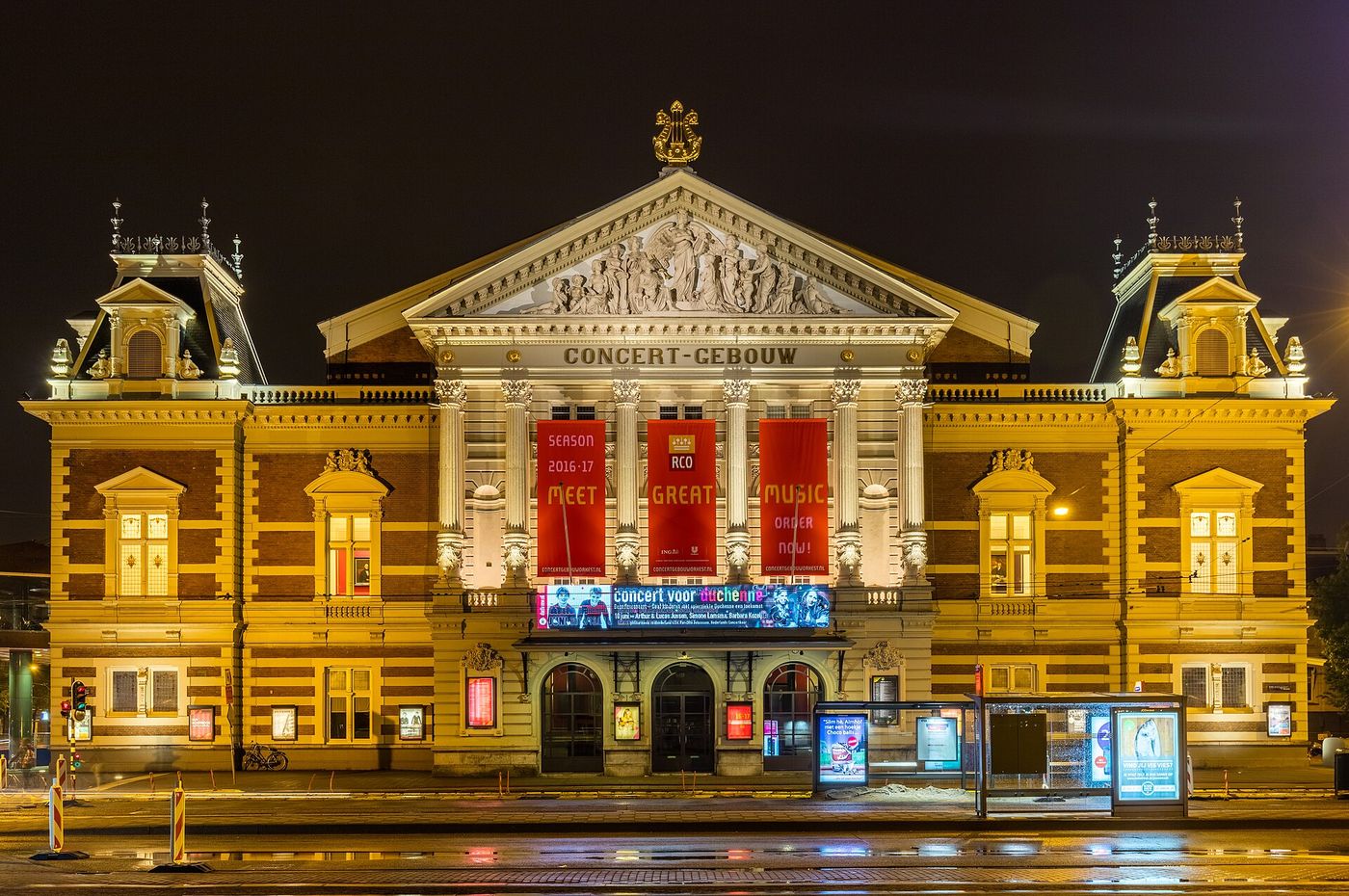
AMSTERDAM — The Royal Concertgebouw Orchestra has played Mahler’s Fifth Symphony several hundred times since the composer himself conducted it in the hall in 1906, and there is a house way of doing it: burnished, unhurried, and secure in the knowledge that nobody in the room needs to be convinced. On Thursday night, a 29-year-old British conductor named Tamsin Okoro, making her debut with the orchestra, decided that somebody did.
Ms. Okoro, who is in her second season as chief conductor of the Odense Symphony in Denmark and has been collecting debuts across Europe at a rate that suggests a career being carefully built, took the opening funeral march faster than I have ever heard it in this hall. The trumpet call, played by the principal, Pieter Verhoeven, with a hard, almost brutal edge, was answered by strings that did not console. It was unsettling. It was also, for the first time in my experience of this orchestra, a funeral march that sounded like it was about someone.
The approach held through the second movement, which Ms. Okoro treated not as a storm but as an argument, with the cellos given unusual prominence and the brass held back until the chorale, which she then released with a force that made the hall’s famous acoustic ring. The Scherzo, Mahler’s longest and most difficult to hold together, was the evening’s one real miscalculation: Ms. Okoro’s tempos for the Ländler sections were so relaxed that the movement’s architecture briefly sagged, and the horn obbligato, beautifully played by Annemieke de Vries, was left to carry more than it should have.
Then came the Adagietto, and the reason this review carries a recommendation. Ms. Okoro took it in under nine minutes, closer to the tempo of Mahler’s own era than to the 12-minute meditations that have become the norm, and she conducted it as a love letter rather than an elegy, which is what Mahler said it was. The Concertgebouw strings, which can sound like a single instrument when they choose to, chose to. The harp, placed unusually far forward, was audible as a voice rather than an accent. I have heard this music more beautifully played. I am not sure I have heard it more honestly.
The finale was fast, bright, and occasionally untidy, with a horn entry in the fugato that arrived a beat early and an acceleration into the final chorale that the orchestra followed with evident enjoyment. The audience, which at the Concertgebouw is not easily moved, stood.
The first half had been Lili Boulanger’s “D’un soir triste,” played with a dark, grave beauty, and Ravel’s Piano Concerto in G with the Dutch pianist Joris Hendriks, 34, who handled the outer movements with wit and the slow movement with a restraint that Ms. Okoro matched exactly. It was an intelligent program, and an intelligent debut, and the orchestra, which has a history of inviting back young conductors who have the nerve to disagree with it, should do so quickly.
The program repeats on Friday and Sunday at the Concertgebouw, Amsterdam.
A version of this article appears in print on Oct. 12, 2026, Section A, Page 2 of the European edition with the headline: Review: At the Concertgebouw, a 29-Year-Old Conductor Makes Mahler’s Fifth Sound Like News.