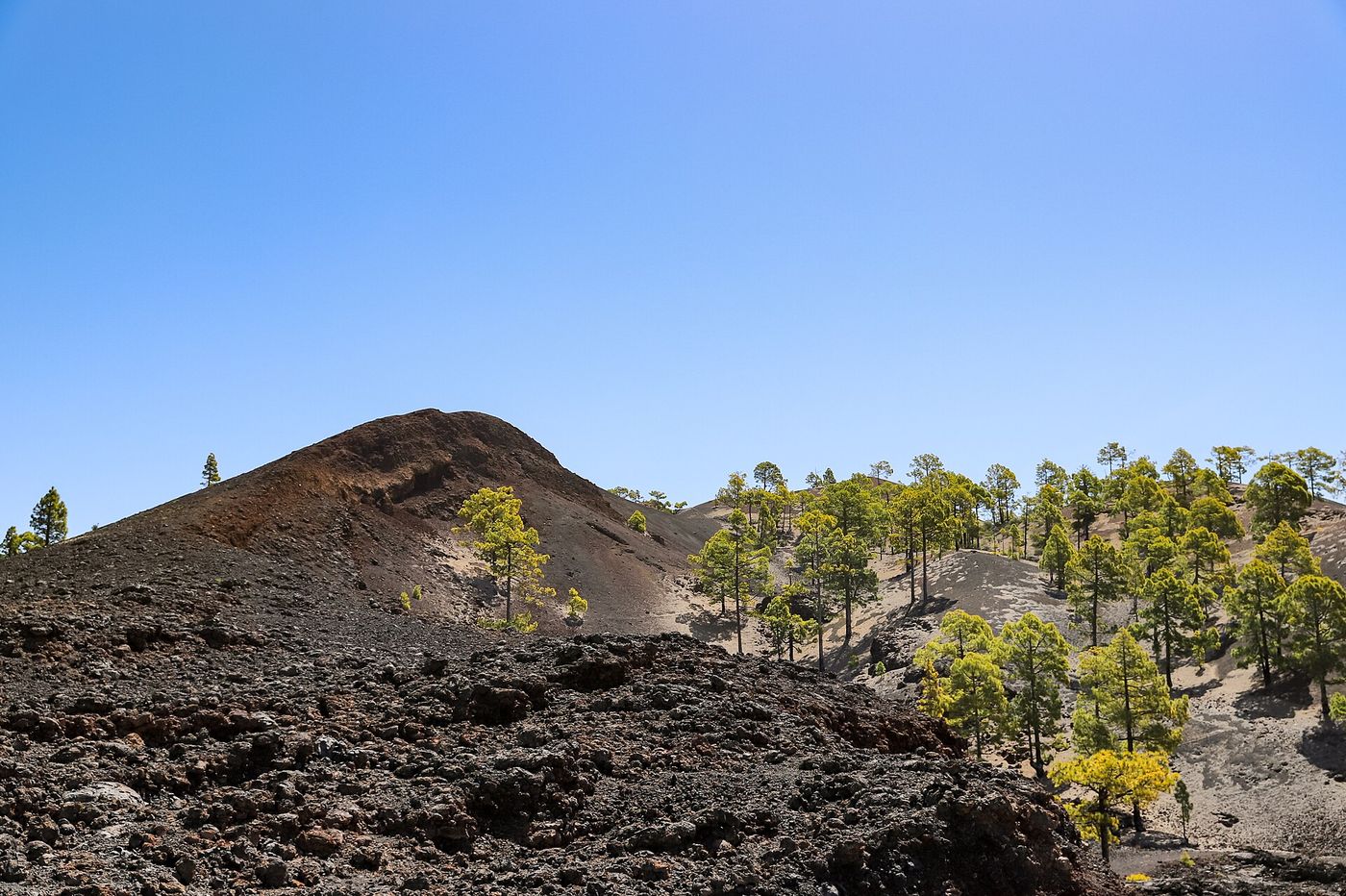
LAS PALMAS, Spain — On a Tuesday morning in the lava fields below Mount Teide, a crew of 140 was filming a scene in which a spacecraft crash-lands on a distant planet. The spacecraft was a plywood shell on a flatbed. The distant planet was Tenerife. The crew, apart from the director, the two lead actors, and a stunt coordinator from Los Angeles, was Spanish, and most of it was from the islands.
The Canary Islands, a Spanish archipelago off the coast of West Africa better known for package holidays, have become one of Europe’s busiest film locations, thanks to a combination of year-round light, a landscape that can pass for several planets, and a tax incentive that returns up to 54 percent of qualifying production spending, the most generous in the European Union. The islands hosted 112 film and television productions in 2025, according to the regional film commission, up from 38 in 2019, with a combined spend of 310 million euros, about $335 million.
“We used to sell sun and sand,” said Elena Cabrera, director of the Canary Islands Film Commission. “Now we sell sun, sand, volcanoes, a desert, a rainforest, a crew base of 2,400 people, and a rebate that makes the accountants smile. The accountants are the ones who decide.”
The incentive, which the Spanish government raised from 40 percent in 2023 as part of a package of measures for the islands’ economy, is capped at 36 million euros per production, and it has drawn American streaming series, British period dramas, and, increasingly, films from the rest of Europe. A German production company has built a 6,000-square-meter sound stage near Las Palmas. A Spanish company is building another on Fuerteventura.
The boom has produced a generation of local crew who no longer have to leave. “Ten years ago, if you wanted to work in film and you were from Gran Canaria, you went to Madrid or you went to London,” said Ayoze Déniz, 34, a camera operator who has worked on 19 productions in the islands since 2021. “Now people come to us. I have not been off the island for work in three years.”
It has also produced strains familiar from other hot locations. Rents in Las Palmas have risen about 35 percent since 2021, and local housing groups blame short-term lets to film crews, among other factors. The regional government has been criticized for what one opposition member called “subsidizing Hollywood to the tune of a hospital a year,” a charge the film commission disputes, citing a study that found each euro of rebate generated 3.4 euros of local spending.
There are also questions about durability. Tax incentives are a competitive market, and several European countries have raised theirs in response. Ms. Cabrera acknowledged that the islands could not rely on the rebate alone. “The incentive gets them here,” she said. “The crews and the light keep them here. If we lose the first we must still have the second.”
Back below Teide, the spacecraft crashed for the fourth time that morning. The director called cut. Mr. Déniz, who had been lying on his back in the lava for the shot, stood up and brushed off the ash. “Mars,” he said, “is very dusty.”
A version of this article appears in print on Oct. 12, 2026, Section A, Page 2 of the European edition with the headline: In the Canary Islands, a 54 Percent Tax Break Has Turned Volcanoes Into Back Lots.