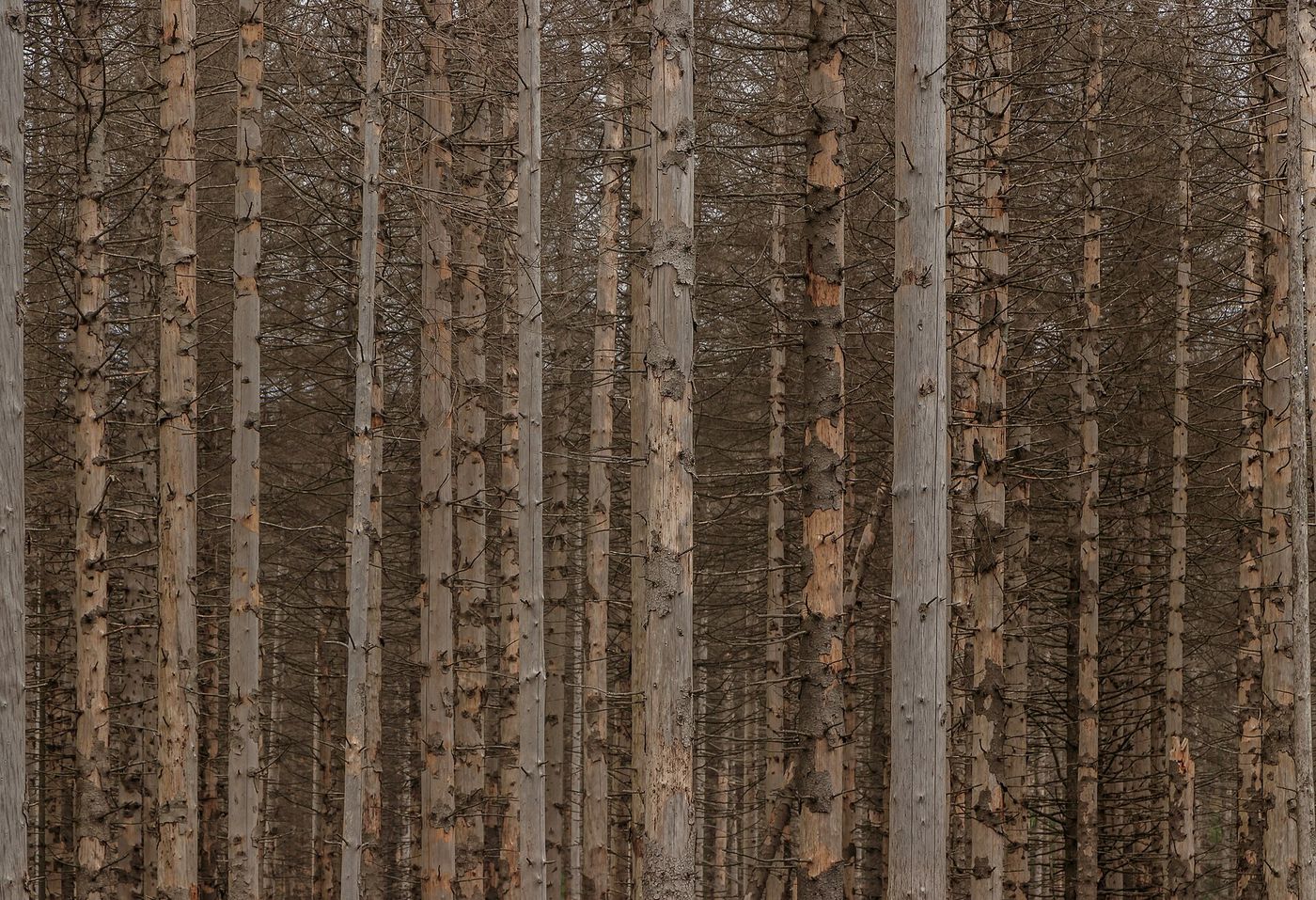
GOSLAR, Germany — From the summit of the Brocken, the highest peak in northern Germany, the view that once took in an unbroken dark green of spruce now resembles a landscape after a fire: gray trunks standing in ranks, bleached by sun, with a fuzz of young birch and rowan pushing up between them.
The state forestry service of Lower Saxony estimates that 80 percent of the spruce in the Harz, about 22,000 hectares, has died since 2018, when three consecutive drought summers weakened the trees and allowed the European spruce bark beetle to multiply unchecked. It is among the fastest forest die-offs ever recorded in Central Europe, and it has made this region of medieval mining towns and hiking trails an unlikely laboratory for how forests should be rebuilt in a hotter climate.
“The spruce was never supposed to be here in these numbers,” said Dr. Annette Kruse, a forest ecologist at the Northwest German Forest Research Institute in Göttingen. The Harz was planted with spruce monocultures in the 18th and 19th centuries to feed the silver mines with pit props and charcoal, she said, and the trees were replanted again after the Second World War, when Germany paid war reparations in timber. “It was a timber plantation that people learned to love as a forest. The beetle has given us a chance to build something that can survive 2050.”
What that means in practice is contested. The national park, which covers about 10 percent of the Harz, has adopted a policy of doing almost nothing: letting dead trees stand, allowing birch, rowan and willow to colonize, and waiting for beech and oak to follow over decades. Outside the park, commercial foresters are planting mixed stands of Douglas fir, oak, beech and silver fir, species chosen for drought tolerance and, in the case of Douglas fir, saleable timber.
Matthias Rehbock, a district forester who manages 4,000 hectares near Clausthal-Zellerfeld, said his teams had planted 1.8 million seedlings in three years, and that deer had eaten roughly a third of them. “We are not planting a forest,” he said. “We are planting a buffet.” His office has raised hunting quotas and built 60 kilometers of fencing, and he expects the new stands to need 20 years of protection before they can be left alone.
The dead forest has also become an economic problem. The Harz draws about 10 million overnight visitors a year, and surveys by the regional tourism board found that a quarter of first-time visitors described the landscape as “depressing.” Birgit Scholz, who runs a 34-room hotel in Braunlage, said bookings from older German guests had fallen by a fifth since 2021, partly offset by younger hikers and Dutch families who, she said, “did not know what it used to look like.”
The region has responded by leaning into the change, with guided “forest transformation” walks, viewing platforms that explain the die-off and a new 11-kilometer trail through regenerating national park land where rangers point out the lynx and black storks that have returned to the open country. Dr. Kruse said the public debate had shifted from mourning to curiosity. “Five years ago people asked me when the forest would come back,” she said. “Now they ask which forest.”
A version of this article appears in print on Oct. 12, 2026, Section A, Page 14 of the European edition with the headline: The Harz Lost Its Spruce Forests to Beetles and Heat. Now It Is Deciding What Grows Back..