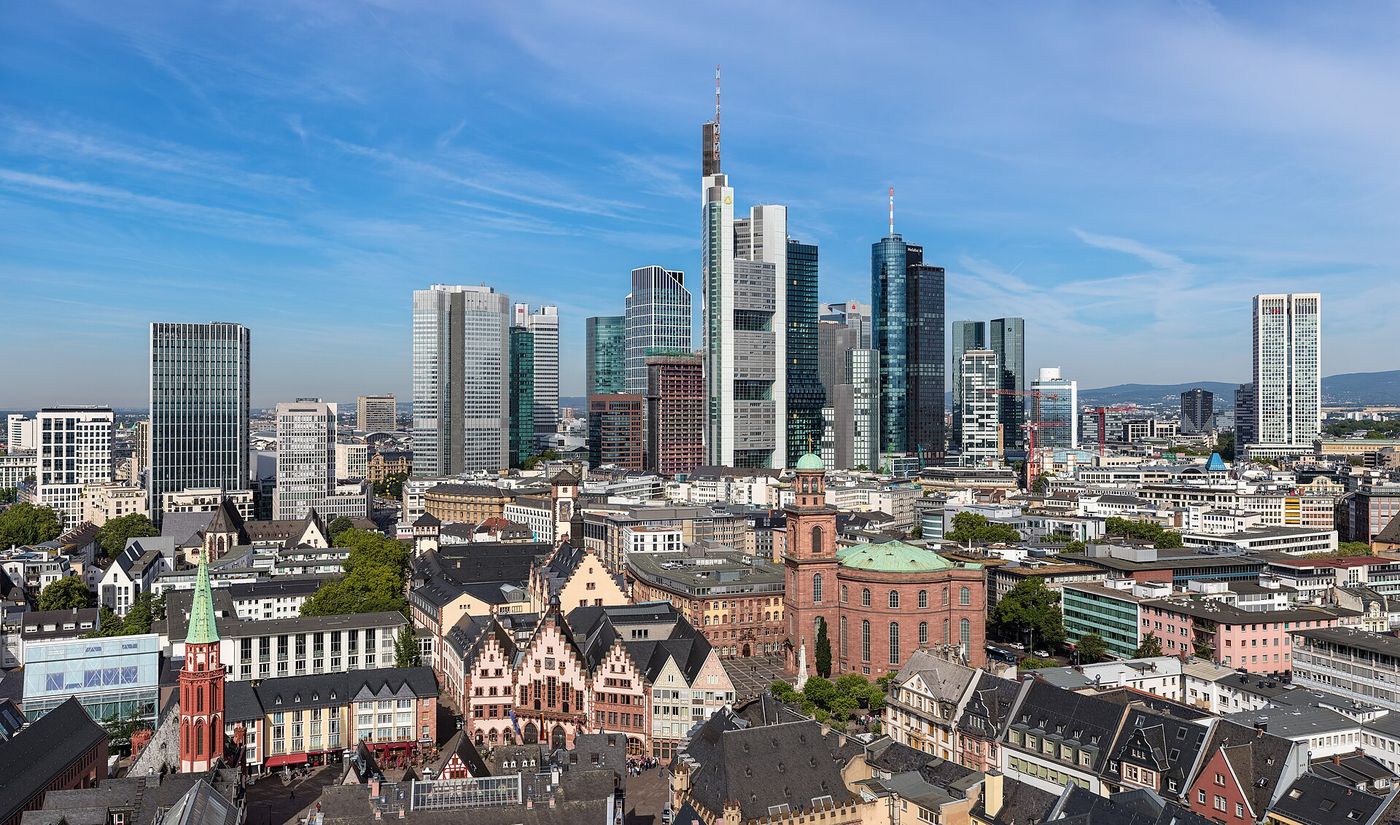
FRANKFURT — The building at Mainzer Landstrasse 160 was built in 1992 for a regional bank, with 14 floors of open-plan offices, a marble lobby and a vacancy, since 2023, of 100 percent. By next autumn it will hold 212 apartments, the first large office-to-residential conversion in this city’s banking district, and the test case for a policy the city hopes will turn one crisis into relief for another.
Frankfurt’s office vacancy rate reached 11.8 percent in the third quarter, the highest since 2005, according to the brokerage Colliers, as banks and consultancies cut space after the shift to hybrid work. About 1.4 million square meters sit empty. At the same time, the city estimates it is short 90,000 homes, and the average asking rent for a new flat has passed 19 euros a square meter, among the highest in Germany.
“Everyone looks at those two numbers and says, well, obviously,” said Katharina Lenz, the city’s head of planning. “And then you look at a 1980s tower with a 40-meter floor plate, central air and windows that do not open, and it is not obvious at all.”
The constraints are physical. Apartments need daylight, which means a window within about 7 meters of every habitable room; an office tower with deep floors has a dark core that cannot be bedrooms. They need plumbing in every unit, where an office has it in two risers. They need openable windows, individual heating and, under German code, a second escape stair or a balcony reachable by fire ladder. On a bad building, the conversion costs more than demolition and rebuilding, and the city’s own study found that only about a third of its empty office stock is suitable.
The Mainzer Landstrasse building is in the good third. Its floor plate is a narrow rectangle, 18 meters deep, built around a central corridor that becomes the hallway of a residential floor without moving a wall. Its windows open. The developer, Rhein-Main Wohnbau, bought it in 2024 for 41 million euros, about 40 percent of its 2019 valuation, and is spending 68 million on the conversion, which works out to about 3,200 euros per square meter of apartment, roughly 30 percent below new construction. The flats, 45 to 95 square meters, will rent for 16 to 18 euros a square meter, with 30 percent set aside at 10.50 under the city’s affordable housing rule.
“We will make a return on this one. We looked at 22 buildings and this was one of four where the numbers closed,” said the developer’s managing director, Ulrich Hartmann. “The others need an owner who is willing to accept that the building is worth less than they think. That conversation is still happening.”
The city has tried to help. In March, it dropped the requirement for a full rezoning on conversions of buildings under 30 meters, cut the parking requirement for converted units to zero and allowed the second escape route to be met with a balcony. Eleven conversion applications have been filed since, totaling about 1,900 units. Berlin and Düsseldorf have adopted similar rules.
Critics on the city council argue the numbers are small against the need. Ms. Lenz does not disagree. “Nineteen hundred flats does not solve 90,000,” she said. “But every one of them is a building that is no longer empty, in a neighborhood that has a bakery again at 7 p.m. That counts for something.”
A version of this article appears in print on Oct. 12, 2026, Section A, Page 11 of the European edition with the headline: Frankfurt Has 1.4 Million Square Meters of Empty Offices. A Few Are Becoming Apartments..