TALLINN, Estonia — Estonia’s Supreme Court ruled on Friday that a law requiring religious organizations to cut formal links with foreign bodies that support military aggression is constitutional, rejecting a challenge from the Orthodox church whose roughly 100 parishes have historically answered to the Moscow Patriarchate.
The decision, by a 14-to-3 vote of the full court, means the Estonian Christian Orthodox Church has until April 1 to amend its statutes to remove canonical subordination to Moscow or be struck from the register of religious associations, which would strip it of the right to own property, employ clergy, and hold services in its own name.
“The Constitution protects freedom of religion,” the court wrote. “It does not protect the right of a foreign organization that has blessed a war of aggression to exercise governance over associations on Estonian soil.” The judges found that the law regulated organizational structure rather than belief, and that parishes remained free to worship according to any rite.
The church’s spokesman, the Rev. Andrei Kuzmin, said the ruling asked believers to do something that was not theirs to give. “Canonical ties are not a membership we can cancel like a subscription,” he said outside the court in Tartu. “The state is telling us to stop being who we are, and calling that freedom.” He said the church would consider an appeal to the European Court of Human Rights but would also convene its council to discuss changes to its statutes.
The law, passed in 2025 after a year of debate, was prompted by the Russian church leadership’s open support for the invasion of Ukraine. Kadri Tamm, who oversees religious affairs at the Interior Ministry, said the government had no interest in closing churches. “We want the same thing the court wants: Orthodox parishes that are run from Estonia,” she said. Several parishes have already reregistered under the Estonian Apostolic Orthodox Church, which is under the Patriarchate of Constantinople and has existed in parallel since the 1990s.
Jaan Rebane, a lawyer who specializes in nonprofit law and who was not involved in the case, said the practical effect would depend on the ministry’s patience. “Dissolution is a nuclear option,” he said. “My expectation is a long negotiation about what the word ‘subordination’ means in a statute, conducted by people who would rather not be in the newspaper.”
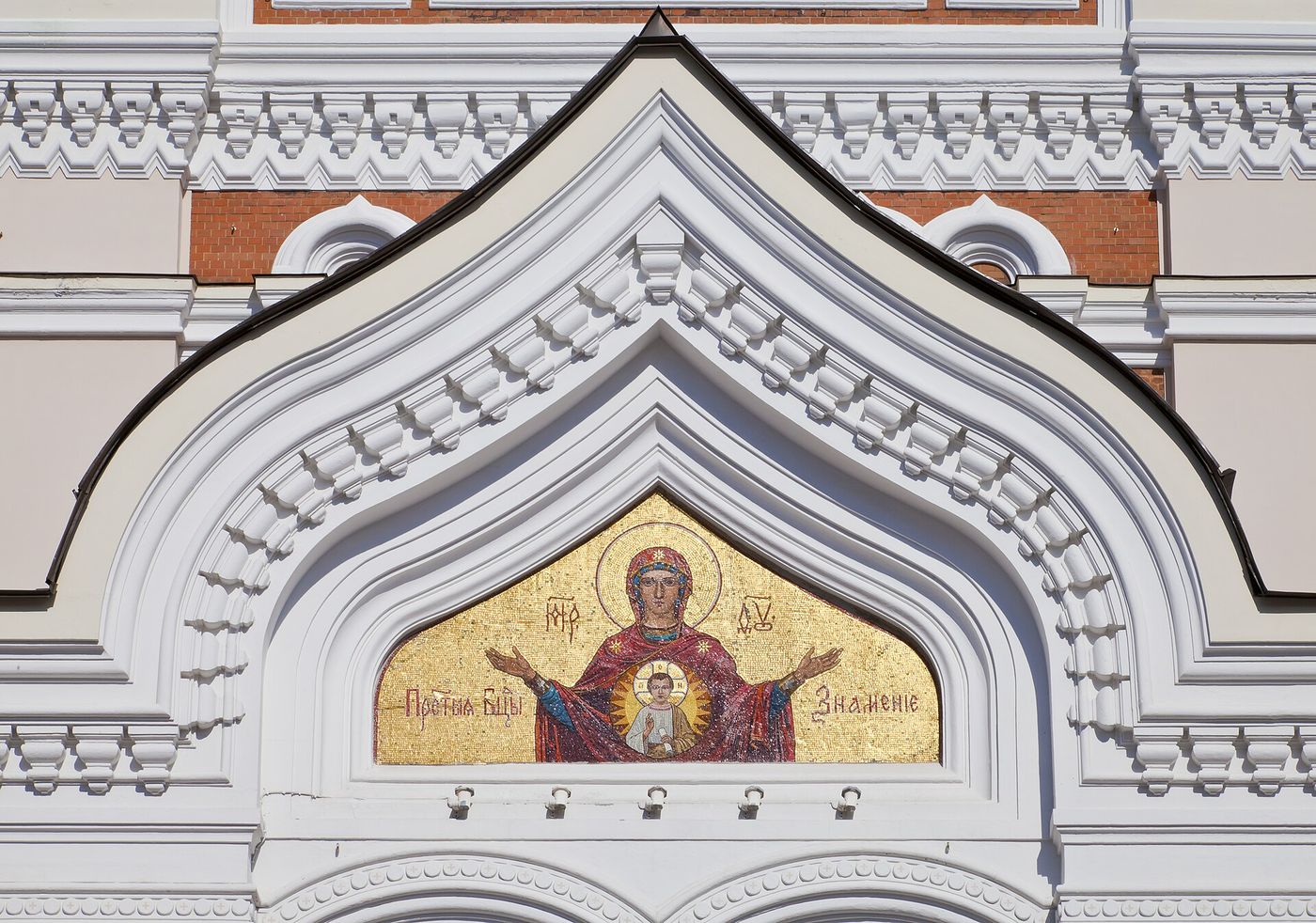
At the Alexander Nevsky Cathedral on Friday evening, a few dozen worshipers attended vespers. One of them, Larissa Smirnova, 71, said she had been baptized in the building and intended to be buried from it. “Whoever signs the papers in Moscow or Istanbul,” she said, “the candles are the same.”
A version of this article appears in print on Oct. 12, 2026, Section A, Page 2 of the European edition with the headline: Estonia’s Top Court Upholds Law Forcing Churches to Sever Ties With Moscow.



