FAENZA, Italy — Giancarlo Bettini has rebuilt his ceramics workshop twice since 2023, and this autumn he received a letter telling him he would have to do it a third time without help. His insurer, which had covered the kilns and the stock of glazed tiles for 30 years, was declining to renew the policy. “They did not even raise the price,” he said, standing on a floor still ringed with a faint brown line two feet up the wall. “They just said no.”
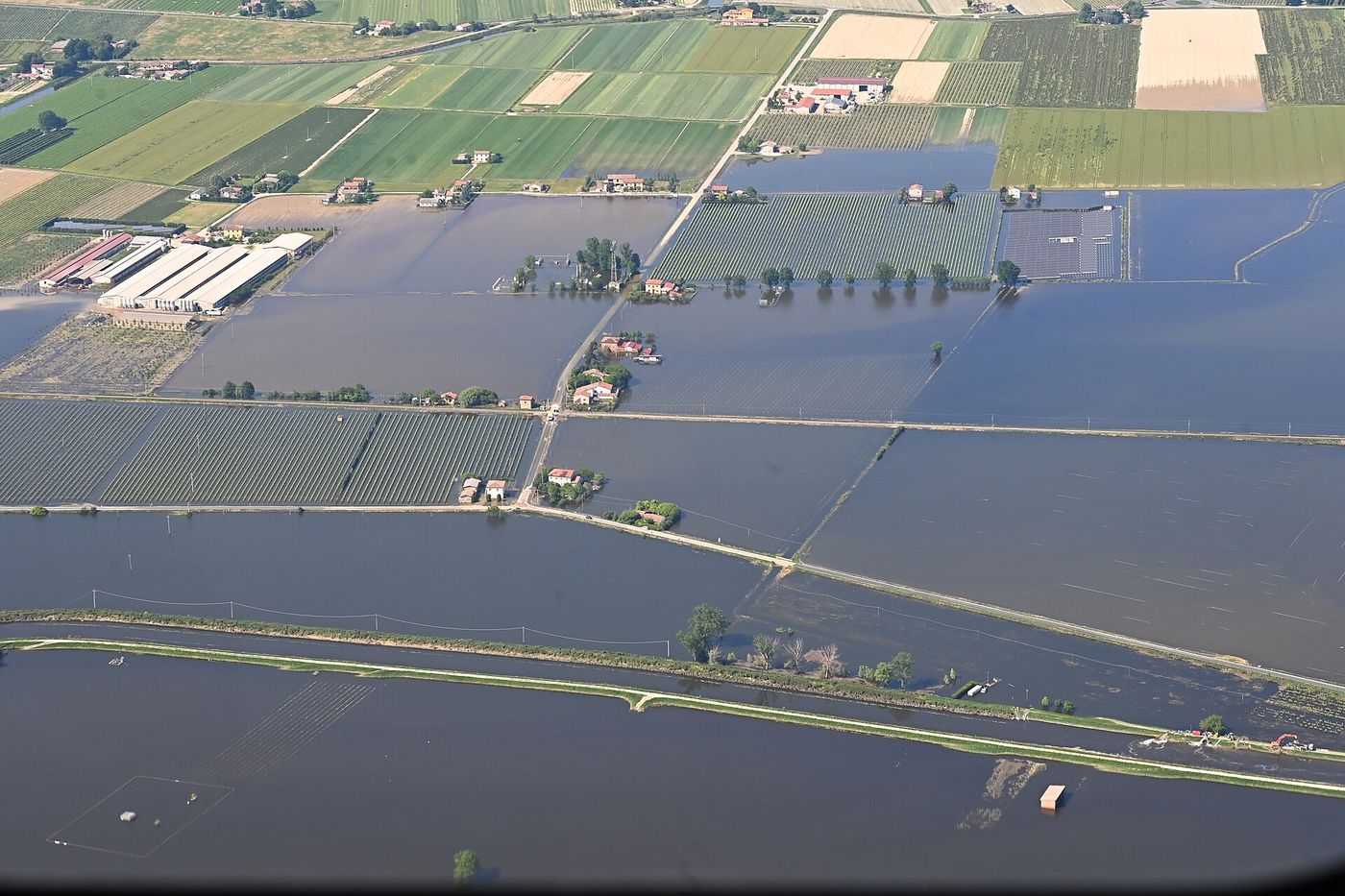
Mr. Bettini’s experience is becoming common across the Romagna plain, a flat expanse of orchards and small factories between Bologna and the Adriatic that has flooded three times in four years. A survey released this month by the regional chamber of commerce found that 23 percent of businesses in the worst-hit municipalities had been refused natural-catastrophe coverage in the past year, up from 6 percent in 2024, and that premiums for those who kept their policies had risen by an average of 140 percent.
The retreat collides with a law, in force since the start of this year, that requires every Italian company to carry insurance against floods, landslides and earthquakes or forfeit access to public subsidies and disaster aid. The law was written in part because of Romagna, where the state paid out roughly 8.5 billion euros after the floods of May 2023, and the government argued that taxpayers could not keep acting as the insurer of last resort.
“The law assumes a market exists,” said Paola Dragoni, an analyst at the Italian insurers’ association in Milan. “In most of the country it does. In a handful of places that have been underwater three times, the honest answer is that a private company cannot price that risk at anything a bakery can afford.” The association has asked the government to create a state-backed reinsurance pool, similar to France’s, that would cap insurers’ losses in repeat-flood zones.
Hydrologists say the floods are not freak events. Dr. Elena Sartori, who studies the Apennine river basins at the University of Bologna, said the region’s rivers were channeled between high artificial embankments in the 19th century, which protected farmland but left no space for water when storms deliver a month of rain in two days, as happened in 2023 and again in September 2024 and last March. “The levees do not fail because they are badly built,” she said. “They fail because they are asked to hold back more water than has ever existed in this valley.”
The regional government has begun buying farmland to create 14 flood-retention basins, giant fields that can be deliberately inundated to spare towns downstream. Only two are finished. Luca Fantini, who directs the regional civil protection agency, said the full program would take a decade and 1.1 billion euros, of which about a third is funded. “Everyone wants the basin,” he said. “Nobody wants the basin on their land.”
In Faenza, where the Lamone River has twice poured through the historic center, the city has installed flood gates on 240 ground-floor doorways and moved its electrical substations above the 2023 waterline. Mr. Bettini has done the same for his kilns, raising them on concrete plinths. He is now applying to a regional mutual fund that small businesses created this summer, pooling 40 million euros of their own money because, he said, “the insurers have decided we do not exist.”
He paused by the door, where a plaque marks the high-water mark of May 2023. “My grandfather started this workshop in 1952,” he said. “He never saw the river come in once.”
A version of this article appears in print on Oct. 12, 2026, Section A, Page 17 of the European edition with the headline: In Italy’s Flood Country, Insurers Are Leaving Faster Than the Water Recedes.