WROCŁAW, Poland — The night shift at Zakłady Metalowe Odra, a maker of steel components for appliances on the southern edge of this city, speaks four languages that it did not speak in 2022: Nepali, Tagalog, Hindi and Bengali. About 180 of the plant’s 620 production workers now come from South and Southeast Asia. Without them, said Agnieszka Wróblewska, the human resources director, the shift would not exist.
Poland’s unemployment rate stands at 2.8 percent, the lowest in the European Union, and its statistics office counts about 450,000 unfilled jobs. The country’s working-age population has shrunk by 1.5 million in a decade. The Ukrainian workers who filled the gap after 2014, about a million of them, have been thinned by war and by better wages in Germany. Into that space, employers and recruitment agencies have brought roughly 250,000 workers from Nepal, the Philippines, India, Bangladesh and Indonesia since 2023, according to Interior Ministry permit data.
“We advertised in Wrocław for a year and got 11 applicants for 60 jobs,” Ms. Wróblewska said. “We advertised in Kathmandu and got 2,000 in a week. I am not a politician. I have a production plan.”
Ramesh Thapa, 31, from Pokhara in Nepal, operates a press at the plant and earns about 6,200 zlotys a month, roughly 1,450 euros, before overtime. He paid a recruitment agency 4,000 euros for the job, a sum that took his family two years to assemble and that he repaid in 14 months. “In Qatar I worked outside at 45 degrees for half this money,” he said. “Here it is cold and people are quiet and I have a contract. I would like to bring my wife. The paperwork takes two years.”
The scale of the shift has surprised a country that until recently exported workers rather than importing them. Wages are rising about 8 percent a year, faster than anywhere else in the E.U., and employers say that without foreign labor the increases would be larger and the factories fewer. Marek Sobczak, who runs a recruitment agency in Warsaw that placed 9,000 Asian workers last year, said demand had shifted from construction and warehouses to skilled factory work, nursing and bus driving. “Three years ago the question was whether Polish employers would hire someone from Manila,” he said. “Now the question is whether Manila has anyone left.”
Politics has followed. Visa fraud involving work permits for Asian nationals became a scandal in 2023 and remains a reliable theme for parties that oppose immigration, and the government has tightened rules on agencies and introduced mandatory employer registration. Polls show a majority of Poles accepting labor migration in principle and a majority opposing it in their own town, a combination that sociologists say is familiar from Western Europe a generation earlier.
“Poland is doing in five years what Germany did in 30, and it is doing it with the German experience in full view,” said Piotr Nowicki, a sociologist at the University of Wrocław. “The employers are ahead of the public, the public is ahead of the politicians, and the workers are ahead of all of them, because they are already here.”
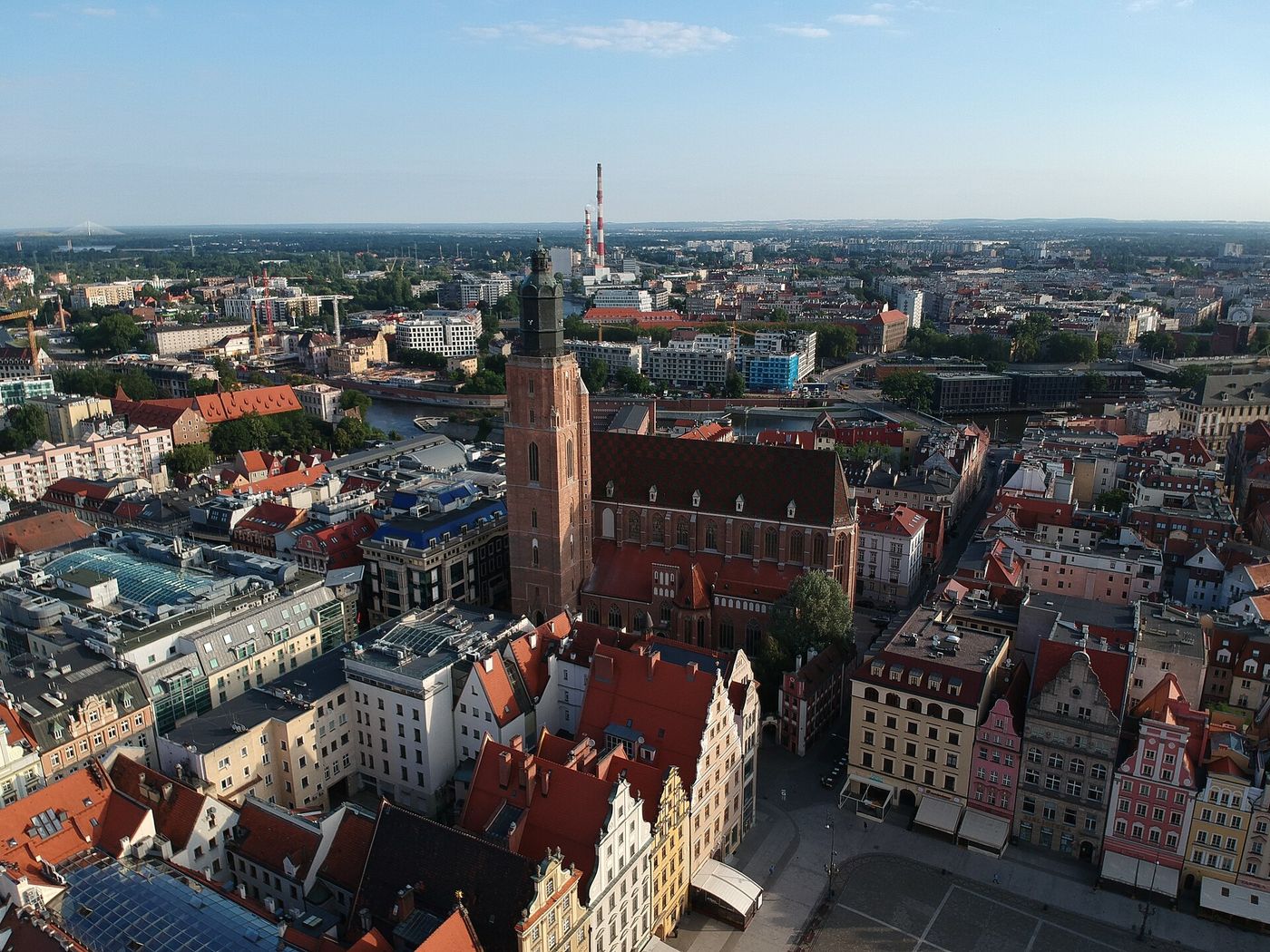
On a Sunday afternoon in the market square, Mr. Thapa and four colleagues were drinking tea outside a Nepali restaurant that opened in April. It is the city’s third. “When I came, there was one,” he said. “That is how you know a place is becoming home. Someone opens a restaurant.”
A version of this article appears in print on Oct. 12, 2026, Section B, Page 5 of the European edition with the headline: Poland Ran Out of Workers. Now It Is Recruiting in Manila and Kathmandu..