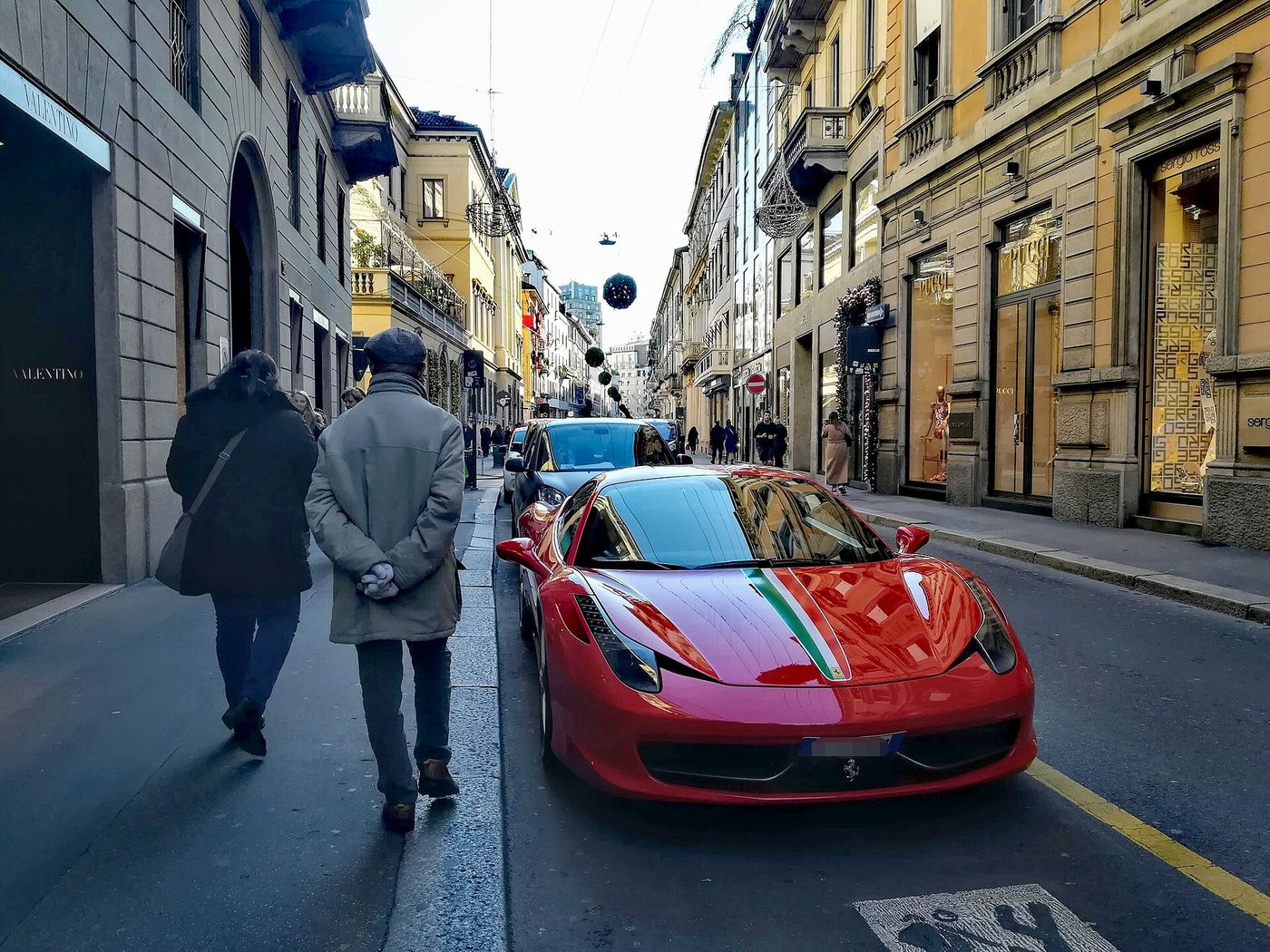
MILAN — On Via Montenapoleone, where retail rents reached 20,000 euros a square meter this year and made it the most expensive shopping street in the world, three storefronts are papered over. Two belonged to Italian houses that had been in business for more than half a century.
Global sales of personal luxury goods are on course to fall about 3 percent in 2026, the third consecutive annual decline, according to a study published on Monday by Marchionni & Partners, a Milan consultancy. Chinese shoppers, who accounted for a third of spending in 2019, now account for 22 percent. American demand, the industry’s hope for the past two years, has gone flat as tariffs raised prices by 10 to 15 percent. Only Japan and the Gulf are growing.
The largest groups, with their cash reserves and owned real estate, are absorbing the downturn. The pain is concentrated one tier down, among houses with sales of 100 million to 500 million euros that pay the same rents, hire the same influencers and depend on the same department stores. Casa Verenna, a leather goods house founded in 1962 with sales of about 280 million euros, confirmed last week that it had hired advisers to find a buyer. Bastiani Milano has closed its New York flagship. A knitwear maker in Biella has cut 140 jobs.
“Scale is the only moat left,” said Giulia Ferrante, a luxury analyst at a Milan brokerage. “A brand with 300 million in sales pays Montenapoleone rent and gets a third of the sales per square meter that the giants do. For three years that was a choice. Now it is a wound.”
The industry’s own decisions are part of the story. Between 2021 and 2024, the big houses raised prices by an average of 30 to 40 percent, pushing entry-level handbags past 3,000 euros and driving away the aspirational customers who had fueled the previous decade. Those customers have not come back, and the brands are quietly discounting through outlets and private sales while insisting publicly that they never do.
The squeeze travels down the supply chain to the workshops of Tuscany and the Brianza, where roughly 70 percent of the world’s luxury goods are made. About 4,000 workers at subcontractors in Tuscany are on state-supported short-time schemes. Marco Senesi, whose leather workshop in Scandicci employs 45 people, said orders were down 35 percent from 2023 and that the large houses now paid in 120 days. “They tell us we are family,” he said. “Family does not pay in four months.”
Buyers for the mid-sized houses include private equity firms and Gulf sovereign funds, which see brands with heritage and depressed valuations. Alessandro Verenna, the third generation of his family to run Casa Verenna, said he had resisted a sale for two years. “My grandfather sold bags to film stars,” he said. “I am selling the company to a spreadsheet. I would like to think he would understand.”
Milan Fashion Week in September was the shortest in 15 years, with 48 shows on the official calendar, down from 67 in 2023. Landlords on Montenapoleone, for now, are holding their prices.
A version of this article appears in print on Oct. 12, 2026, Section B, Page 7 of the European edition with the headline: Luxury’s Slump Enters a Third Year, and Milan’s Mid-Sized Houses Are Feeling It Most.