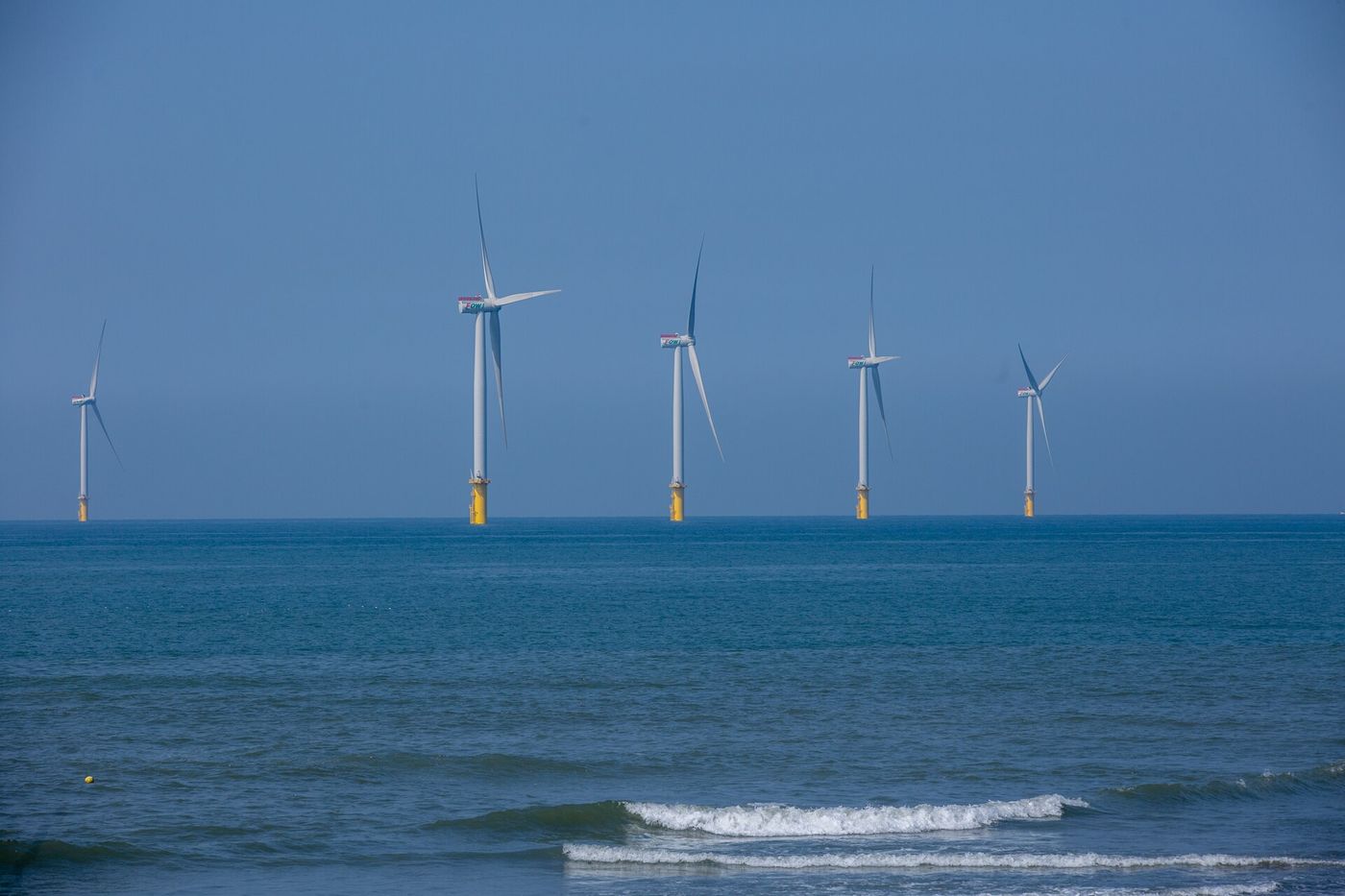
TAICHUNG, Taiwan — From the breakwater at Taichung harbor, the rows of turbines on the horizon look like the finished product of Taiwan’s decade-long bet on offshore wind. The island crossed 3.2 gigawatts of installed capacity in the strait last month, enough on a strong day to power about 2.5 million homes.
But on at least 14 days since July, the grid operator has instructed wind farms off Changhua County to curtail production because the onshore network could not absorb it, according to data from the state utility Taipower reviewed by The Continental Times. The curtailed electricity, about 190 gigawatt-hours, would have been worth roughly 1.1 billion New Taiwan dollars, or $34 million, at the feed-in tariff paid to developers.
The bottleneck is a 161-kilovolt substation at Changhua’s coastal industrial park, which was designed for 2 gigawatts of input and is receiving more than that in peak wind. A second substation and a 345-kilovolt line to the west-coast trunk were scheduled for completion in 2025 but have been delayed by land acquisition disputes and a shortage of transformers, which are in global short supply. Taipower now expects them in the second half of 2027.
“We built the power plants faster than the roads to carry the power,” said Chen Yu-ting, deputy director of the Bureau of Energy’s renewable division, at a hearing in Taipei last week. “That is a planning failure, and we are correcting it.”
The timing is awkward. Taiwan shut its last operating nuclear reactor in May 2025, and the government has pledged to bring renewables to 30 percent of generation by 2030, up from about 14 percent this year. Semiconductor manufacturers, which consume roughly a fifth of the island’s electricity and face pressure from customers to use clean power, have signed long-term contracts for most of the strait’s wind output. Several have asked for guarantees about delivery.
Developers are losing patience. A consortium that operates two of the affected farms said the curtailment orders had cut its revenue by 9 percent this year and warned that financing for the next bidding round, covering 3 gigawatts of new sites to be auctioned in December, would become more expensive. “Lenders price grid risk,” said Lin Hsiao-wen, the consortium’s general manager for Taiwan. “If the government cannot tell them when the wires will exist, the interest rate tells them for it.”
Taipower has proposed a stopgap: a 400-megawatt battery installation at the industrial park, to be completed next summer, that would store surplus wind power for release in the evening. The utility is also seeking authority to compensate developers for curtailed output, a measure the legislature has not yet approved.
Fishermen along the Changhua coast, who opposed the wind farms a decade ago, now watch the turbines turn with a certain irony. “They told us the sea would become a power plant,” said Hsu Kuo-liang, 61, who runs a small boat out of Wanggong. “Now the power plant is waiting for an extension cord.”
A version of this article appears in print on Oct. 12, 2026, Section A, Page 2 of the European edition with the headline: Taiwan’s Offshore Wind Farms Are Built. Now the Island Needs the Wires to Use Them.



