Tomás Ibarrola, a Basque architect whose parish churches of raw concrete, built for the steelworkers and shipbuilders of northern Spain in the 1960s and ’70s, were denounced as bunkers when they opened and are now studied as among the most original religious buildings of the 20th century, died on Thursday in San Sebastián. He was 88.
His death, at a hospital, was announced by the Basque College of Architects. His son, Iñaki Ibarrola, said the cause was complications of pneumonia.
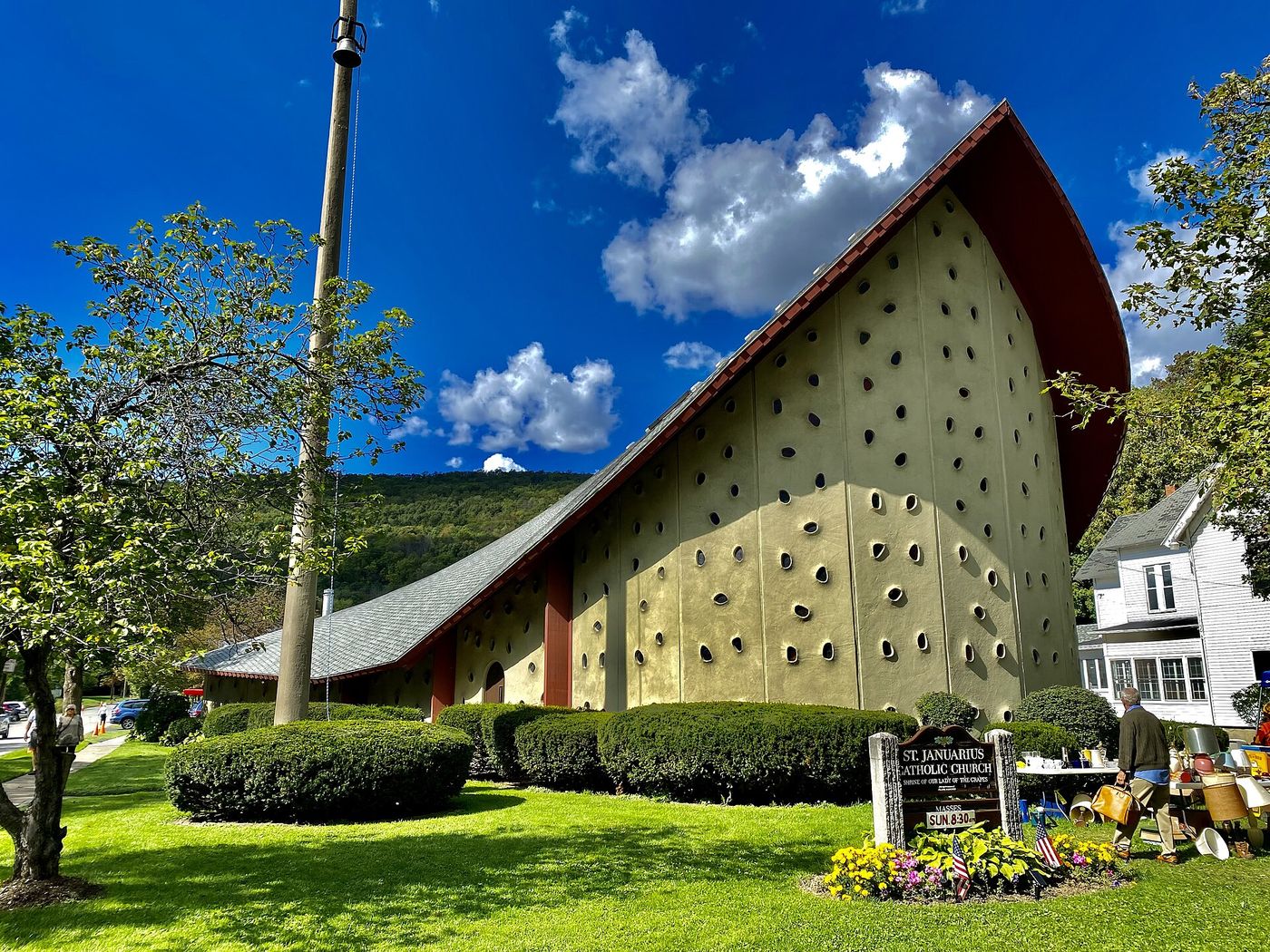
Mr. Ibarrola built 14 churches between 1964 and 1991, nearly all in the industrial valleys around Bilbao and in the towns of Navarre, for a church that was expanding into new working-class districts and a dictatorship that paid for it. He gave them nothing that they expected. His churches had no steeples, no ornament, no stained glass and often no obvious front door. From the street they were blank, folded walls of board-marked concrete. Inside, they were caverns of light, lit by slots and oculi placed so that the sun moved across the altar through the day.
“He understood that his congregation worked in foundries and shipyards, in buildings of concrete and steel, and he did not think they should have to pretend on Sunday that they lived in the 15th century,” said Amaia Zubizarreta, an architectural historian at the University of the Basque Country who wrote the standard study of his work. “The miracle is that he made those same materials feel like grace.”
The reception was hostile. The church of San Andrés in Barakaldo, completed in 1969 with a sawtooth roof of concrete that admitted light only from the north, was called “a garage for God” in the local press. A bishop declined to consecrate another until a cross was added to the exterior; Mr. Ibarrola complied with a cross of such austerity, a thin steel line set into the concrete, that it took visitors a moment to find it. Several of his buildings were altered by parishes that added the steeples and statues he had omitted.
Tomás Ibarrola Echeverría was born on Nov. 14, 1937, in Eibar, a town of gunsmiths and machinists in Gipuzkoa, during the Civil War, six months after the bombing of Guernica 30 kilometers away. His father was a lathe operator. He studied architecture in Madrid, graduating in 1962, and worked briefly in Paris, where a visit to a concrete chapel in the Jura by a Swiss-French master, he later said, “showed me that concrete could pray.” He returned to Bilbao in 1963 and opened an office with two chairs and a drawing board.
He built little outside the church: a school, two housing blocks, a market hall in Tolosa that still functions. He refused commissions he considered vanity, and a long dispute with the regional government over a cultural center he was asked to design, then asked to make taller, ended with his withdrawal in 1988 and a decade of near silence. He taught, drew and restored one of his own churches, in Sestao, after a fire in 2004.
Reassessment came late. In 2015, four of his churches were listed as protected monuments by the Basque government, and a retrospective at the Guggenheim Bilbao in 2021 drew 180,000 visitors, many of them from the districts where the buildings stand. He attended the opening in a wheelchair and was reported to have said, looking at a photograph of San Andrés in the afternoon light, that it had taken 50 years but the garage had finally been understood.
His wife, Begoña Arrieta, a schoolteacher, died in 2016. Besides his son, he is survived by a daughter, Nerea, and five grandchildren. A funeral Mass will be held on Monday at San Andrés in Barakaldo, where, the parish said, the north light will be allowed in without alteration.
A version of this article appears in print on Oct. 12, 2026, Section A, Page 16 of the European edition with the headline: Tomás Ibarrola, Basque Architect Who Built Churches of Raw Concrete and Light, Dies at 88.