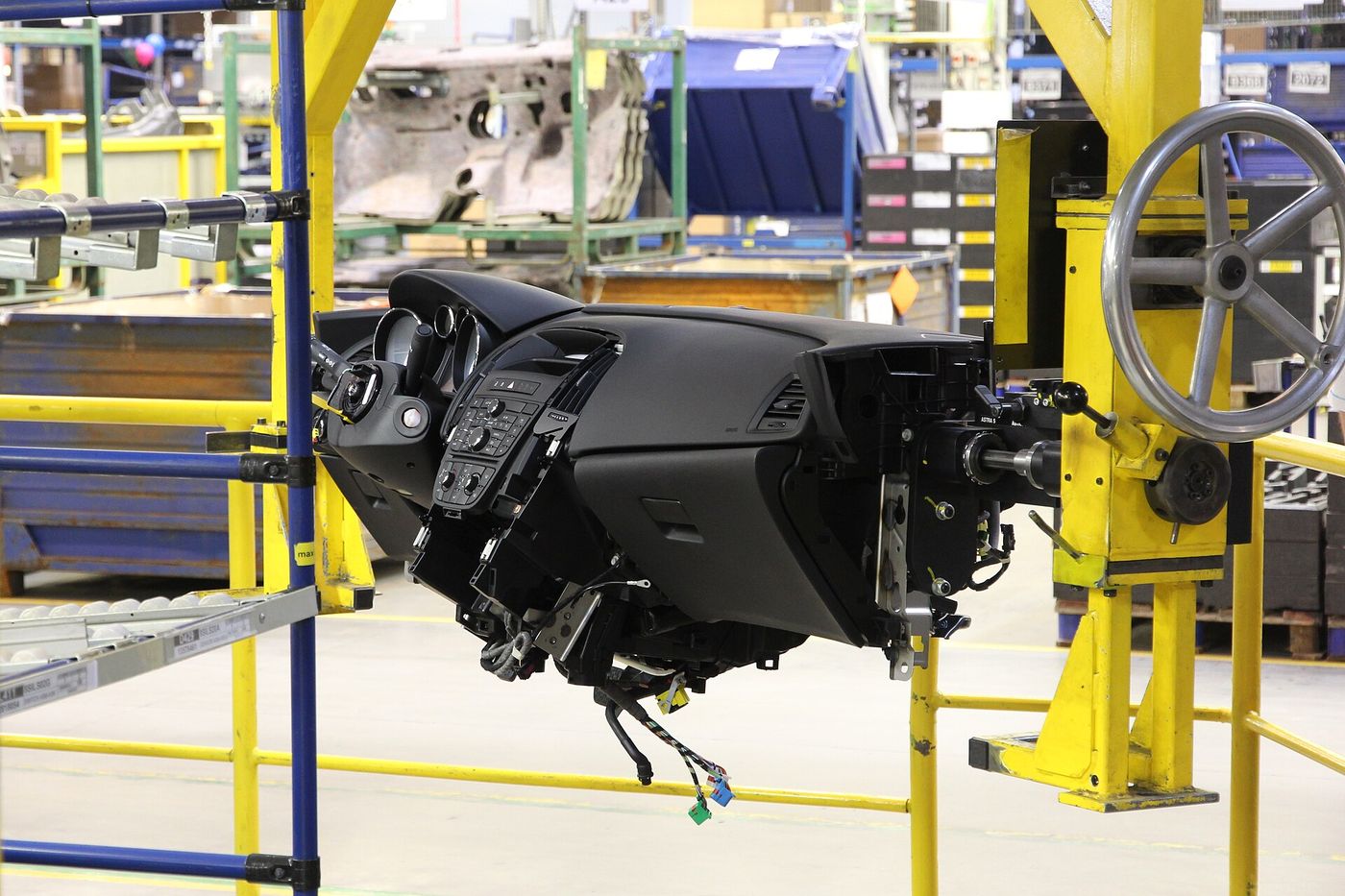
VALENCIENNES, France — Two years ago, the assembly line at the car plant on the edge of this northern French city was scheduled to switch entirely to electric S.U.V.s by the end of 2026. This month, workers are installing tooling for a new generation of plug-in hybrids, a drivetrain the industry had treated as a bridge to be crossed and burned, and which is now its fastest-growing product.
Across Europe, manufacturers have announced at least 11 billion euros of investment since January in hybrid and combustion-engine capacity, according to a tally by Automotive Perspectives, a consultancy in Munich. Battery-electric cars took 19 percent of new registrations in the first nine months of the year, up from 16 percent in 2025 but well short of the 25 to 30 percent that most product plans assumed. Plug-in hybrid sales rose 41 percent.
“Last year they told us the engine shop would close in 2027,” said Fabien Delcourt, a delegate for the CFDT union at the plant, where about 2,800 people work. “Now they are hiring engine fitters again. We are happy for the jobs. But nobody on this floor believes any plan anymore.”
The reversal has regulatory cover. Brussels relaxed the industry’s carbon dioxide targets last year, allowing manufacturers to average their emissions over three years instead of one, and it is formally reviewing the 2035 ban on new combustion cars, with a decision expected in the spring. It also has a commercial logic: the average electric car sold in Europe costs about 44,000 euros, against 31,000 euros for a comparable gasoline model, while a plug-in hybrid carries a premium of roughly 3,000 euros that buyers have shown they will pay.
Suppliers that had written off whole product lines are reopening them. Groupe Mécanique du Nord, a family-owned maker of transmission components with 1,400 employees in the Hauts-de-France region, has restarted a line it mothballed in 2023 and expects to add 120 jobs by spring. “We impaired this business three years ago,” said Hélène Tissier, its chief executive. “We have now un-impaired it. Accountants do not have a word for that, and neither do I.”
Analysts see the logic and the danger in equal measure. “Doubling down on hybrids is rational for 2027 and dangerous for 2032,” said Jonas Hartwig of Automotive Perspectives. Chinese manufacturers, which now hold about 12 percent of Europe’s electric market despite tariffs, build battery packs for roughly half what European plants pay, and Chinese plug-in hybrids are not covered by the tariffs at all. “The risk is that Europe perfects a product the rest of the world has stopped buying,” Mr. Hartwig said.
The money is real either way. Three of the continent’s largest carmakers have extended the lives of engine plants in Germany, Hungary and Spain, and a fourth has reversed the closure of a transmission plant near Turin. Some of that is a hedge, executives say privately: tooling for a hybrid line can be partly converted if electric demand accelerates. Some of it is simply what customers are ordering.
On the shop floor, Karim Oudjani, 41, has spent 19 years at the plant and has built diesels, gasoline engines, electric motors and now hybrids. “Whatever they want, I will build,” he said. “I just want to know which one pays my mortgage in 2030.”
A version of this article appears in print on Oct. 12, 2026, Section B, Page 1 of the European edition with the headline: Europe’s Carmakers Rebuild Their Factories Around a Car They Once Planned to Kill: the Hybrid.