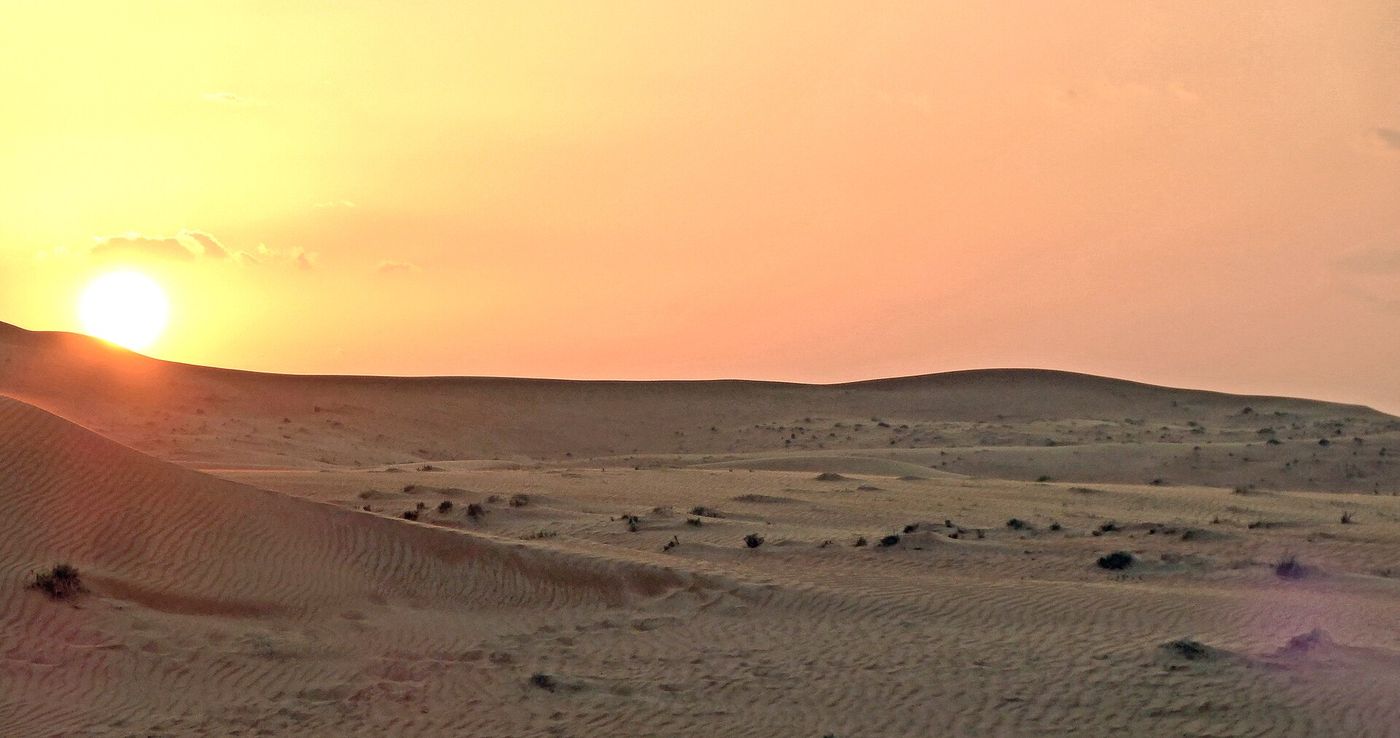
DUQM, Oman — The tanker that left the port of Duqm on Sunday evening carried 25,000 tons of ammonia and, for Oman’s government, the first proof that the desert along this stretch of the Arabian Sea can be turned into an export commodity without drilling into it.
The cargo, bound for Rotterdam, was produced at a plant that uses electricity from 1.2 gigawatts of solar and wind farms to split desalinated seawater into hydrogen, then combines the hydrogen with nitrogen to make ammonia, which is easier to ship. It is the first commercial-scale shipment of so-called green ammonia from the Gulf, and the sultanate has committed about 140 billion Omani rials, or $36 billion, in land allocations and partner investment to build an industry it hopes will produce 1 million tons of hydrogen a year by 2030 and 8 million by 2050.
“Oman does not have the oil reserves of its neighbors. What it has is 300 days of sun, wind off the coast and empty land next to deep water,” said Khalid al-Harthi, chief executive of the state hydrogen company, which auctions blocks of desert to developers. “We are selling the same thing we always sold, energy. We are just not digging it up.”
The economics are not yet settled. Green ammonia costs roughly twice as much to produce as ammonia made from natural gas, and the shipment to Rotterdam was sold to a German fertilizer company under a contract that European officials have said is subsidized through a carbon-contract scheme. Oman’s developers say costs will fall as electrolyzer prices decline; a 2025 study by an energy consultancy in Abu Dhabi estimated the sultanate could produce hydrogen at about $2.30 a kilogram by 2030, among the lowest in the world, if financing costs stay low.
The demand side is the harder question. Japan and South Korea have signed memoranda to buy Omani ammonia for power plants, but final contracts have been slower to arrive than the government expected, and a planned pipeline that would carry hydrogen from Oman to Europe through the Red Sea exists only as a study. Of the eight blocks auctioned since 2023, two have reached final investment decisions.
“Oman has built the supply before anyone has committed to buy. That is brave, and it may be right,” said Dr. Amal al-Busaidi, an economist at Sultan Qaboos University in Muscat. “But a tanker to Rotterdam is a demonstration. An industry is 50 tankers a year to buyers who have signed for a decade.”
For Duqm, a town that had 1,500 residents in 2010 and now has about 30,000, the hydrogen plant has arrived after a decade of promises that a refinery and a dry dock would make it a second Jebel Ali. Said al-Jabri, 41, who runs a transport company with 30 trucks, said he had learned to believe projects when the ships came. “The refinery came. The dock came. Now the ammonia,” he said. “Each one took longer than they said, and each one came.”
The next shipment is scheduled for December. The buyer has not been announced.
A version of this article appears in print on Oct. 12, 2026, Section A, Page 9 of the European edition with the headline: Oman Ships Its First Cargo of Green Ammonia, a Test of Whether the Gulf Can Sell Sunlight.



