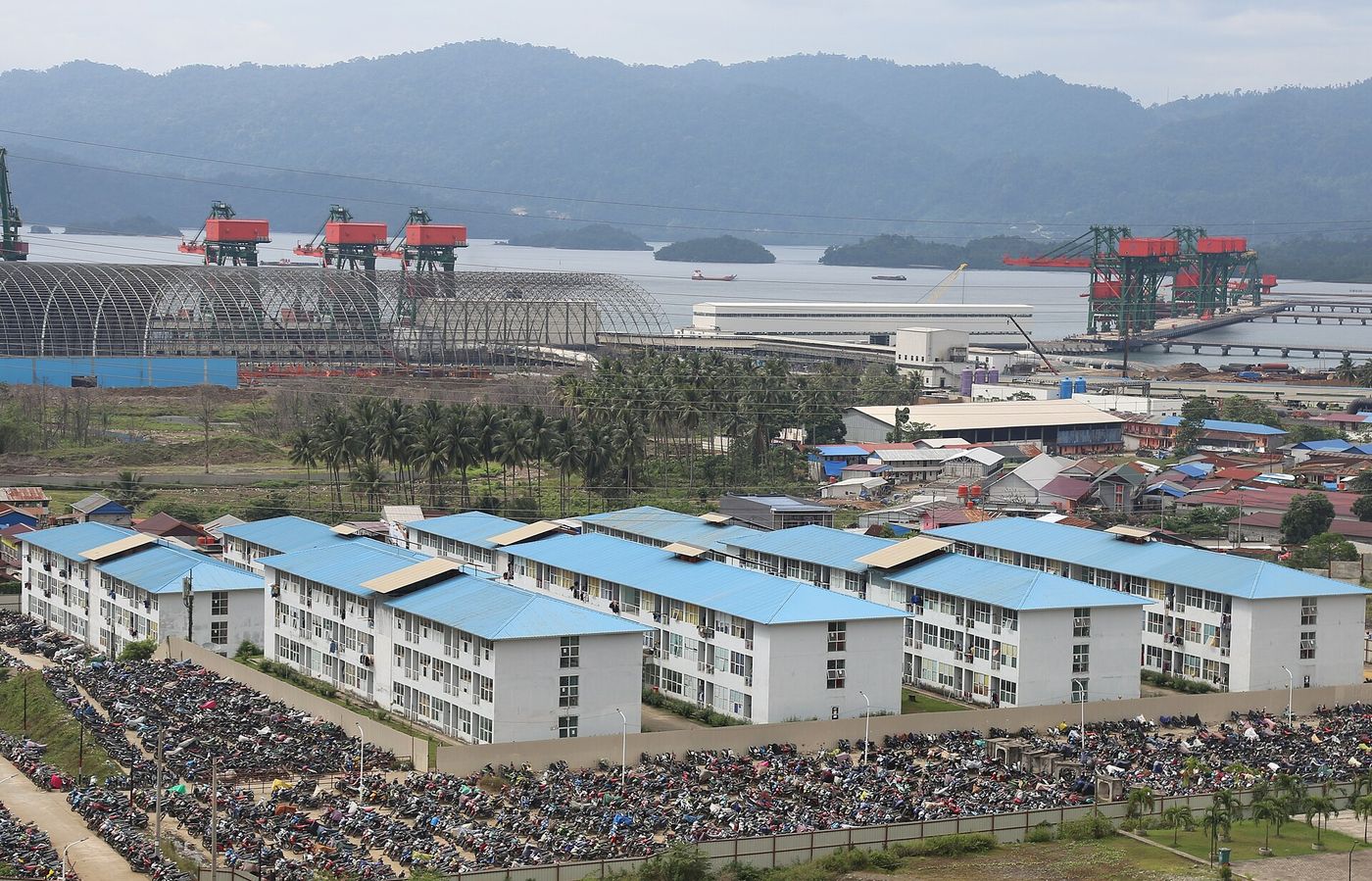
MOROWALI, Indonesia — The clinic in Bahodopi village used to see three or four cases of acute respiratory infection a week. Now it sees that many before lunch.
The village sits at the gate of the Morowali Industrial Park, a 4,000-hectare complex on the eastern coast of Sulawesi where Chinese and Indonesian companies smelt nickel ore into the stainless steel and battery precursors that have made Indonesia the world’s dominant supplier of the metal. The park produces about 10 percent of global nickel output and generated $21 billion in exports last year. It is powered by captive coal plants with a combined capacity of about 5.5 gigawatts, larger than the grid of many countries.
A study released last week by the public health faculty of Hasanuddin University in Makassar found that the rate of acute respiratory infection among children under 5 in the three villages nearest the park was 2.4 times the provincial average, and that fine particulate levels at monitoring sites in Bahodopi averaged 61 micrograms per cubic meter over 12 months, four times the World Health Organization guideline. The study was funded by a Jakarta foundation and has not been accepted by the park’s operators, who dispute its methodology.
“We have known for years what the sky looks like here,” said Dr. Siti Nurhaliza Lamadjido, the lead author and a pulmonologist who grew up in the regency. “What we did not have was a number. Now we do.”
Morowali has been Indonesia’s economic showcase. The government banned exports of raw nickel ore in 2020 to force foreign investors to build smelters at home, and the policy worked: the regency’s economic output grew tenfold in a decade, and the park employs about 85,000 people, a third of them migrants from Java and elsewhere. Villages that had no paved road in 2015 now have motorcycle dealerships and a cellphone tower every kilometer.
The park’s management company said in a statement that its plants met Indonesian emission standards, that it had installed electrostatic precipitators on all coal units and that it was constructing a 300-megawatt solar array that would reduce coal burn. It noted that the regency’s hospital, built in 2023, was funded by the park’s tenants. The environment ministry said it was reviewing the study and had carried out 14 inspections of the park this year, issuing warnings in four cases.
The pressure on the operators is increasingly commercial rather than regulatory. Automakers in Europe and South Korea that buy nickel for batteries have begun requiring suppliers to report emissions and air quality at the smelter level, and at least one has suspended a contract pending an audit. “The buyers do not want to be in a documentary,” said Arief Wicaksono, an analyst at an energy research group in Jakarta. “That is a stronger incentive than the ministry.”
In Bahodopi, Rosmini Taliu, 38, who sells fried bananas at the park gate, has a son who uses an inhaler. Her husband earns 6.2 million rupiah a month, about $380, as a crane operator inside the fence, nearly three times what he made fishing. “The park gave us a house and gave my son asthma,” she said. “Nobody asked which one we wanted.”
A version of this article appears in print on Oct. 12, 2026, Section A, Page 8 of the European edition with the headline: Indonesia’s Nickel Boom Made Morowali Rich on Paper. Its Residents Are Breathing the Cost.



