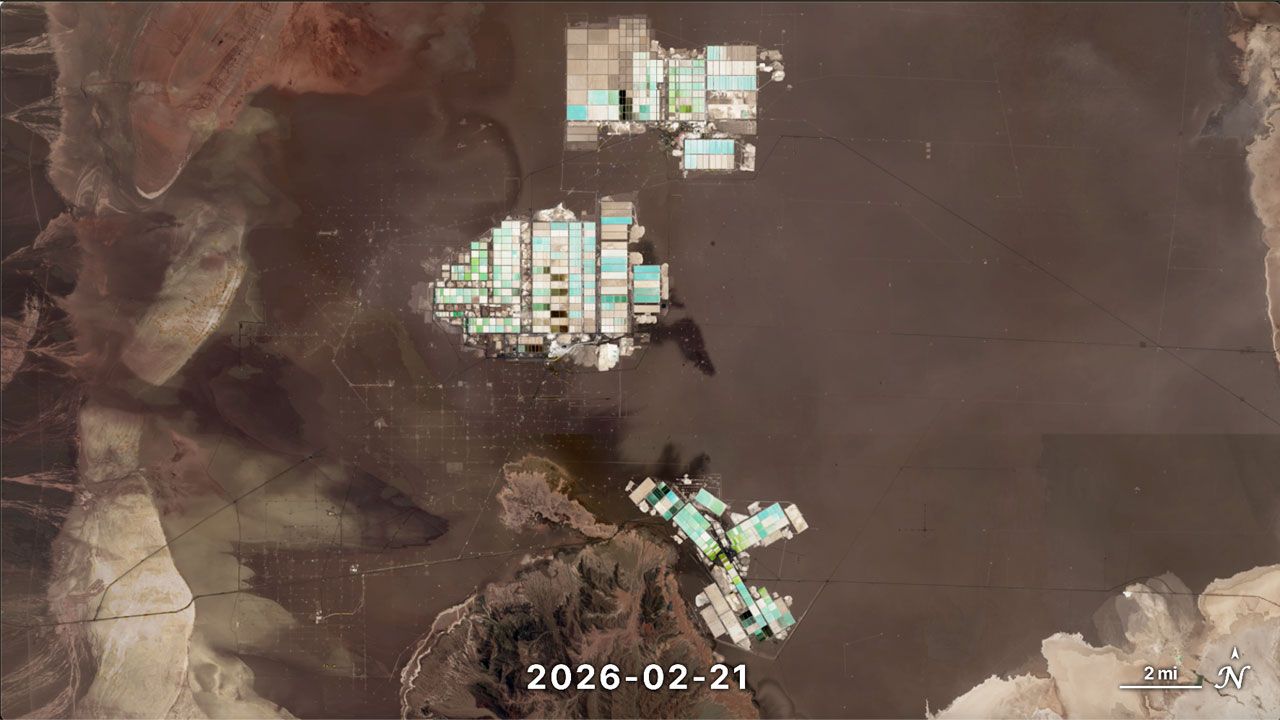
SAN PEDRO DE ATACAMA, Chile — The first shipment of lithium carbonate from Chile’s new state-controlled venture left the port of Antofagasta on Saturday, bound for a battery plant in South Korea. Four thousand tons, enough for roughly 70,000 electric car batteries, marked the moment the country’s National Lithium Strategy moved from legislation to cargo.
The venture, in which the state copper company Codelco holds a majority stake alongside the private producer that has operated on the Salar de Atacama since the 1980s, took control of the operation in January. Under the terms, the state receives about 70 percent of operating margins over the life of the contract, which runs to 2060, up from the roughly 50 percent that royalties and taxes previously captured.
“This is what sovereignty over a resource looks like in practice: not nationalization, but the state at the table with a majority of the chairs,” said Valentina Rojas Undurraga, a mining economist at the University of Chile. “Whether it works depends on whether Codelco can run a chemical business, which it has never done.”
Chile holds the world’s largest lithium reserves and was the top producer until Australia overtook it a decade ago. Production stagnated in recent years amid regulatory uncertainty, falling prices, and a running dispute with the 18 Indigenous Atacameño communities that ring the salt flat over water. The venture aims to raise output to 300,000 tons a year by 2030, from about 200,000 now, using a new direct-extraction process that it says will cut brine pumping by half.
The communities are not convinced. Their council, which signed a benefit agreement in 2024 worth 3.5 percent of sales, says monitoring data it has gathered since show that the freshwater lagoons at the edge of the salar continue to shrink.
“They tell us the new technology will fix it. We have heard that about every technology,” said Ricardo Cruz Anza, president of the community of Peine, 100 kilometers south of San Pedro. “We want a seat on the board, not a check.”
The venture has agreed to an independent hydrological review, due in March, and has committed to building a desalination pipeline from the coast by 2029 to replace freshwater use at the plant. Environmental groups note that the pipeline would cross a national reserve.
The government, meanwhile, is pressing ahead. It has opened bidding for six other salt flats under the same state-majority model and signed a preliminary agreement with a European consortium to build a cathode material plant near Antofagasta, which would be the first in South America.
Prices remain the wild card. Lithium carbonate sold for about $11,000 a ton last week, a fifth of its 2022 peak, as Chinese supply flooded the market. At that level, the venture’s profits are modest. “We built the strategy for a boom,” Ms. Rojas said. “We are launching it in a bust.”
A version of this article appears in print on Oct. 12, 2026, Section A, Page 5 of the European edition with the headline: Chile’s State-Run Lithium Venture Ships Its First Cargo as Atacama Communities Press for a Share.



