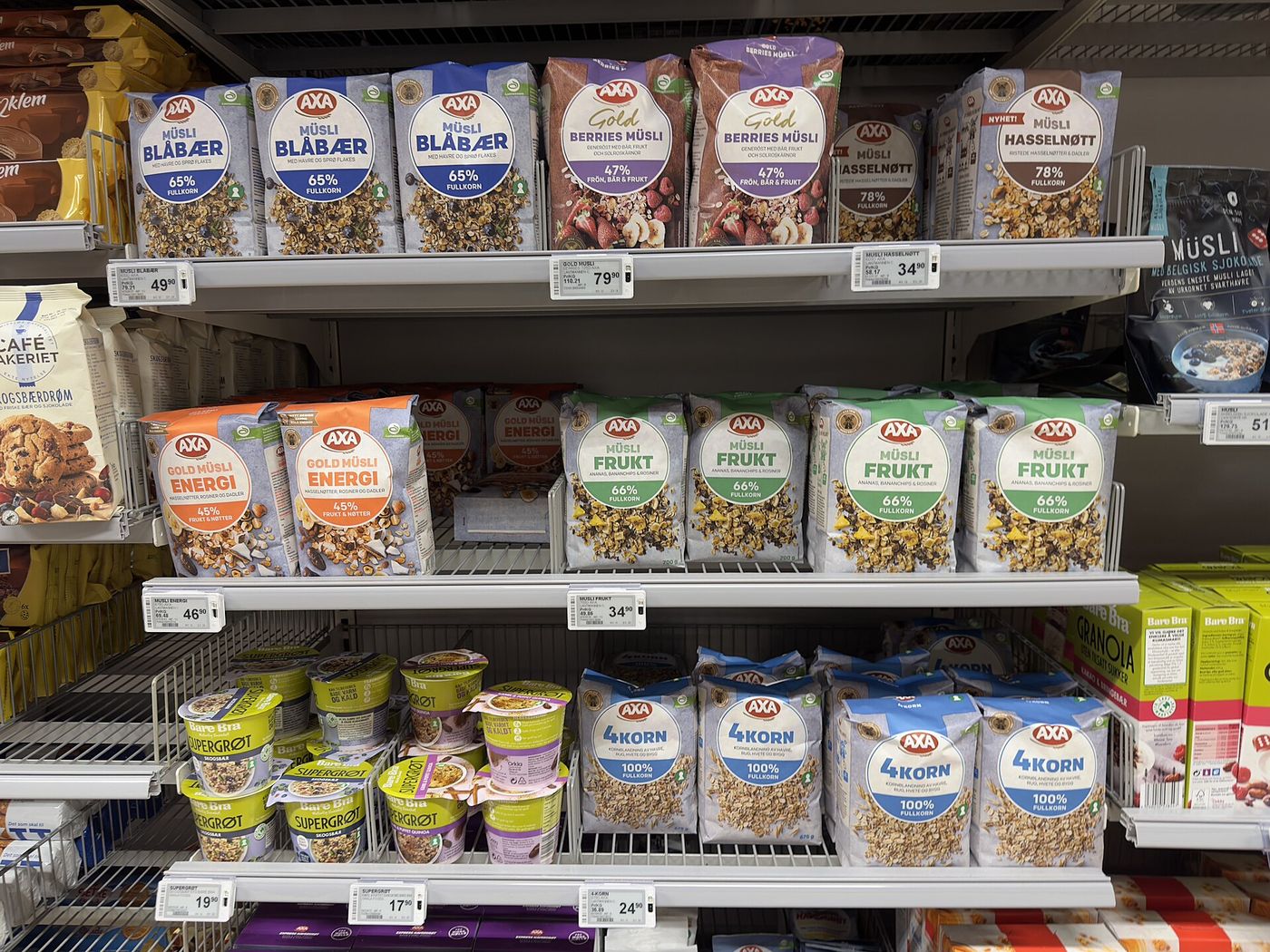
LONDON — Sales of breakfast cereals classified as high in sugar fell 3.4 percent in Britain in the first nine months after a ban on advertising them on television before 9 p.m. and online at any time, according to an analysis published Monday, the first evidence of what the long-delayed policy has done to the national shopping basket.
The analysis, by researchers at the University of Cambridge using supermarket loyalty card data from 1.2 million households, found a smaller decline, 1.9 percent, for sugary drinks, and no statistically significant change for confectionery, which fell 0.3 percent. Households with children under 12 showed roughly double the overall shift. Sales of cereals reformulated to fall below the sugar threshold, which food companies can still advertise, rose 7 percent.
“This is what a modest, well-designed policy looks like in the data,” said Dr. Olivia Hartley, the public health researcher who led the study. “Nobody serious expected the ad ban to empty the chocolate aisle. The point was to take the pressure off children, and in cereals, the category most aimed at children, that is what we see.” She estimated that the change, if sustained, would reduce the average child’s sugar intake by about 2 grams a day, a small fraction of the 50 grams the typical British 10-year-old consumes.
The ban, first proposed in 2020 and postponed three times under pressure from broadcasters and food manufacturers, took effect in January. It bars advertisements for products high in fat, salt or sugar, defined by a government scoring system, on television before the watershed and in all paid online advertising. Brand advertising that does not show a specific product remains legal, which is why cartoon mascots still appear on screen, now promoting a company rather than a cereal.
The advertising industry said the data showed the ban had barely moved behavior while costing broadcasters an estimated 200 million pounds in lost revenue. “A 3 percent change in cereal and nothing in chocolate is not a public health intervention. It is a rounding error with a very large bill attached,” said Simon Treadwell, director of a trade association representing advertisers. He argued that the rise in reformulated products showed companies had already been responding to a sugar levy on drinks that took effect in 2018.
Dr. Hartley said that was the point. “Reformulation is the goal,” she said. “If a company cuts sugar in a cereal so it can advertise it, the child who eats it does not care why.”
Rachel Osei, a nurse in Croydon with two sons aged 7 and 9, said she had noticed the change less at the supermarket than on the sofa. “They used to sing the jingles,” she said. “Now they ask for the thing the footballer eats, which is a yogurt. I will take the yogurt.”
The government is due to review the policy in 2028 and has said it will consider extending it to billboards and sports sponsorship, as the Netherlands and Spain have done.
A version of this article appears in print on Oct. 12, 2026, Section A, Page 5 of the European edition with the headline: Nine Months Into Britain’s Junk Food Ad Ban, Sugary Cereal Sales Have Slipped. Chocolate Hasn’t..