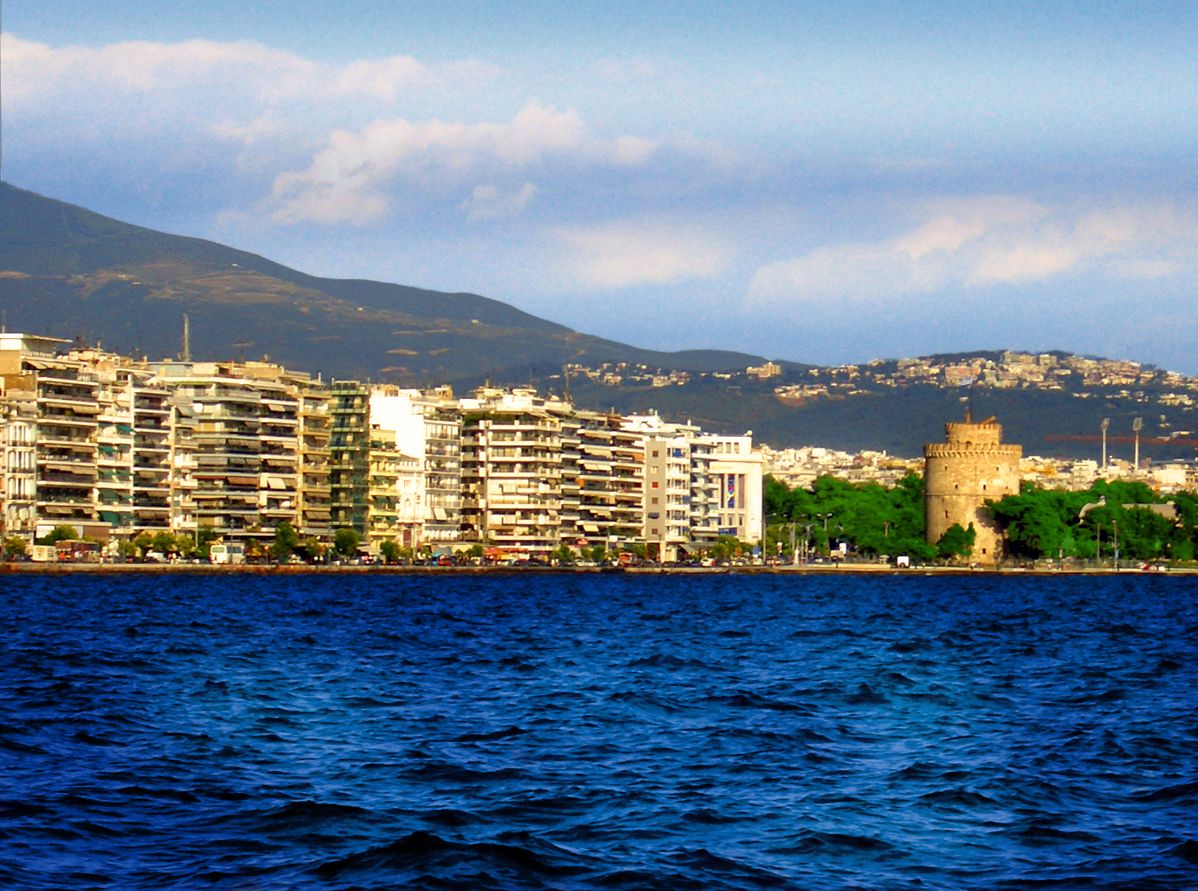
THESSALONIKI, Greece — The lecture hall on Tsimiski Street in Thessaloniki holds 180 students, and on a Tuesday morning in October every seat was taken for an introductory course in business analytics. The scene would be unremarkable anywhere else in Europe. In Greece, where the Constitution has reserved higher education to the state since 1975, it is the result of a political fight that lasted a decade and is not finished.
Four nonstate universities, each operating under a license from a foreign institution and authorized by a 2024 law, began teaching this month with a combined 3,200 students, the Education Ministry said. Two are in Athens, one in Thessaloniki, and one has campuses in both. Tuition ranges from 9,000 to 14,000 euros a year, in a country where state universities are free and the average monthly salary is about 1,350 euros.
“We are not competing with the state universities,” said Yannis Papadakis, the dean of the Thessaloniki institution, which is affiliated with a British university. “We are competing with Bologna, Rotterdam, and Nicosia.” About 40,000 Greeks study abroad, among the highest rates in the E.U. relative to population, and the government has argued for years that keeping even a quarter of them at home would be worth more than the symbolic cost of ending the monopoly.
Opponents argue that the cost is not symbolic. Article 16 of the Greek Constitution bars the establishment of universities by private individuals, and the 2024 law sidestepped it by classifying the new institutions as branches of foreign universities rather than Greek ones. A challenge is pending before the Council of State, the country’s highest administrative court, and the professors’ union has asked it to suspend the licenses. “A branch is a university with a different letterhead,” said Nikos Theodorou, the union’s president. “Either the Constitution means something or it does not.”
Sofia Karagianni, the ministry’s secretary general for higher education, said the government was confident the law would survive. She noted that private colleges offering foreign degrees had operated in a legal gray zone in Greece for 20 years without the ability to call themselves universities or have their degrees fully recognized. “We did not create private higher education,” she said. “We admitted it exists, and we regulated it.”
The students seem less interested in the constitutional question. Eleni Konstantinou, 18, from Kavala, said she had been admitted to a state university in Patras to study economics and had chosen Thessaloniki instead, with her parents paying. “Patras would have been free and I would have finished in six years, if I was lucky, in a department with 400 students per professor,” she said. “Here they know my name. My father says that is worth a car.”
Professors at the state universities, where enrollment fell 3 percent this year, said they were watching. “If the private universities are better, the lesson is that we need funding,” said Dimitra Vlachou, who teaches economics at the Aristotle University of Thessaloniki. “If they are worse, the lesson is the same. Either way, nobody is going to draw it.”
A version of this article appears in print on Oct. 12, 2026, Section A, Page 8 of the European edition with the headline: Greece’s First Private Universities Open Their Doors, Ending a 50-Year State Monopoly.



