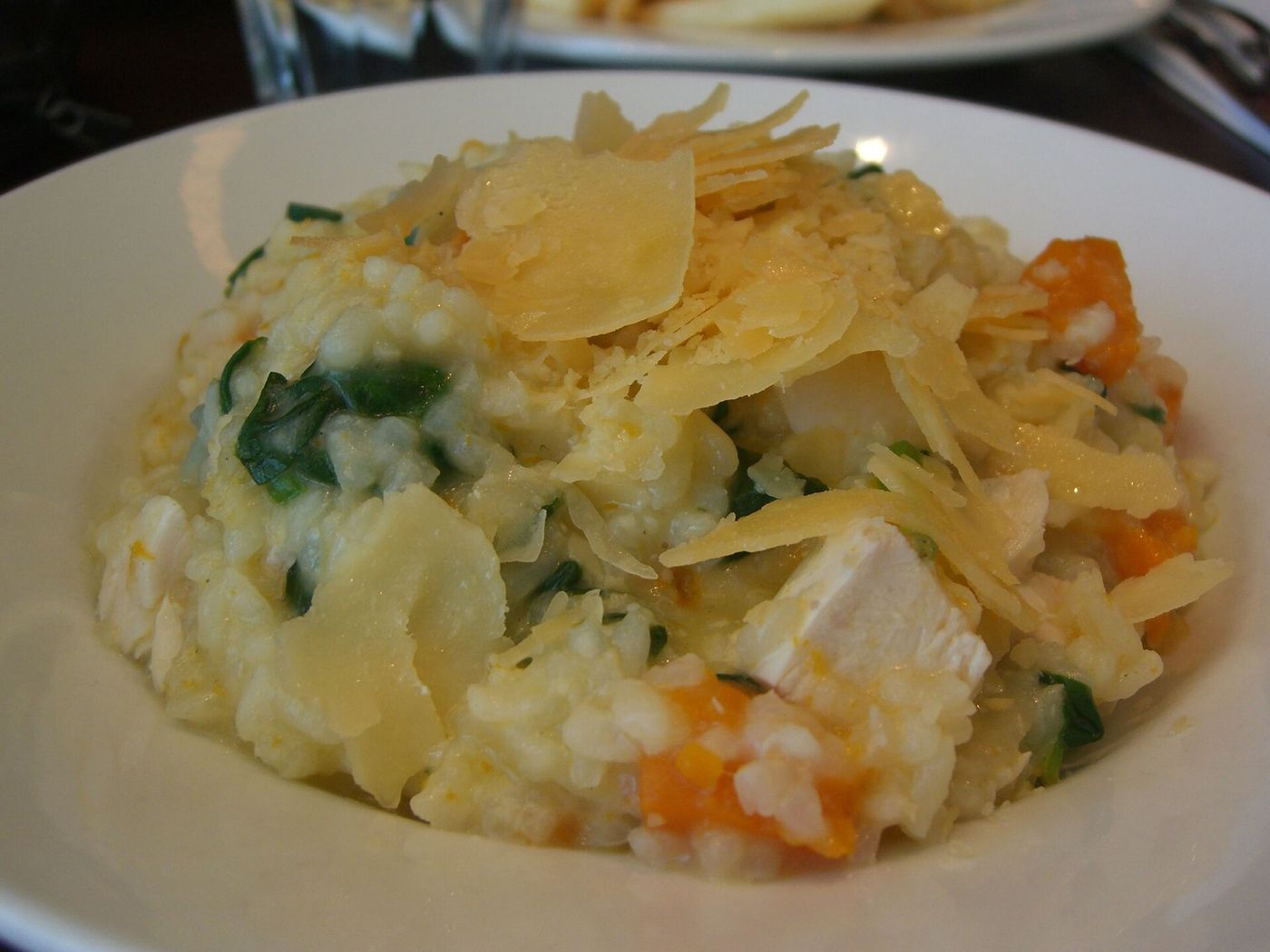
The problem with most pumpkin risotto is that the pumpkin is cooked in the pot with the rice, where it dissolves into an orange paste that tastes mainly of warmth. The fix is to roast half of it until it caramelizes at the edges, fold it through at the end for texture, and roast the other half softer, to mash into the rice for color and body. The result is a risotto that tastes of squash rather than of the idea of squash. The brown butter with sage, poured over at the table, is what the whole dish has been waiting for.
Use a dense, dry-fleshed squash: a small Hokkaido or kabocha, or a wedge of Crown Prince or butternut. Watery jack-o’-lantern pumpkins will not do. For the rice, carnaroli holds its shape best, though arborio is fine.
Ingredients, for 4: 1 kilogram dense winter squash, peeled, seeded and cut into 2-centimeter cubes; 4 tablespoons olive oil; 1.3 liters chicken or vegetable stock; 1 small onion, finely chopped; 320 grams carnaroli or arborio rice; 150 milliliters dry white wine; 60 grams Parmesan or Grana Padano, finely grated, plus more to serve; 90 grams unsalted butter; 16 sage leaves; a pinch of freshly grated nutmeg; salt and black pepper; a squeeze of lemon.
Roast the squash. Heat the oven to 220 degrees Celsius. Toss the cubes with 3 tablespoons of the oil and a good pinch of salt and spread them on two baking sheets. Roast for 25 to 30 minutes, turning once, until tender and browned at the edges. Set aside a third of the cubes, the best-browned ones, for folding in whole. Mash the rest roughly with a fork.
Make the risotto. Bring the stock to a bare simmer in a pan and keep it there. In a wide, heavy pot, warm the remaining tablespoon of oil and 30 grams of the butter over medium heat, add the onion with a pinch of salt and cook gently for 6 minutes until soft. Add the rice and stir for 2 minutes until the grains are hot and translucent at the edges. Pour in the wine and stir until it has been absorbed. Then add the stock a ladleful at a time, stirring often and adding the next ladle when the last has nearly gone. After about 12 minutes, stir in the mashed squash. Keep going, tasting from 16 minutes, until the rice is tender with a slight bite, about 18 to 20 minutes in all. The risotto should be loose enough to spread slowly on the plate; add a last splash of stock if it is stiff.
Finish. Off the heat, beat in the cheese, 20 grams of the butter, the nutmeg, a squeeze of lemon and plenty of black pepper. Fold in the reserved whole squash cubes. Taste for salt. Cover and let it rest for 2 minutes.
Brown the butter. While the risotto rests, melt the remaining 40 grams of butter in a small frying pan over medium heat. Add the sage leaves and cook, swirling, until the butter foams, turns the color of hazelnuts and smells nutty, and the leaves have gone crisp and dark green, about 3 minutes. Take it off the heat immediately. Spoon the risotto onto warm plates, pour over the brown butter and sage, and finish with more cheese. Eat at once; risotto does not wait.
A version of this article appears in print on Oct. 12, 2026, Section C, Page 10 of the European edition with the headline: Pumpkin Risotto With Brown Butter and Sage Is Worth the Stirring.