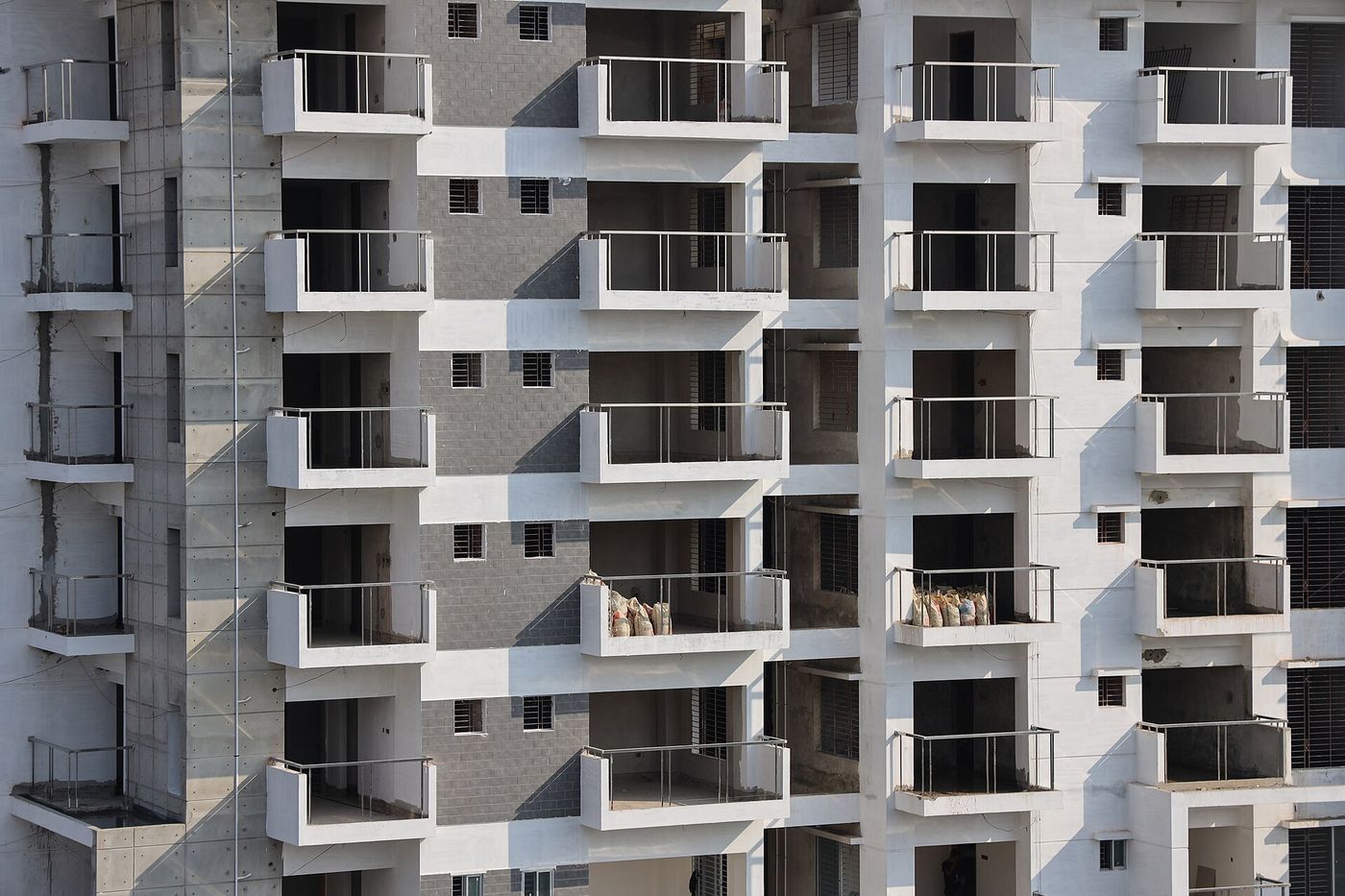
LEIPZIG, Germany — On a former freight yard west of the city center, the cranes are moving again. The Elbquartier project, 640 apartments that were approved in 2022, halted in 2023 and written down in 2024, broke ground for its second phase this month, one of hundreds of German housing projects to come back from the dead this year.
Permits for new homes rose 14 percent from a year earlier in August, to 23,400, the sixth consecutive monthly increase, the federal statistics office reported on Wednesday. Completions fell to about 215,000 homes in 2025, the fewest since 2010 and far below the government’s target of 400,000, but the permit data suggest the trough has passed. Mortgage rates for 10-year fixed loans have fallen to about 3.3 percent from 4.2 percent two years ago, and a 2025 law that lets municipalities waive parts of the building code for residential projects has shortened approval times from an average of 14 months to about six.
“The projects that are starting now were designed for 2 percent money, frozen at 4 percent and are being built at 3.3,” said Matthias Rönnefeld, chief executive of Elbquartier Wohnbau, the developer. “Nobody is making the returns they planned. But a half-finished project earns nothing, and a finished one at least earns rent.”
Costs remain the obstacle. Building an apartment in a German city now costs about 4,100 euros a square meter before land, nearly 40 percent more than in 2020, pushed up by energy efficiency standards, materials and wages. Developers say they can only make new construction work at rents of 16 to 18 euros a square meter, roughly double the average existing rent in cities like Leipzig, where asking rents have nonetheless risen 9 percent in a year.
Economists estimate the national shortfall at about 800,000 homes, concentrated in the seven largest cities and their suburbs. “Germany did not stop needing homes in 2023. It stopped building them,” said Anneliese Vogt, who leads housing research at an economic institute in Halle. “Three years of a 200,000-home deficit does not reverse because permits are up 14 percent. It reverses when we build 350,000 a year for a decade, and we are not close.”
Some of the revival is coming from methods the industry long resisted. Modular and prefabricated construction, in which bathrooms, walls and even whole apartments are built in factories and assembled on site, accounted for about 11 percent of new multifamily starts this year, up from 4 percent in 2021. Two of the largest housing companies have said they will build only prefabricated units for the rest of the decade.
For tenants, the turn has yet to register. Svenja Kordes, 31, a nurse, has been looking for a two-room apartment in Leipzig for seven months and has attended viewings with more than 40 other applicants. “They say they are building again,” she said. “I will believe it when there are fewer people in the stairwell.”
Mr. Rönnefeld, the developer, said the first tenants of the Elbquartier’s second phase would move in at the end of 2028. “That is what a turn looks like,” he said. “It is a long way from a permit to a key.”
A version of this article appears in print on Oct. 12, 2026, Section B, Page 11 of the European edition with the headline: After Three Lost Years, Germany Is Building Homes Again.