TEN COUNTRIES, ONE RIVER: A Human History of the Danube. By Zoltán Ferencz. Translated by Judith Keller. 488 pages. Illustrated. Vantage. $35.
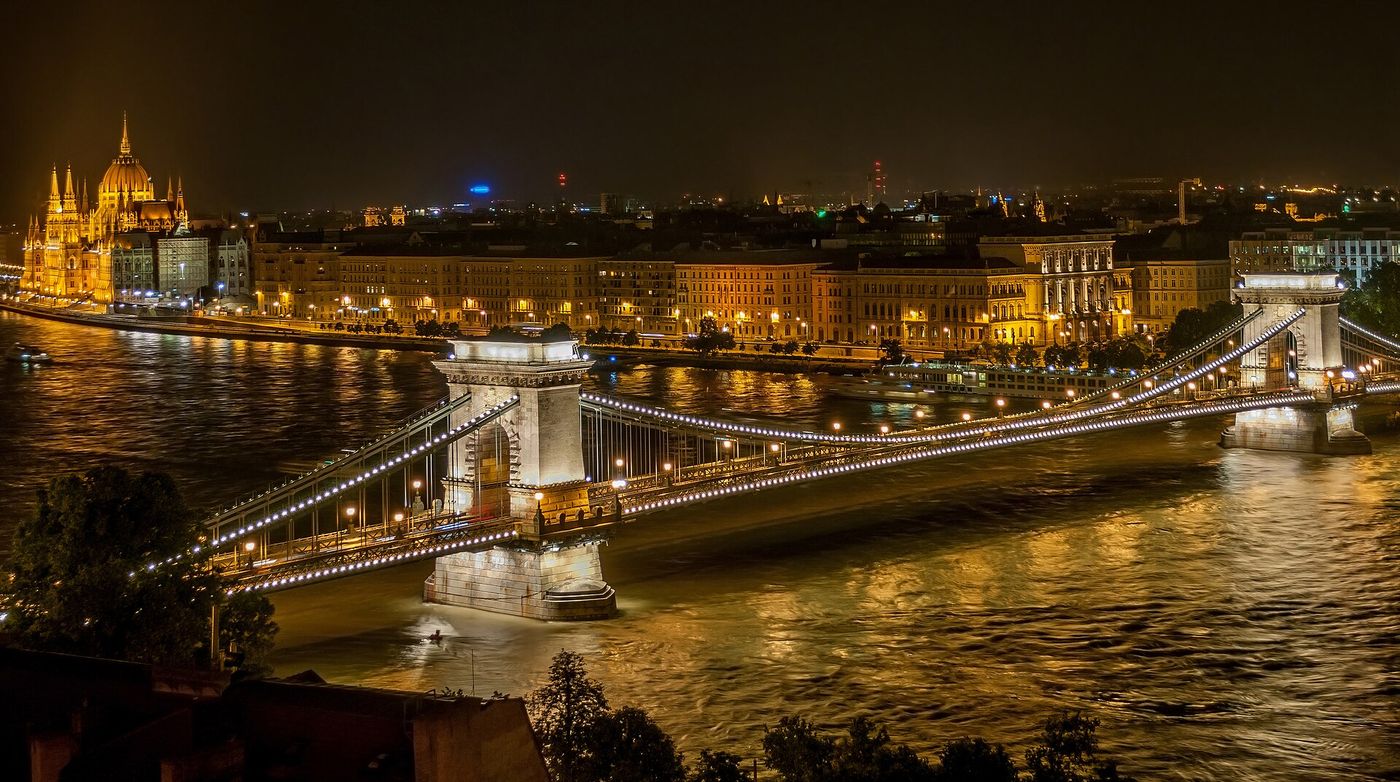
Rivers make bad subjects for history books because they refuse to stay in one country, and historians, on the whole, prefer countries. The Danube, which rises in the Black Forest and reaches the Black Sea 2,850 kilometers later having touched 10 nations and four capitals, has been written about mostly in pieces: the Habsburg Danube, the Ottoman Danube, the Communist Danube. Zoltán Ferencz’s new book is an attempt to write about the whole thing, and it very nearly succeeds.
Mr. Ferencz, 58, teaches at the Central European University in Vienna and grew up in Mohács, in southern Hungary, where his father was a ferry pilot. His method is to travel downstream and to tell the river’s story through its workers rather than its rulers: the Bavarian raftsmen who floated timber to Vienna until the 1920s, the Serbian pilots who guided ships through the Iron Gates gorge before it was dammed, the Romanian fishermen of the delta, the Bulgarian engineers who built the bridge at Ruse in 1954 and were forbidden to speak to their Romanian counterparts on the other side.
The result is a book full of people who have never been in a history book before, and Mr. Ferencz is a generous and patient listener. A chapter on the 1956 refugees who crossed the Danube from Hungary into Austria at Andau is built almost entirely from interviews with survivors, now in their 80s, and is the best thing in the book. A chapter on the 1990s, when NATO bombing dropped three bridges into the river at Novi Sad and shipping stopped for four years, is nearly as good.
Where the book is weaker is where it is most ambitious. Mr. Ferencz wants the river to stand for a certain idea of Europe, connected, plural, indifferent to borders, and he returns to this idea more often than it can bear. The Danube has been a border at least as often as it has been a bridge, and the book’s final chapter, which surveys the river’s present as a corridor for Ukrainian grain and a battleground over dredging and drought, acknowledges this without quite integrating it.
Judith Keller’s translation is clear and often elegant, though it occasionally leaves Hungarian idioms stranded in English. The 60 illustrations, many of them from private family albums, are well chosen, and the maps, one for each of the 10 countries, are genuinely useful.
Mr. Ferencz ends in the delta, at the village of Sfântu Gheorghe, watching the river disperse into the sea. “It does not end,” he writes. “It simply stops being a river.” It is a fitting conclusion to a book that is at its best when it stops trying to be a thesis and lets the water run.
A version of this article appears in print on Oct. 12, 2026, Section A, Page 2 of the European edition with the headline: Review: A History of the Danube That Follows the Water, Not the Empires.