AMSTERDAM — There is a moment about 25 minutes into “Zout,” the new evening-length work by Jorrit van Daalen for Dutch National Ballet, when the entire corps of 24 dancers lies down on the stage and begins, very slowly, to breathe. Their chests rise and fall in sequence, front to back, so that a wave appears to pass through the bodies. It lasts perhaps 90 seconds. It is the most beautiful thing I have seen on a European ballet stage this year.
Mr. van Daalen, 37, who spent eight years as a dancer with the company before turning to choreography, has made short pieces for it since 2021, mostly brisk, witty, and over in 20 minutes. “Zout,” which means salt, is his first full-length commission and the company’s first from a Dutch choreographer since 2017. It is 95 minutes without an intermission, set to a new score by the composer Femke Oosterhuis for strings, electronics, and a choir of 16, and it is about, as far as it is about anything, the North Sea.
The work is in three sections. The first, danced in gray-green unitards under a low ceiling of hanging rope, is the strongest: tight ensemble passages built on a swinging, pendular phrase that recalls the clean Dutch classicism of the company’s postwar repertory in its clarity and nobody at all in its weight. The dancers do not float. They are pulled. Mr. van Daalen has a gift for making the corps look like a single organism without ever letting the individual bodies disappear, and in a quartet for four men that closes the section, the organism briefly splits, reforms, and dissolves.
The second section, a long duet for the principal Ruben Mertens and the young soloist Lieke Bakker, is where the evening sags. The movement is intimate and searching, but Ms. Oosterhuis’s score thins out to a single sustained chord, and the duet, which runs nearly 20 minutes, has no architecture to lean on. Mr. Mertens and Ms. Bakker are superb, but they are superb for longer than the material can bear.
Then the rope ceiling descends, the choir enters, and the third section returns to the ensemble with a force that justifies the wait. The breathing passage recurs, inverted, with the dancers standing. A storm sequence, lit by Theun Smits in a bruised white, is danced at a speed that made the audience audibly gasp. The ending, a single dancer walking upstage into darkness while the others lie still, is conventional, but Mr. van Daalen has earned the convention.
“Zout” is not yet the masterpiece the company has been waiting for. Cut by 15 minutes and given a second section that moves, it could be. On Thursday the company danced it as if it already were, and that counted for a great deal.
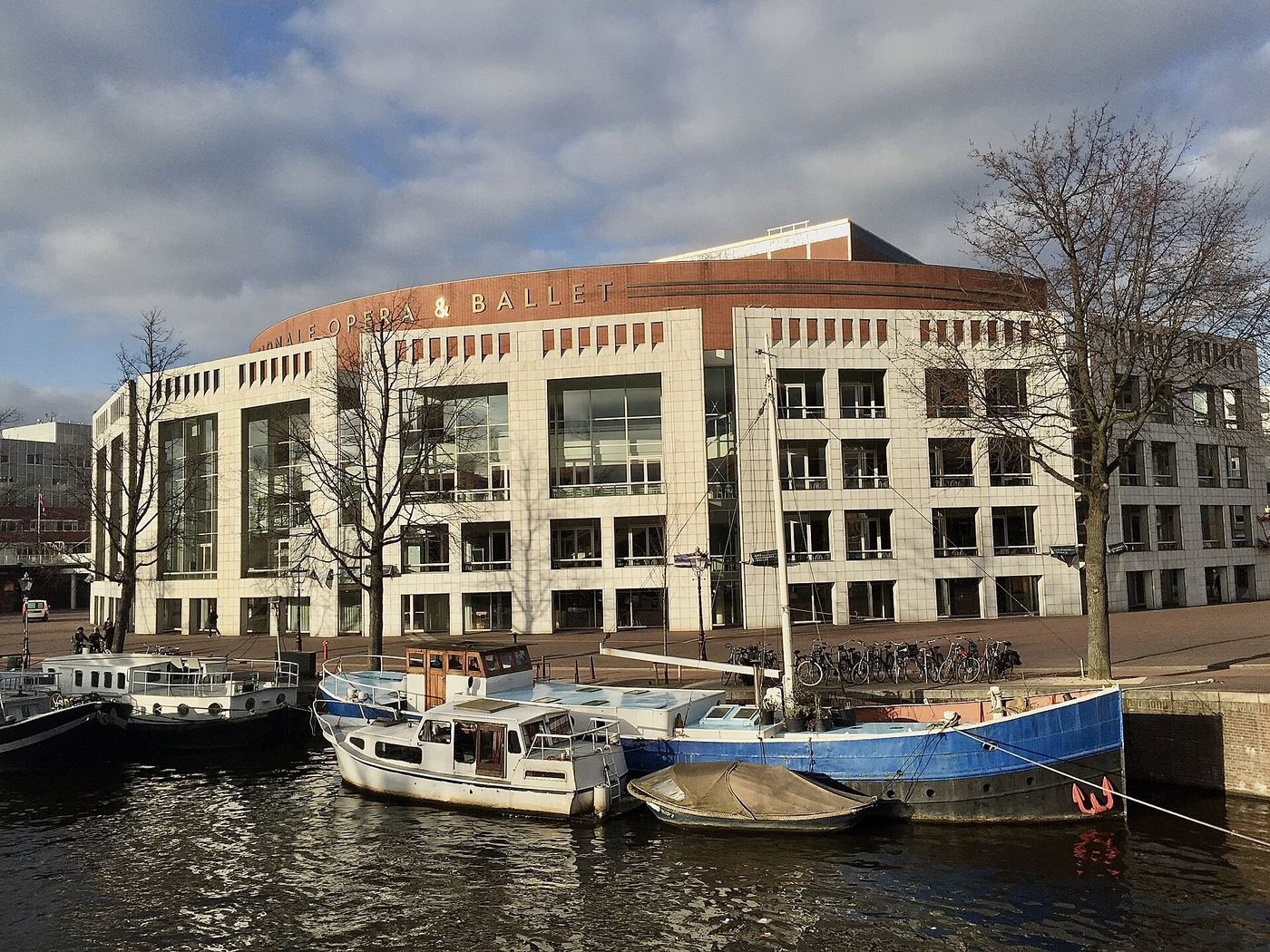
“Zout” continues through Nov. 2 at Dutch National Opera and Ballet, Amsterdam.
A version of this article appears in print on Oct. 12, 2026, Section C, Page 5 of the European edition with the headline: Review: At Dutch National Ballet, a Choreographer Finds the Sea in 24 Bodies.