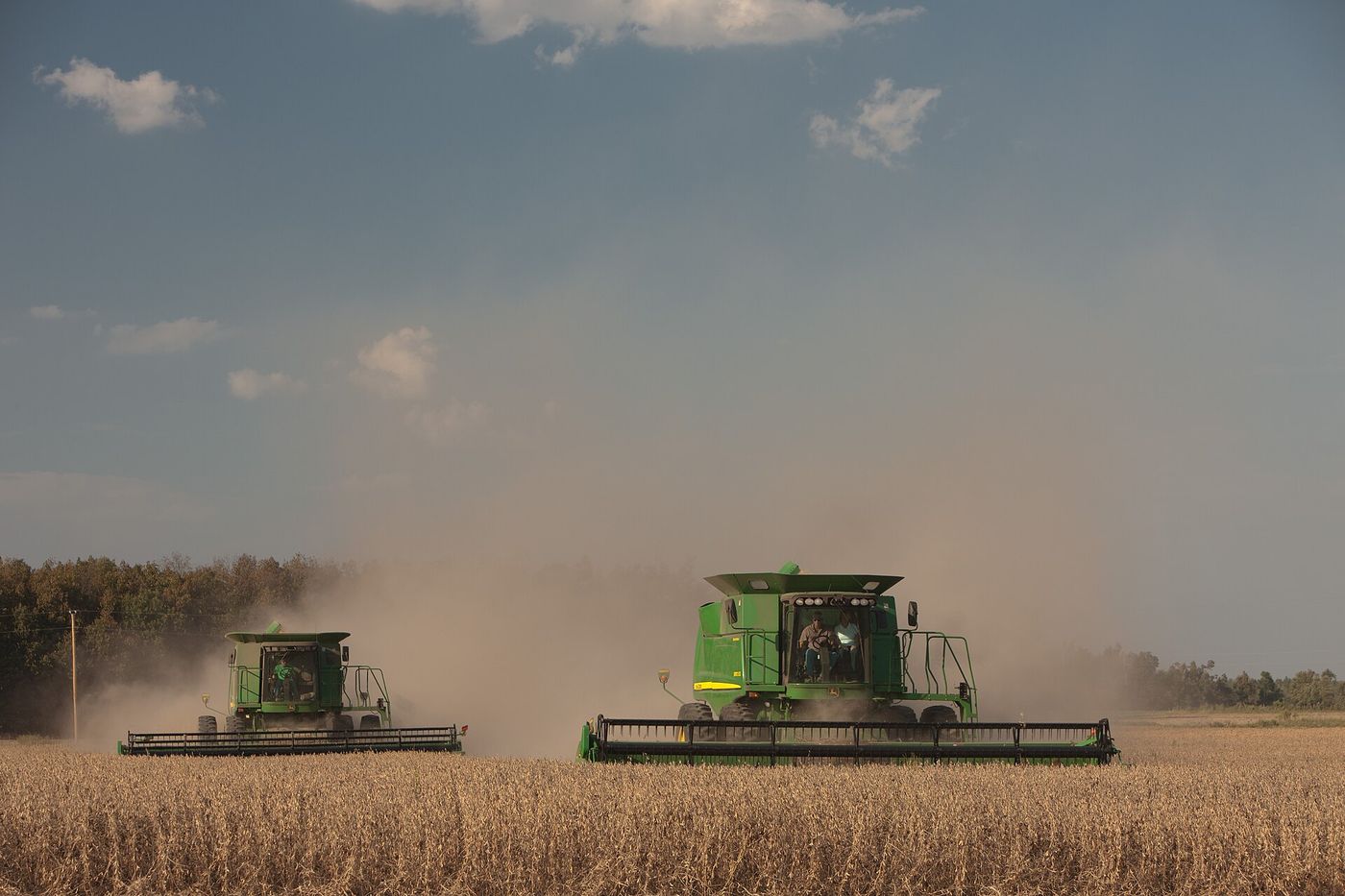
SIDNEY, Ohio — The trucks start lining up at 5 a.m. on Route 47, a mile-long queue of grain haulers waiting to tip their soybeans into the pits of a plant that did not exist two years ago. By the end of October, the facility will have taken in its 40 millionth bushel.
The plant, one of seven large soybean crushing facilities that have opened across the Midwest since 2023, is part of a quiet transformation of the American farm economy. Soybeans, long grown mainly for animal feed and export to China, are increasingly being pressed for oil to make renewable diesel, a fuel that West Coast refineries blend to meet California’s low-carbon standards and that the federal government subsidizes through a tax credit worth up to $1 a gallon.
United States crushing capacity has risen 22 percent since 2022, to about 2.8 billion bushels a year, according to the National Oilseed Processors Association. The country now processes more than half of its own crop, up from 40 percent a decade ago.
For farmers within 60 miles of a plant, the effect has been immediate. The local price for soybeans, known as the basis, has strengthened by 30 to 50 cents a bushel relative to the Chicago futures price, said Gregory Thalmann, a grain merchandiser with a cooperative in Shelby County. “That is real money,” he said. “On 1,000 acres, it is $20,000 a year that used to go to the railroad.”
Barbara Kessling, who farms 1,400 acres with her brother outside Sidney, said the plant had changed how the family plans. They have shifted 200 acres from corn to soybeans and are considering a storage bin to time sales. “Ten years ago, if China sneezed, we got the flu,” she said. “Now I sell to a guy I can see from the county road.”
Economists warn, however, that the new demand rests on policy. The federal clean fuel credit is scheduled for review in 2027, and the price of renewable diesel has fallen 18 percent this year as new refining capacity came online faster than fuel demand. Two planned crushing plants in Nebraska and South Dakota were paused in the summer.
“We have built a lot of steel on the assumption that the credit stays,” said Monica Alvarez-Reid, an agricultural economist at Ohio State University. “If it goes, the beans do not disappear, but the premium does, and some of these plants will be running at 60 percent.”
There is also the matter of the meal. Crushing a bushel of soybeans yields about 11 pounds of oil and 44 pounds of protein meal, and the surge in crushing has flooded the market with meal, pushing its price to a nine-year low and squeezing the margins of plants that count on it for a third of their revenue. Exporters have found buyers in Mexico and Southeast Asia, but shipping costs eat into the gains.
On Route 47, none of that slowed the line. By noon on Saturday the queue had moved steadily, and Ms. Kessling’s brother, Dale, was on his third delivery. “We will worry about Washington in the winter,” he said. “Right now the beans are dry and the price is good.”
A version of this article appears in print on Oct. 12, 2026, Section A, Page 13 of the European edition with the headline: In the Corn Belt, a Rush to Crush Soybeans Reshapes the Farm Economy.



