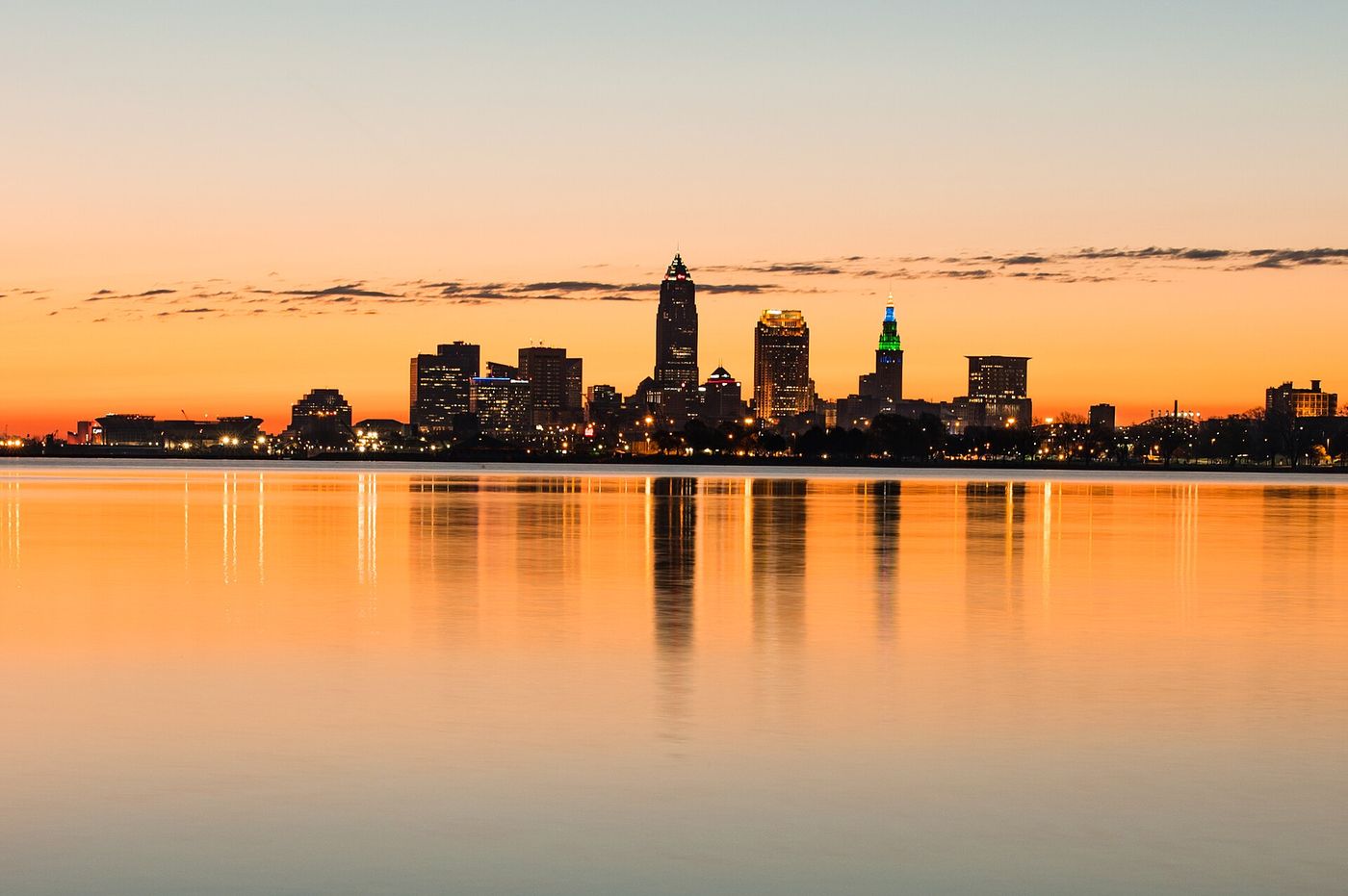
CLEVELAND — The 22nd floor of the old Standard Building used to hold an insurance company’s claims department. On Saturday morning it held a yoga class, a toddler on a scooter, and Tomas Herrera, a 34-year-old nurse who moved in last spring and pays $1,450 a month for a one-bedroom with a view of Lake Erie.
“I grew up thinking downtown was where you went for a baseball game and then left,” Mr. Herrera said. “Now I walk to work. My parents still don’t believe it.”
Cleveland has quietly become one of the most successful laboratories in the United States for converting obsolete office buildings into housing. Since 2023, 12 towers in the central business district have been turned into apartments, adding roughly 2,900 units, according to the Downtown Cleveland Alliance, a business improvement group. Nine more conversions, with about 2,100 units, are under construction, and the downtown residential population, which stood at 15,000 in 2019, passed 25,000 this summer.
The office vacancy rate downtown, which peaked at 31 percent in 2024, has fallen to 19 percent, not because tenants returned but because the buildings stopped being offices.
Several factors made Cleveland’s towers easier to convert than those in larger cities. Many were built before 1960, with narrow floor plates and operable windows that let natural light reach every apartment. Prices were low enough that developers could buy a 300,000-square-foot building for less than $15 million. And a state historic tax credit, stacked with a federal one and a county program that forgives property taxes for 15 years, covered as much as 45 percent of project costs.
“The math in Cleveland works in a way it does not in Chicago or San Francisco,” said Deborah Lindqvist, a real estate economist at Cleveland State University. “You can buy the building for what a renovation of one floor would cost in Manhattan.”
The conversions are not without strain. Residents complain that grocery options remain thin, and the city has struggled to keep up with demand for a downtown elementary school, which opened in a converted bank building in August with 180 pupils and a waiting list of 90. Rents, while low by coastal standards, have risen 22 percent since 2022, and some longtime residents of nearby neighborhoods say they are being priced toward the suburbs.
Developers are also running out of easy buildings. The remaining empty towers, mostly built in the 1970s and 1980s with deep floors and sealed glass, cost far more to carve into apartments. One developer, Okafor Properties, has proposed removing the center of a 1983 tower to create an internal light well, at a cost it put at $38 million.
City officials nonetheless say the gamble has paid off. Downtown income tax receipts, the city’s main revenue source, rose 6 percent last year even as office employment fell. On Saturday, a new grocery store opened on the ground floor of a converted tower on Euclid Avenue, its first customers lining up before the doors opened at 8 a.m.
A version of this article appears in print on Oct. 12, 2026, Section A, Page 4 of the European edition with the headline: Cleveland Turns Its Empty Office Towers Into Apartments, and a Downtown Fills Back Up.



