MARSEILLE, France — A gray cable about as thick as a garden hose came ashore on a beach north of this city at dawn on Tuesday, pulled by a winch through a buried conduit while a few dozen engineers watched from the sand. It had traveled 9,400 kilometers from Mumbai along the seabed, and it was the 20th such cable to land in Marseille, which has become, with little public notice, the seventh largest internet hub on earth.
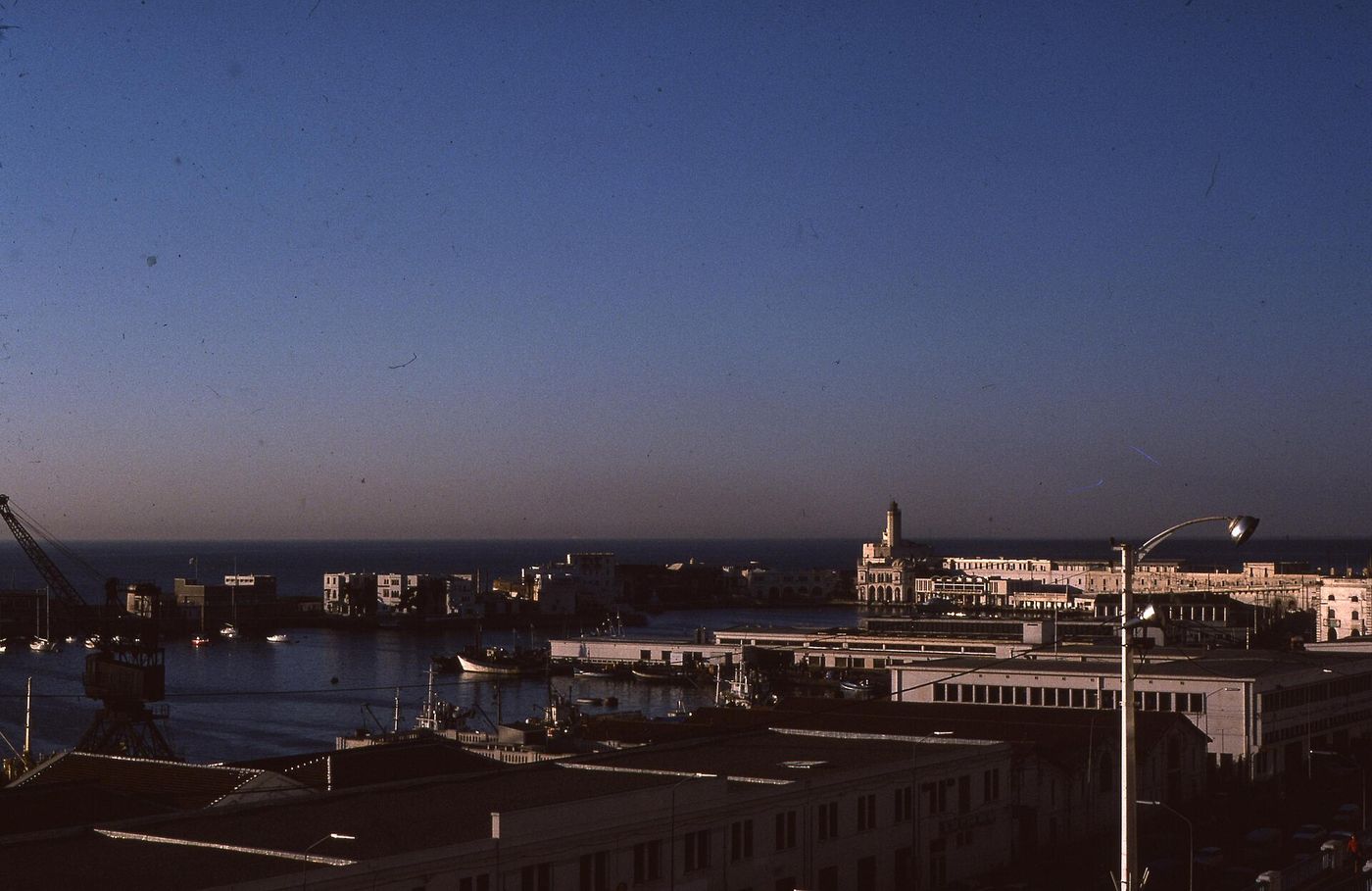
Fifteen years ago the city had three cables and no particular ambition. Then traffic between Europe and Asia surged, the Suez route proved shorter than the Atlantic for data as for ships, and operators found that Marseille offered something rare: a deep-water landing, a dense ring of data centers in converted port warehouses, and a direct fiber link to Frankfurt, Paris, and London.
“We did not plan to be this. We were a port that happened to have the right geography twice,” said Amira Benali, who oversees digital infrastructure for the city government. “Once for the ships, once for the light.”
The economic footprint is modest in jobs, perhaps 2,500 directly, but large in money: operators have invested about 2.3 billion euros in landing stations and data centers since 2015, and the city collects property taxes on buildings that each consume as much power as a small town. One facility cools its servers with seawater drawn from a former coal mine’s drainage gallery.
That success has attracted competitors. Genoa landed its first major Asia-Europe cable in 2024 and is marketing itself as the gateway to northern Italy’s industrial belt; Barcelona has offered tax incentives for landing stations and now has four cables. “The cables want to be where the other cables are, until the moment they do not,” said Oliver Steinmann, an analyst who tracks subsea infrastructure for a London research firm. “Marseille’s risk is the same as any hub’s. Power, land, and politics.”
Power is the immediate constraint. Yannick Bousquet, who directs the landing station that received Tuesday’s cable, said the grid operator had told him that no new large connections would be available in the port area before 2029. “We have cables coming. We have customers coming,” he said. “What we do not have is electrons.”
The cables are also beginning to provoke the same local friction as any infrastructure. Jean-Luc Rostagni, who fishes from the small harbor at L’Estaque, said the exclusion zones around cable routes had grown each year. “They tell me it is the internet,” he said, mending a net. “I tell them I have been pulling things out of this sea for 40 years, and this is the first thing I am not allowed to touch.”
By midmorning the cable was buried, the beach raked, and the engineers gone. Somewhere beneath the sand, Ms. Benali said, Mumbai was now 43 milliseconds away.
A version of this article appears in print on Oct. 12, 2026, Section A, Page 2 of the European edition with the headline: Marseille Lands Its 20th Undersea Cable, and With It a New Kind of Port Rivalry.