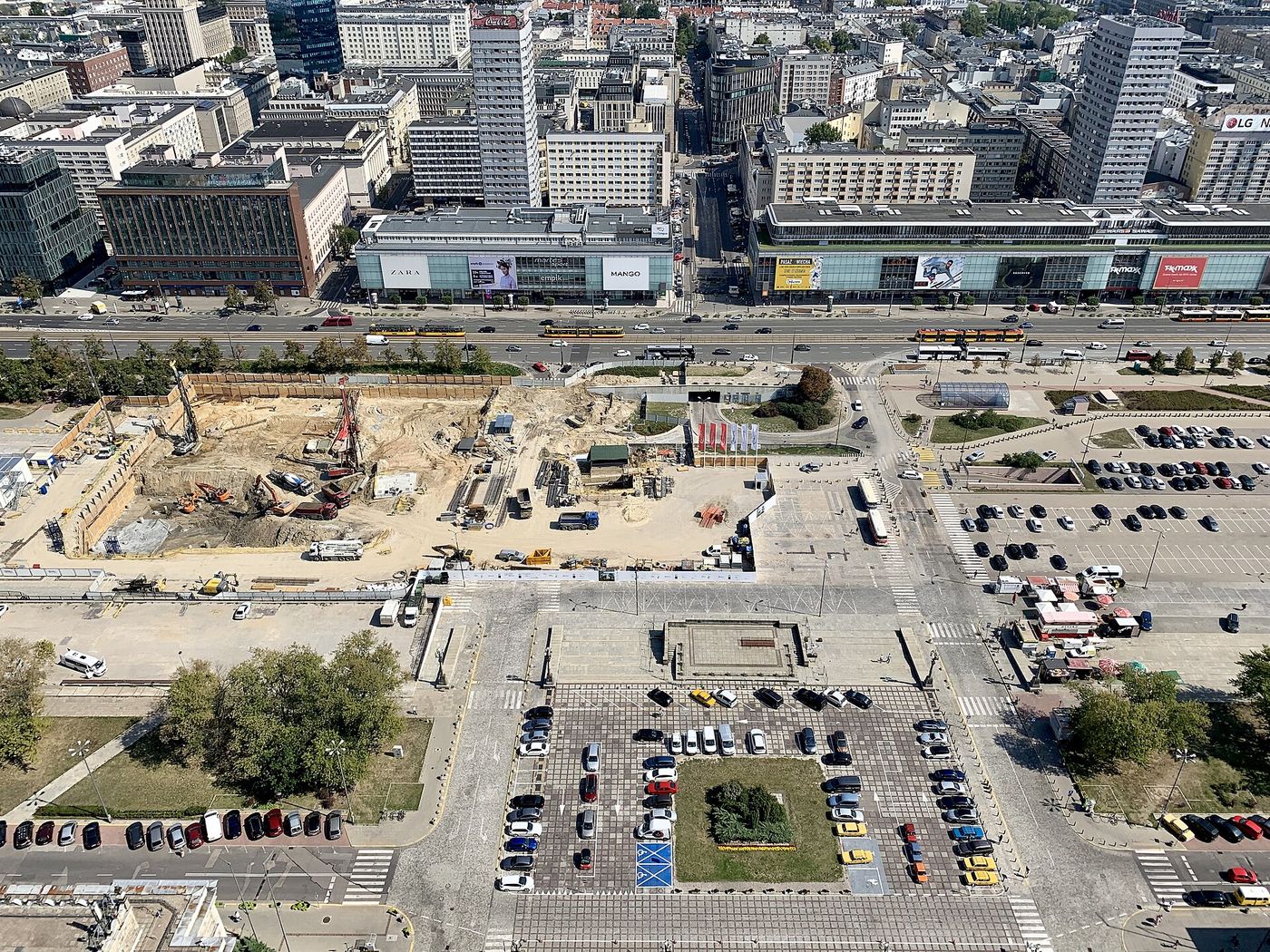
WARSAW — When the Museum of Modern Art in Warsaw opened its long-delayed permanent home a year ago, a pale rectangular building on the square beneath the Palace of Culture and Science, the question in the Polish press was whether anyone would come. The building had been argued over for 19 years, redesigned twice, and derided by one columnist as “a refrigerator with ambitions.”
On Friday the museum announced that it had received 1.02 million visitors in its first 12 months, more than any art museum in Poland and roughly twice its own forecast. About 40 percent were under 30, and nearly a quarter came from outside Warsaw.
“The building that everyone hated turned out to be the building everyone wanted to be in,” said Joanna Mrozek, the museum’s director since 2023, at a news conference in the ground-floor hall, which has become a popular free meeting place, especially in winter. “We did not build a museum for people who already go to museums. We built a square with a roof on it.”
The figures arrive at an awkward moment. The museum, which is funded jointly by the city and the national culture ministry, has asked for a 30 percent increase in its operating budget, to about 68 million złoty, or $17 million, citing staffing costs and energy bills for a building that has turned out to be more expensive to run than planned. The ministry has indicated it will fund part of the increase, but has also proposed adding two ministerial appointees to the museum’s program board, a step the museum’s supporters see as an attempt to influence exhibitions.
The ministry’s spokesman, Paweł Siennicki, said the proposal was “a normal governance measure for an institution receiving significant public funds” and had nothing to do with the museum’s programming, which this year has included a survey of Ukrainian video art and an exhibition on the Polish queer underground of the 1980s. “The museum is a success,” he said. “Success brings scrutiny.”
The museum’s success has been built on a mix of free ground-floor programming, including concerts and a children’s workshop that runs seven days a week, and a ticketed exhibition program that has leaned on Polish artists of the postwar period who are well known at home and little known abroad. A show of the painter Wanda Zielińska drew 210,000 visitors, the most for any exhibition in the museum’s history. The institution’s shop, selling posters and reissued 1960s Polish design, has become a profit center.
Not everyone is persuaded by the numbers. “A million people walking through a free lobby is not the same as a million people engaging with art,” said Krzysztof Dąbrowski, an art critic for a Warsaw weekly, who has praised the building and criticized the program as “safe.” He noted that attendance at the ticketed exhibitions, at about 380,000, was closer to what the museum had originally projected.
Ms. Mrozek did not dispute the point. “We will take the million,” she said. “Next year we will work on the 380,000.”
A version of this article appears in print on Oct. 12, 2026, Section C, Page 5 of the European edition with the headline: Warsaw’s Modern Art Museum Draws a Million Visitors in Year One, and a Fight Over What Comes Next.