PARIS — The art market came to Paris this week looking for a reason to feel better about itself. It found one, but not where the dealers expected.
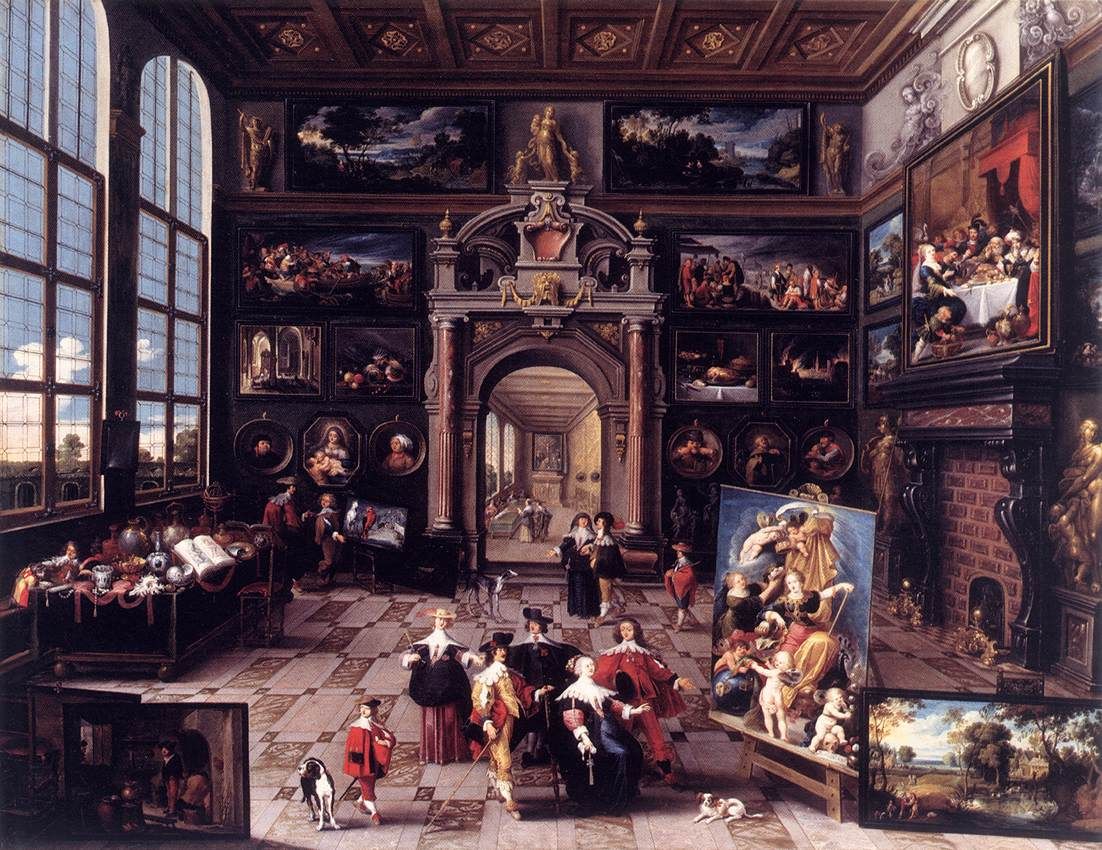
A still life of a lemon, a silver tazza, and a half-peeled orange by the Flemish painter Jan Davidsz. de Heem sold on Wednesday evening for 11.4 million euros, about $12.3 million, more than double its high estimate and a record for the artist. Two Dutch church interiors and a Venetian view also exceeded expectations. Across town, in the contemporary evening sale the following night, 9 of 42 lots failed to find buyers, and the total of 61 million euros came in below the low estimate of 68 million.
“The market is telling us something quite clearly,” said Delphine Aubrac, an independent art adviser who works with collectors in France and Switzerland. “People are willing to pay a great deal for things that are rare, documented, and 300 years old. They are not willing to pay a great deal for things that were made in 2021 and whose price was set by three galleries agreeing with one another.”
The contrast caps a third straight autumn of softening prices for postwar and contemporary art, which had been the engine of auction-house growth for two decades. According to figures compiled by the market research firm ArtTally, global auction sales of work made after 1945 fell 19 percent in the first nine months of 2026 compared with the same period last year, while sales of pre-1800 work rose 7 percent, albeit from a much smaller base.
At the fair in the Grand Palais, which closed on Sunday, galleries reported steady but unspectacular business. Several dealers said they had deliberately brought lower-priced work, in the 20,000-to-150,000-euro range, after watching the top end stall. “Nobody wants to be the booth with the 4-million-euro painting and nothing sold,” said Mathieu Lescure, co-owner of a Brussels gallery that sold 11 works, all under 90,000 euros. “The collectors are here. They are just reading the label twice.”
Auction executives put a brave face on the results. A spokeswoman for one of the three major houses said the contemporary sale had been “carefully curated for a selective market,” and pointed out that the sell-through rate by value, excluding withdrawn lots, was 84 percent. Privately, specialists acknowledged that guarantees, in which the house or a third party promises a minimum price, had covered 17 of the 42 lots, a higher share than in any Paris sale on record.
The de Heem, by contrast, carried no guarantee. It had hung in the same Lyon family’s dining room since 1911 and had never been publicly exhibited. Four bidders, two on the phone from Asia, fought for it for nine minutes.
“It is a lemon,” Ms. Aubrac said. “A very beautiful lemon. But the lesson is that scarcity is back in fashion.”
A version of this article appears in print on Oct. 12, 2026, Section C, Page 4 of the European edition with the headline: In Paris, Old Masters Shine as Contemporary Sales Cool for a Third Straight Season.