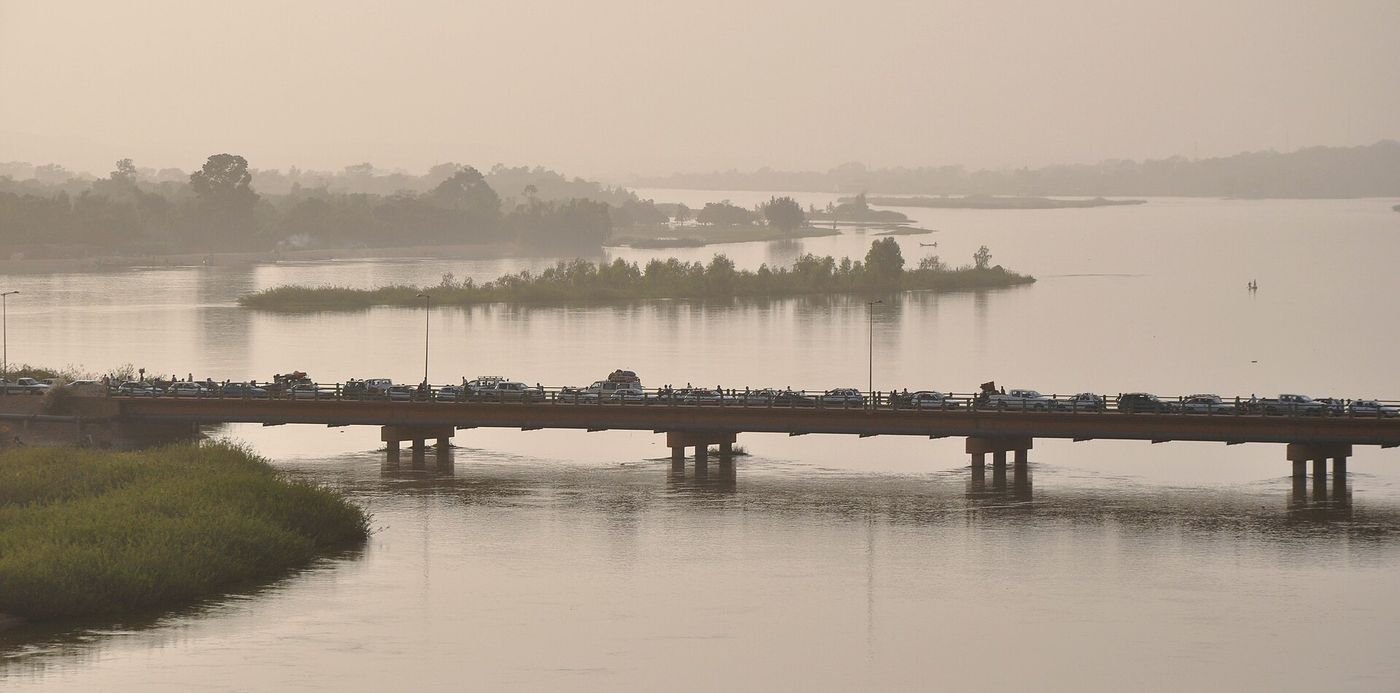
NIAMEY, Niger — The passport office on the Boulevard de la Liberté in Niamey opened at 7 a.m. on Monday, and by 9 the line stretched past the mosque on the corner. The people in it were there for a document that did not exist a month ago: a green passport bearing the seal of the Alliance of Sahel States, valid in Niger, Mali and Burkina Faso and, its holders hope, elsewhere.
The three military-led governments, which withdrew from the Economic Community of West African States in January 2025 after a bitter dispute over sanctions and the timing of a return to civilian rule, began issuing the joint passport on Oct. 1. It is the most visible of a series of institutions the confederation has launched this year, including a joint military force of 5,000 troops, an investment bank capitalized at 500 billion CFA francs, about $830 million, and a planned satellite television channel.
“For us, this is independence, the real one,” said Boubacar Hamidou Maïga, 31, a teacher who was fourth in line. “The old passport said ECOWAS on the cover. That was a club that punished us. This one is ours.”
The practical implications are murkier. The regional bloc, which the three countries left, has said that their citizens may continue to travel visa-free within its 12 remaining member states for the time being, and the old passports remain valid until they expire. But the new passports are not yet recognized by Nigeria, Ghana or the coastal countries through which the landlocked Sahel states conduct most of their trade, and the confederation has not published a list of countries that accept them.
At the Makalondi border post on the road to Burkina Faso, a trucker from Togo, Kossi Agbeko, said he carried three sets of papers. “The ECOWAS card, the national passport, and now they want to see the Sahel one,” he said. “Every border has a different idea of which one is real. The fee is the only thing that is the same.”
The confederation’s economic logic is contested. The three countries have a combined population of 72 million and some of the world’s lowest incomes, and they depend on ports in Benin, Togo, Ghana and Ivory Coast for imports. Niger’s oil exports through a pipeline to the Beninese coast were halted for months in 2024 and 2025 by a dispute with Benin. Analysts say the alliance’s turn toward Russia for security and toward Turkey and China for trade has not replaced the regional market.
“You can print a passport. You cannot print a coastline,” said Dr. Fatoumata Diakité, a political scientist at the University of Bamako. “The confederation is strong on symbols and weak on roads. The question is whether the population’s enthusiasm outlasts the price of rice.”
Security remains the overriding concern. Armed groups affiliated with Al Qaeda and the Islamic State control or contest large areas of all three countries, and attacks on convoys along the Niamey-Ouagadougou road, the confederation’s main artery, have continued through the year. The new joint force has conducted two operations, with results the governments have not disclosed.
In the line on Monday, those concerns seemed distant. Mr. Maïga emerged at 11:20 with a receipt and a date to collect his passport in two weeks. He planned, he said, to take it first to Bamako, to visit a cousin. “And then,” he added, “we will see who else lets me in.”
A version of this article appears in print on Oct. 12, 2026, Section A, Page 7 of the European edition with the headline: In Niamey, a New Sahel Passport Arrives, and the Old Regional Order Fades at the Border.



