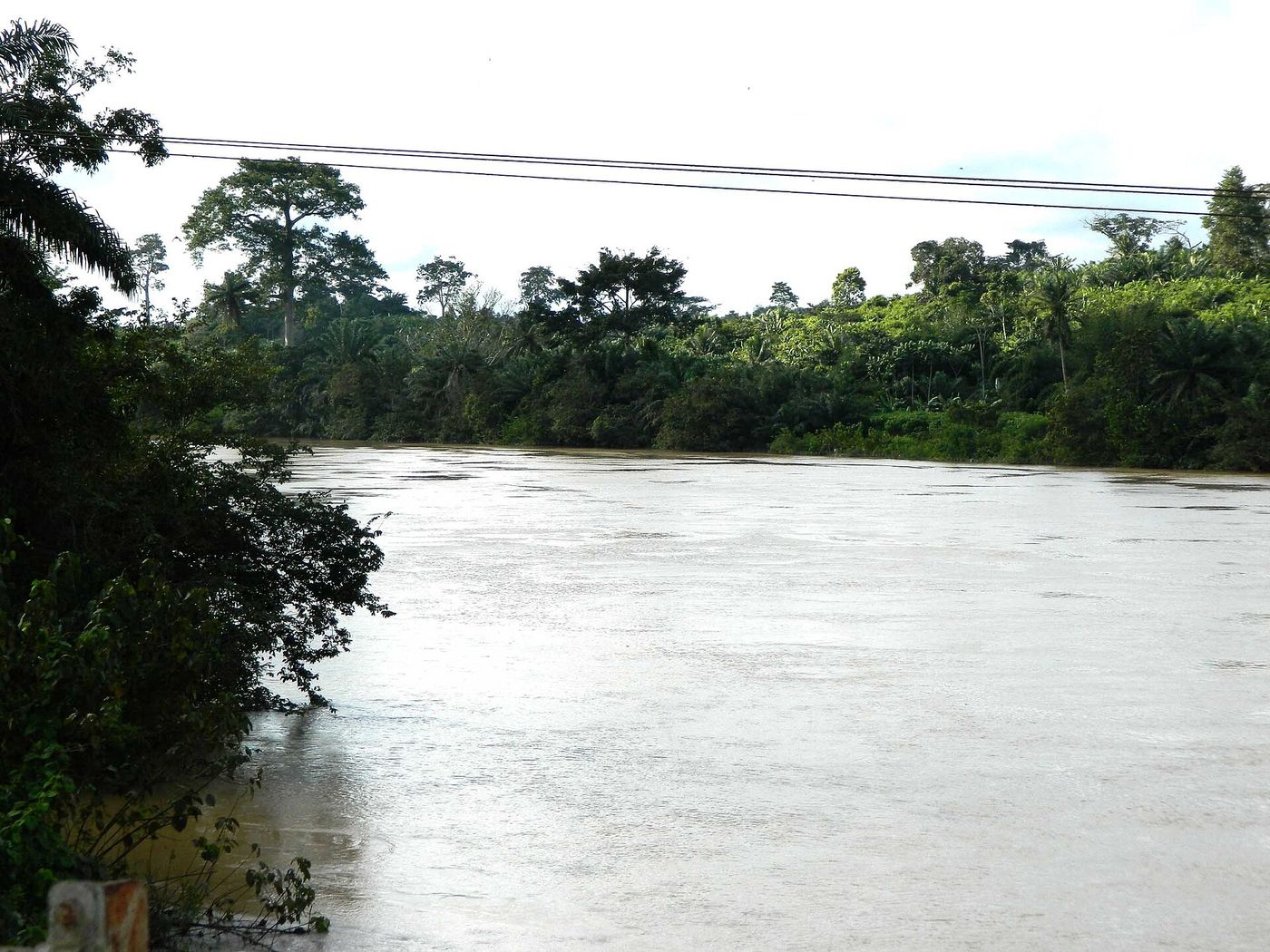
DABOASE, Ghana — The Pra River at Daboase used to run clear enough that children swam in it. On Sunday it ran the color of milky coffee, and the intake pipes of the water treatment plant on its bank, which supplies 400,000 people in Ghana’s Western Region, were closed.
The Ghana Water Company shut the plant’s river intake on Oct. 3 after turbidity readings reached 14,000 units, more than 14 times the level the plant can treat, and has been trucking water to the port city of Takoradi and surrounding towns. It is the third plant in the country to suspend river abstraction this year because of pollution from galamsey, the local term for illegal small-scale gold mining.
“We are not a water company anymore. We are a mud company,” said Kwabena Asante-Darko, the plant’s manager, standing on a walkway over settling tanks filled with a thick ocher sludge. “Even when we can run, the chemicals cost four times what they did in 2020. The filters clog in hours.”
Gold prices near record highs have drawn tens of thousands of people, many of them young and unemployed, into Ghana’s forest reserves and river valleys, where they use excavators and high-pressure pumps to wash gold from riverbanks and use mercury to extract it. The country, Africa’s largest gold producer, officially exported 4.8 million ounces last year, but the Bank of Ghana estimates that a third of production comes from unlicensed operations.
The Water Resources Commission found mercury concentrations in the Pra at 25 times the safe limit in a survey published in September, and the Ankobra and Offin Rivers were similarly contaminated. The cocoa board has warned that farmland in the Western and Ashanti Regions is being dug up or poisoned, and the forestry commission says 34 of the country’s 288 forest reserves have been invaded by miners.
The government announced on Thursday a renewed military deployment to the mining districts, the fourth such operation since 2017. Previous campaigns burned excavators and arrested thousands but faded within months, undercut by local politicians who depend on the miners’ votes and, according to a parliamentary inquiry in 2024, by officials who took a share of the proceeds.
“Everyone knows where the excavators are. They are not hidden; they are the size of houses,” said Dr. Akosua Frimpong-Mensah, a geographer at the University of Cape Coast who studies the mining economy. “The problem was never finding them. It is that every excavator has a protector.”
Miners say they have no alternative. Yaw Opoku, 26, who works a pit near Prestea with six other men, said he earned about 2,000 cedis a week, roughly $130, five times what he made as a farm laborer. “The big companies dig the same ground and nobody sends the army,” he said. “We dig and we are criminals.”
At Daboase, the water company is drilling boreholes as a stopgap and studying a 40-kilometer pipeline to a cleaner tributary. Mr. Asante-Darko doubts either will be enough. “You cannot pipe your way out of a poisoned river,” he said. “You have to stop the poisoning.”
A version of this article appears in print on Oct. 12, 2026, Section A, Page 6 of the European edition with the headline: Ghana’s Rivers Are Turning the Color of Mud, and a Water Plant Has Given Up Trying to Clean Them.



