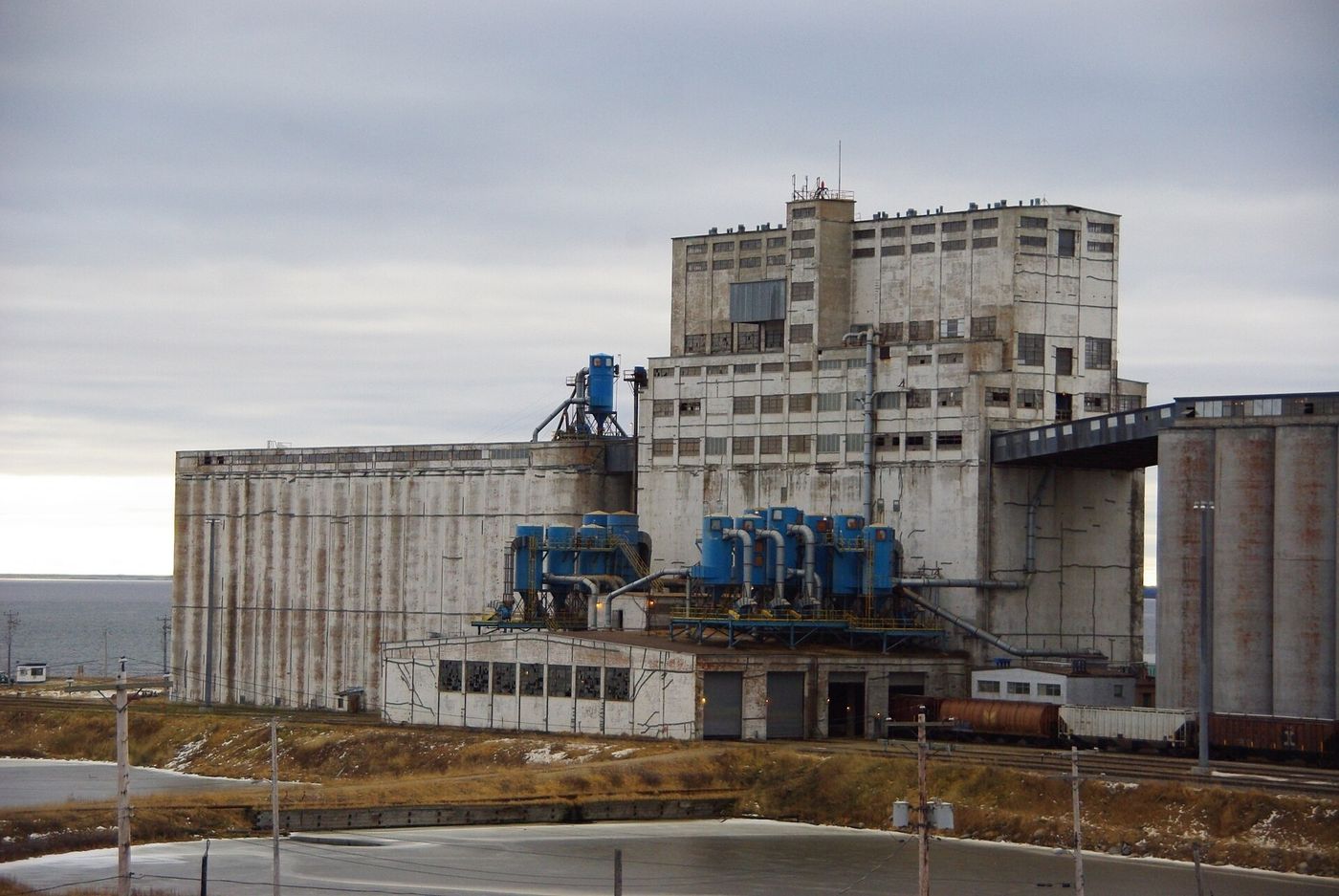
CHURCHILL, Manitoba — The last ship of the season used to leave Churchill by the second week of October, racing the ice. This year the port expects to load vessels until Nov. 20, and the elevator that towers over the town of 870 people has been running two shifts since July.
The Port of Churchill, Canada’s only deepwater Arctic port with a rail link, reported on Friday that it had handled 1.1 million metric tons of cargo in 2026, its highest volume since the 1970s and nearly triple the figure from three years ago. Most of it was wheat and canola bound for Europe and West Africa, but for the first time the port also shipped 180,000 tons of potash from Saskatchewan mines, a trade that could eventually dwarf grain.
The port’s revival rests on an uncomfortable fact. Hudson Bay is freezing later and thawing earlier than it did a generation ago. Environment and Climate Change Canada data show the navigable season has lengthened by about five weeks since 1990. Shipping companies that once refused to insure voyages past mid-October now routinely cover sailings into November.
“Nobody here celebrates the reason,” said Aaron Spence, the port’s operations manager and a member of the Fox Lake Cree Nation, which co-owns the facility through a consortium of 41 Indigenous and northern communities. “But if the water is open, we are going to use it. The alternative is that it opens and someone else uses it.”
The consortium bought the port and the 1,000-kilometer rail line from an American owner in 2018, after a washout severed the track and the previous operator walked away. Since then the federal and Manitoba governments have invested about 450 million Canadian dollars in track repairs, a new rail siding, and dredging. A second phase, approved in August, will add a liquid-bulk terminal and extend the dock to handle Panamax ships.
For prairie farmers, Churchill offers a shorter route to Europe than Thunder Bay and the St. Lawrence Seaway, saving three to five days and, by the port’s estimate, about 12 Canadian dollars a ton. For potash producers, it offers an alternative to Vancouver, where rail congestion has delayed shipments.
Skeptics remain. The rail line crosses hundreds of kilometers of permafrost that is itself thawing, and the track still requires speed restrictions of 25 kilometers an hour on some sections. A single derailment in 2025 closed the line for nine days at the height of the season.
“The port is only as good as the railroad, and the railroad is sitting on ground that is turning to soup,” said Catherine Lévesque, a transportation economist at the University of Manitoba. “You can dredge a harbor. You cannot refreeze the tundra.”
In town, the longer season has brought steady work for the first time in years. The port now employs 110 people during the shipping months, and a hotel that closed in 2017 reopened in the spring. Polar bears, which gather near Churchill each autumn waiting for the ice, still arrive on schedule. The ships are simply staying later to meet them.
A version of this article appears in print on Oct. 12, 2026, Section A, Page 14 of the European edition with the headline: On Hudson Bay, a Remote Canadian Port Bets on a Longer Arctic Shipping Season.



