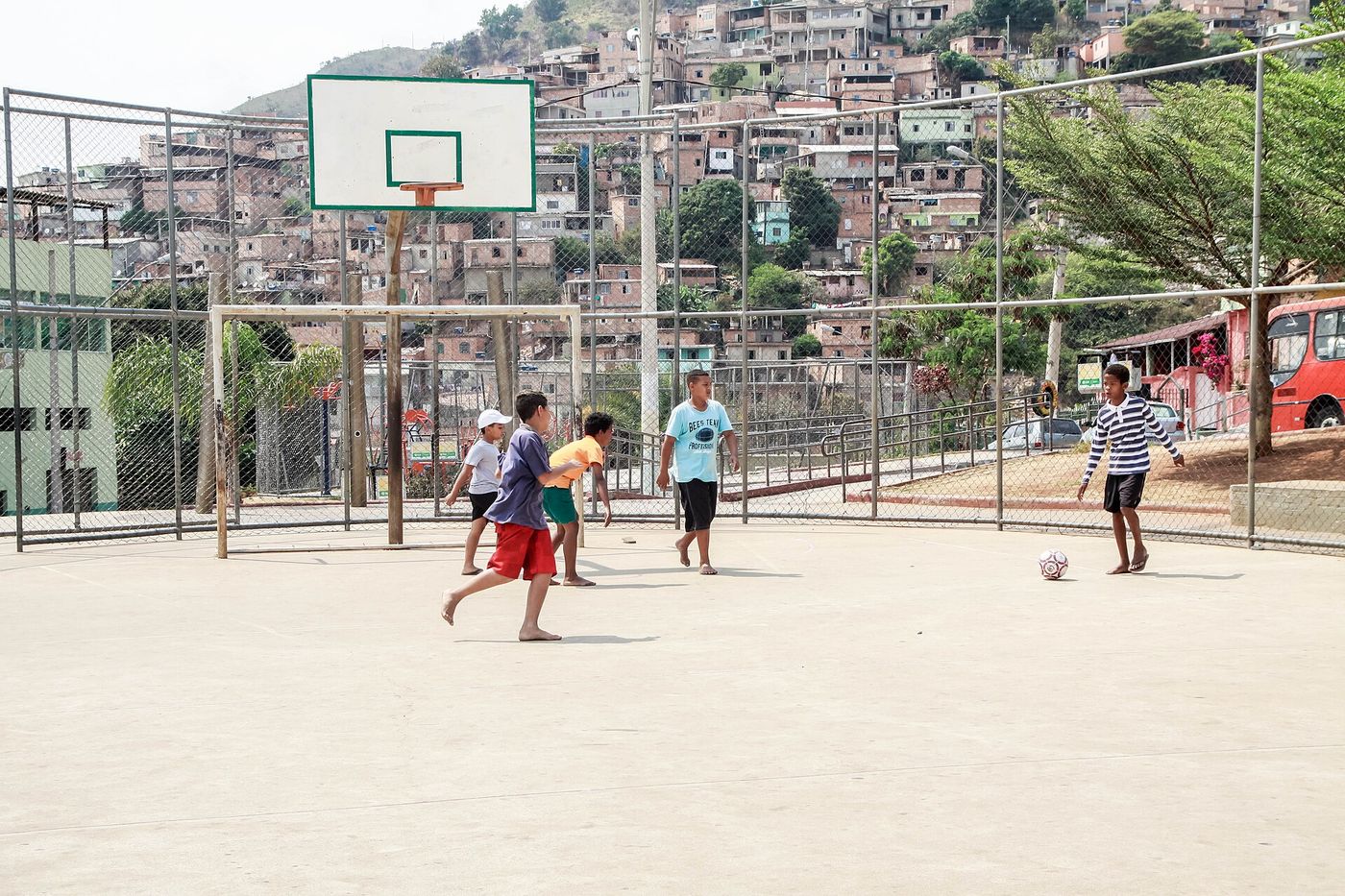
BELO HORIZONTE, Brazil — Rosângela Fonseca built her house on the slope of the Aglomerado da Serra over 26 years, one room at a time, with bricks carried up the hill by her sons. On Friday morning, at a folding table in a community center, she signed a document that made it legally hers.
“I have paid the electricity bill, the water bill, everything, since 1999,” Ms. Fonseca, 63, said, holding the title in both hands. “Now if I die, my children do not have to fight anyone for the house.”
Belo Horizonte, Brazil’s sixth-largest city, has issued 31,000 property titles to residents of informal settlements since 2023, the municipal housing company reported last week, the most of any Brazilian city under a federal program that simplified the process for regularizing land occupied before 2016. Another 48,000 households are in the pipeline.
Roughly a fifth of the city’s 2.3 million residents live in neighborhoods built without permits on public or disputed land, a pattern repeated across Brazil, where an estimated 16 million people live in favelas and similar settlements. Residents typically pay utilities and taxes but cannot sell their homes legally, borrow against them or pass them on without lengthy court proceedings.
The city’s approach combines technology with persistence. Drones map each settlement to a resolution of five centimeters, and teams of surveyors then walk the alleys to match every roof to a family and verify how long they have lived there. Disputes between neighbors over boundaries, which once stalled regularization for years, are resolved through mediation sessions held in the neighborhoods themselves.
“The old model required the resident to come downtown, hire a lawyer and prove a negative,” said Marcelo Andrade Pimentel, director of land regularization at the municipal housing company. “We reversed it. The city goes to the house.”
Economists have long argued that formal titles unlock investment. Early evidence from Belo Horizonte is mixed but encouraging. A survey by the Federal University of Minas Gerais found that titled households were 40 percent more likely to have made a major home improvement in the past year, and that a handful had obtained bank mortgages, almost unheard of in the settlements. Property values in titled areas rose about 15 percent, raising a familiar worry.
“Titles are a double-edged sword,” said Prof. Luciana Barreto, an urban planner who led the survey. “They protect people from eviction by the state, and they expose them to eviction by the market. We are seeing the first investors buying up titled houses near the metro.”
The program also obliges the city to deliver what it has long withheld. Once a street is regularized it must be paved, lighted and connected to sewers. The housing company estimates the cost at 1.2 billion reais, about $220 million, over 10 years, and has secured a loan from the Inter-American Development Bank for a third of it. At the folding table on Friday, 140 families received titles in two hours. The line, officials said, would form again on Monday.
A version of this article appears in print on Oct. 12, 2026, Section A, Page 3 of the European edition with the headline: In Brazil, a City Hands Out Deeds to Homes That Were Never Supposed to Exist.



