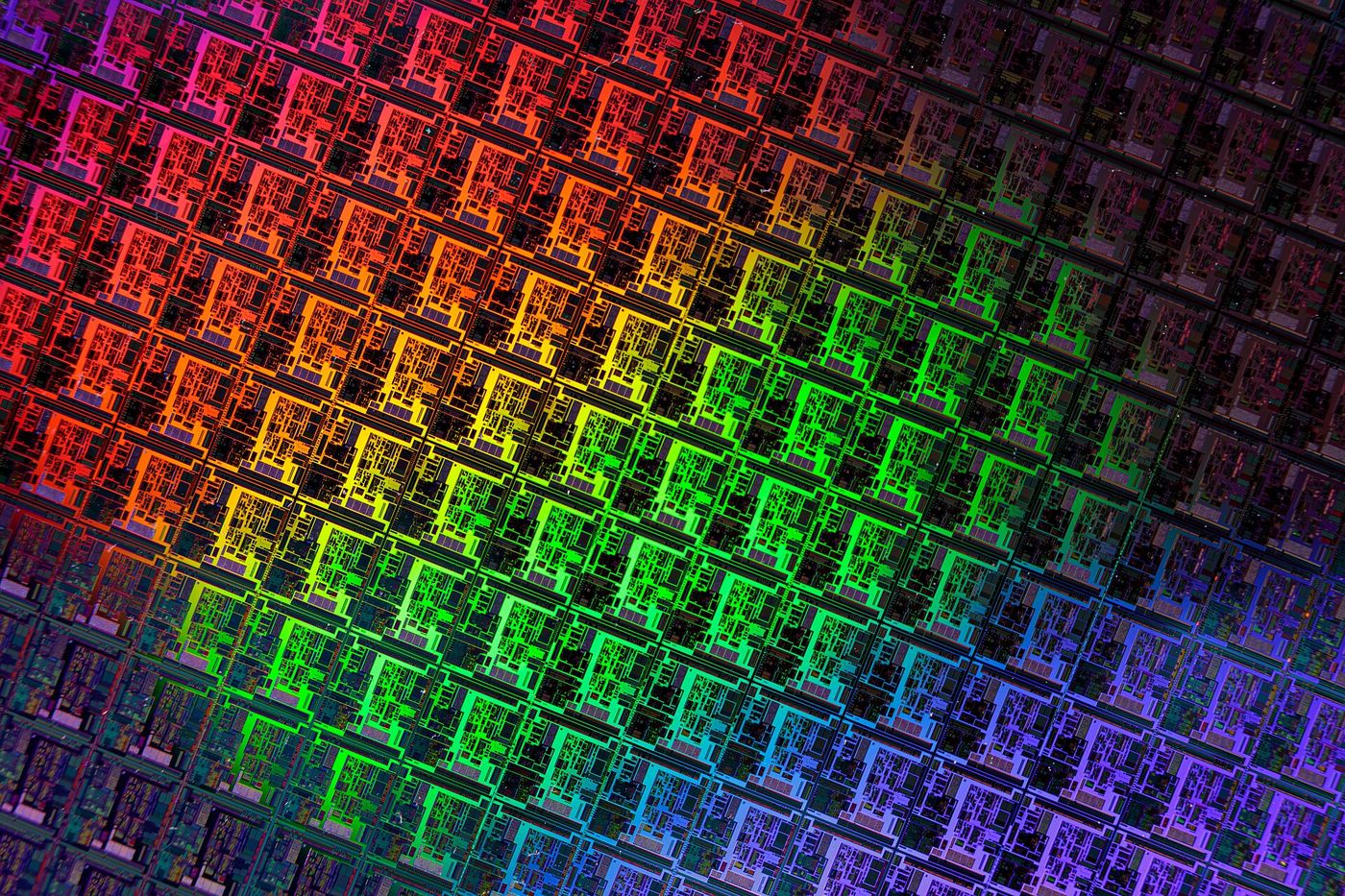
EINDHOVEN, the Netherlands — On an industrial campus at the edge of this city, a consortium of 14 companies and research institutes opened a 1.1 billion euro pilot factory on Thursday that will make a kind of chip most of the world has never heard of, and that its backers believe could become the most important component in the data centers now being built to run artificial intelligence.
The chips are photonic integrated circuits, which route information as pulses of light rather than electrical current. They do not do the computing; they do the talking, moving data between processors and between racks of servers at speeds and power levels that copper wiring cannot match. As A.I. clusters grow to hundreds of thousands of chips, the links between them have become a bottleneck, and light is the leading answer.
“Everybody is chasing the processor. Almost nobody in Europe can make the processor,” said Lotte Hendriks, the consortium’s chief technologist. “But the processor is useless if it is starved of data, and the part that feeds it is a market where we are not behind. We are, for once, early.”
The Eindhoven line will process 6-inch wafers of indium phosphide, a compound semiconductor better suited to emitting and detecting light than silicon, at a capacity of about 20,000 wafers a year. That is tiny by the standards of memory or logic fabs, but photonic chips are small and a wafer yields thousands. The plant is expected to employ about 900 people by 2029 and has received 410 million euros under the E.U. Chips Act and Dutch national programs.
Joris Bakker, a senior official at the Dutch economy ministry, said the investment was deliberately aimed at a niche. “We are not going to build a 300-millimeter logic fab to compete with Asia. That ship sailed,” he said. “We are going to be unavoidable in a component that every A.I. data center on earth needs.”
Analysts are cautiously supportive. Carsten Möller of a Frankfurt-based semiconductor research firm estimated the market for data center optical interconnects at about 9 billion euros this year, growing 25 percent annually, with most production today in the United States and Taiwan. “The Dutch have the research base and the equipment makers next door,” he said. “What they have not proved is that they can run a fab at commercial yields. That is a different sport from writing papers.”
The consortium’s first commercial products, transceiver chips capable of 1.6 terabits per second, are due to ship to two cloud providers in mid-2027. Ms. Hendriks would not name them. She did say that the first wafer to come off the line on Thursday was not sold but framed, and now hangs in the lobby. “The second one,” she said, “we are going to try to make money on.”
A version of this article appears in print on Oct. 12, 2026, Section A, Page 3 of the European edition with the headline: A Dutch Chip Plant Bets That Light, Not Electricity, Will Carry the Next Decade of Data.