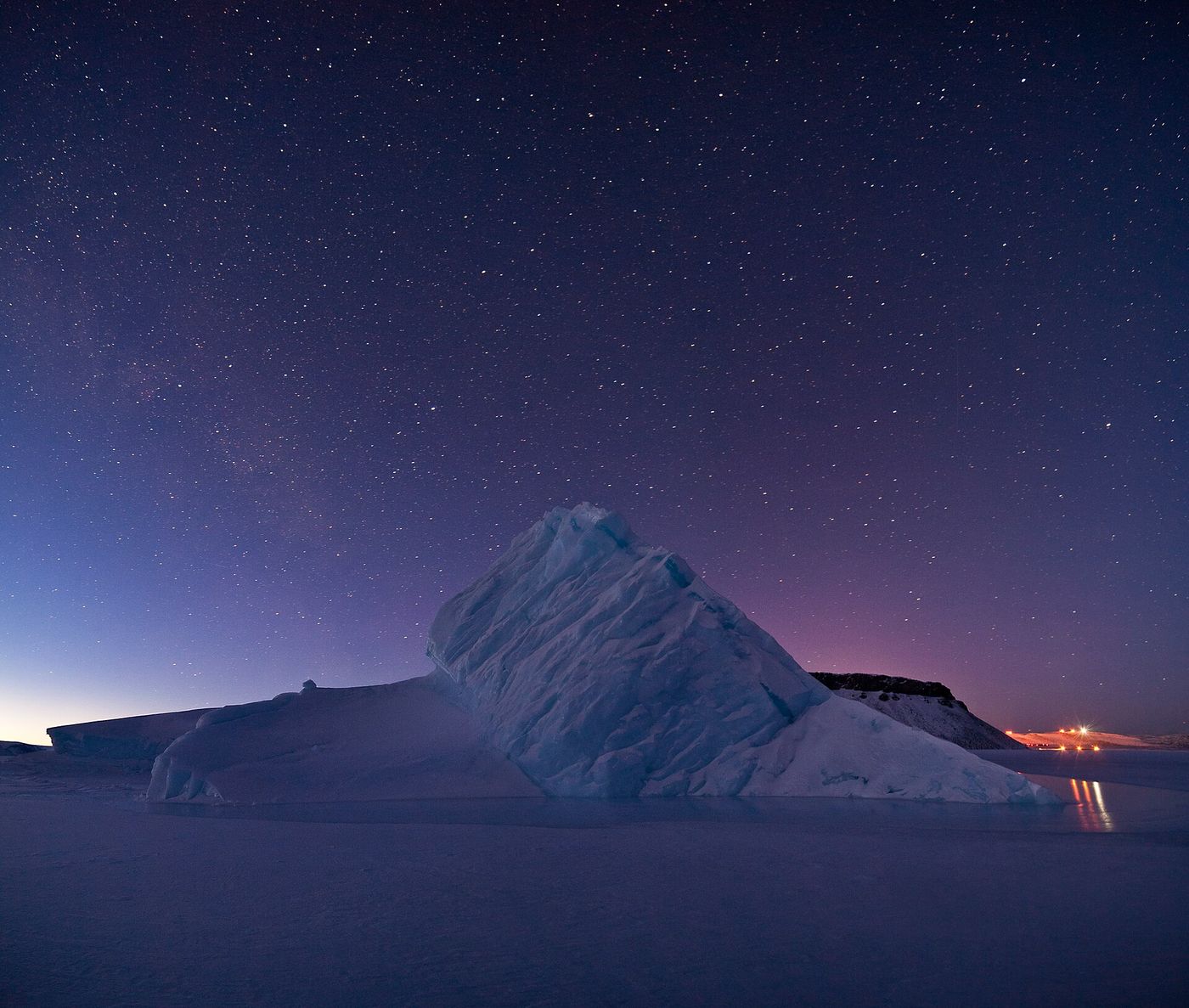
KANGERLUSSUAQ, Greenland — At 11:40 p.m. on Sept. 28, with the Arctic sun hanging low over a plain of ice, a drill that had spent four summers grinding downward through the Greenland ice sheet stopped meeting ice and started meeting rock. Two days later, the team pulled up the last core: 1.8 meters of frozen gravel, silt, and what one scientist described as “something that looked suspiciously like a root.”
The hole, 2,612 meters deep, is the first to reach bedrock beneath one of Greenland’s ice streams, the fast-moving rivers of ice that carry much of the sheet’s mass to the sea. Ice cores from the sheet’s stable center have told scientists about past climate for decades. This one, drilled on the northwest flank where the ice is sliding, was meant to answer a different question: what lies underneath, and what it was doing the last time the ice was gone.
“The ice is the archive of the atmosphere. The dirt underneath is the archive of the ice itself,” said Nanna Kristiansen, a glaciologist at the University of Copenhagen who led the project, speaking by satellite phone from the camp before it was dismantled. “If there are plants in that sediment, then this spot was ice-free, and we can date when. That tells us how little warming it took to lose it.”
The sediment will be analyzed over the coming year for pollen, plant DNA, and isotopes produced when rock is exposed to cosmic rays, which accumulate only at the surface and act as a clock for how long the ground lay bare. Preliminary dating of the lowest ice suggests it is about one million years old, making the soil beneath at least that age.
The stakes are not academic. Greenland holds enough ice to raise global sea levels by about 7 meters, and models disagree sharply about how much warming would set its collapse in motion. A previous core from a 1960s American military project, reanalyzed in 2021, found plant remains suggesting the northwest had been ice-free within the past million years, during a period only modestly warmer than today. The new core is the first deliberately drilled to test that result.
“It is one thing to find a twig in a core that someone forgot in a freezer for 50 years,” said Oliver Grant, a British Antarctic Survey scientist who studies ice-sheet stability and is not part of the project. “It is another to drill on purpose, through moving ice, and bring up the ground. This is the sample everyone has wanted.”
The 38-person team, drawn from eight countries, lived in tents at the camp for up to 12 weeks each season. Aqqaluk Olsen, a logistics coordinator from Ilulissat who ran the camp’s supply flights, said the hardest part was not the cold but the sameness. “Every day is white,” he said. “Then one day they bring up brown, and everyone is shouting like it is a football match.”
Dr. Kristiansen said the cores were already on a ship to Copenhagen. “We have a million years in boxes,” she said. “Now we have to read it.”
A version of this article appears in print on Oct. 12, 2026, Section A, Page 4 of the European edition with the headline: Drill Reaches Bedrock Beneath a Greenland Ice Stream, Pulling Up Soil Last Open to the Sky a Million Years Ago.