POZZUOLI, Italy — The fishermen of Pozzuoli measure the volcano by the harbor steps. In the 1980s, when the ground beneath this town rose nearly 2 meters in two years, the boats could no longer reach the quay. The steps were rebuilt. This autumn they are dry again at high tide, and the instruments confirm what the fishermen already know: the ground is rising at 2 centimeters a month, the fastest rate in 40 years.
Campi Flegrei, a 13-kilometer-wide caldera that encompasses Pozzuoli and the western suburbs of Naples, is not a mountain but a depression, the collapsed footprint of eruptions 39,000 and 15,000 years ago, one of which spread ash across Europe. About 500,000 people live inside it. Since 2005 the ground has risen 1.4 meters, and the earthquakes that accompany the uplift, more than 6,000 this year, have grown stronger, with a magnitude-4.4 tremor in September cracking walls and emptying schools.
“A volcano like this does not erupt without warning. The question we cannot answer is how much warning,” said Lucia Ferrante, a volcanologist at the Vesuvius Observatory, the branch of Italy’s national geophysics institute that monitors the caldera. “The ground rises, gas pressure builds, rock weakens. We see all of it. What we cannot see is the threshold.”
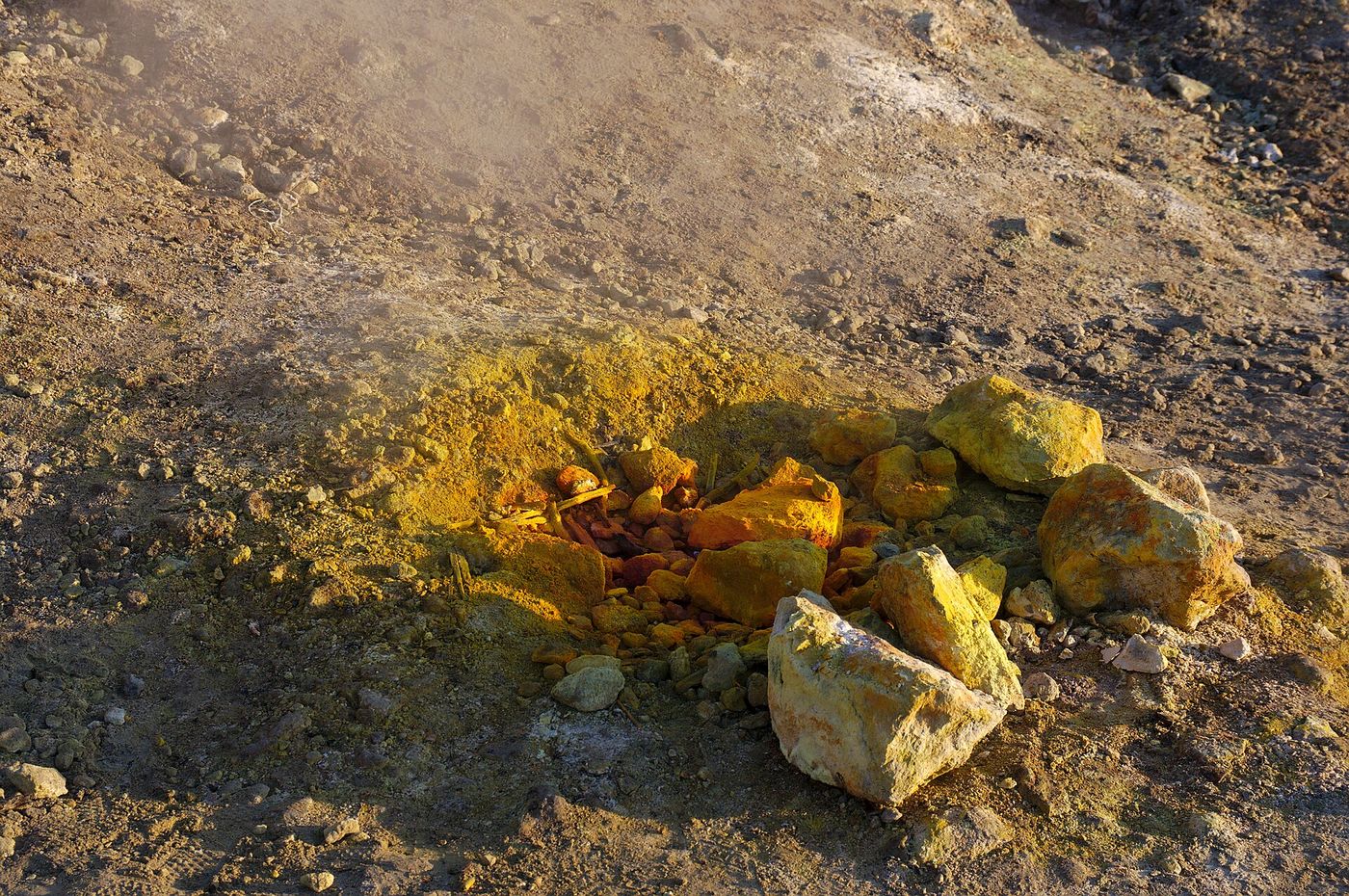
The observatory runs 30 seismic stations, 25 satellite-positioning receivers, and a network of gas sensors around the Solfatara crater, where carbon dioxide emissions have roughly doubled since 2020. The data show magma and hot fluids accumulating about 3 to 4 kilometers down, pushing the crust upward. Whether that pressure vents as an eruption, as it did in 1538 when a new hill rose in a week, or subsides again, as it did after 1984, is the question the models cannot settle.
Civil protection officials have stopped waiting for them to. Ciro Amendola, who coordinates emergency planning for the municipality, said the town held its third full evacuation drill in two years last month, moving 8,000 residents to assembly points in 90 minutes. The national plan assigns each district of the caldera a host region elsewhere in Italy. “We used to tell people not to worry. Now we tell them where to go,” Mr. Amendola said. “It is a better conversation.”
For residents, the volcano is a tenant that never leaves. Antonietta Russo, 58, who runs a bakery near the harbor, has had her shop’s cracks filled four times since 2023. “My grandmother left in 1970, my mother left in 1983, and both came back,” she said. “When it is time, we will leave. Not before. Where else do we make the bread?”
Dr. Ferrante said the observatory’s alert level, raised to yellow in 2012, would be lifted to orange only if gas chemistry or earthquake depths shifted in ways that suggested magma was rising. She did not rule it out. “The caldera has been breathing for 2,000 years,” she said. “We are simply the first generation to count its breaths.”
A version of this article appears in print on Oct. 12, 2026, Section A, Page 6 of the European edition with the headline: West of Naples, the Ground Rises 2 Centimeters a Month, and a City Learns to Live With a Volcano That Breathes.