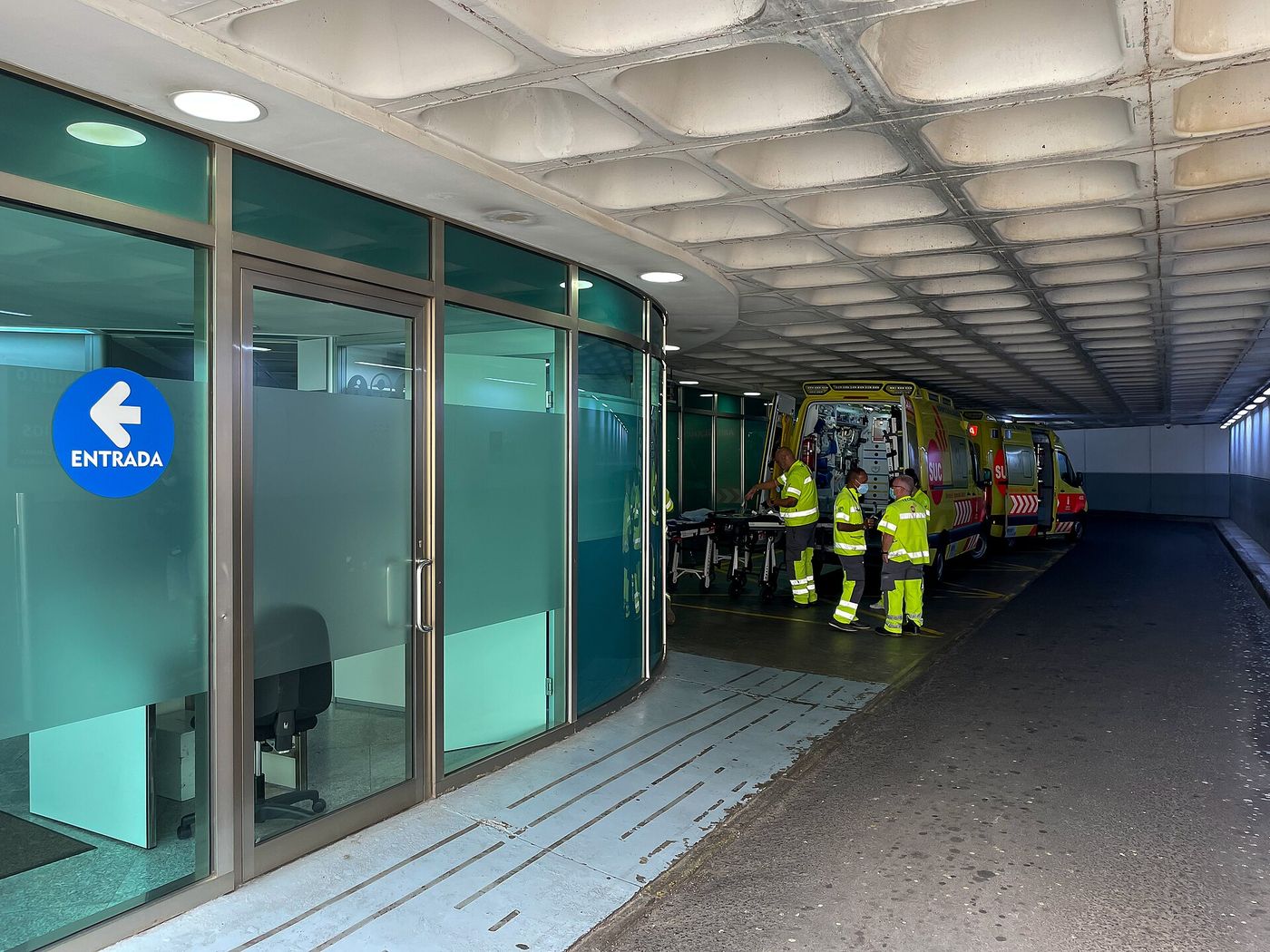
LISBON — When Sara Mendonça’s contractions started at 2 a.m. on a Saturday in September, she did not call her husband first. She called the national health service hotline to ask which hospital would take her. The maternity emergency unit nearest her home in Setúbal was closed for the weekend; the next, across the Tagus bridge, had no beds. The operator directed her to a hospital 50 kilometers away. Her daughter was born in the car park.
“Everybody I know who is pregnant has the hotline number saved,” Ms. Mendonça, 31, said. “You check it the way you check the weather.”
Portugal’s public health service closed emergency obstetric units on rotation on 14 weekends in September, according to a schedule the health ministry now publishes weekly, and 31 of the country’s 42 maternity hospitals reported at least one period of closure or restriction during the month. The closures, which began as an emergency measure in the summer of 2022, have become a permanent feature of a system that the ministry acknowledges is short of about 300 obstetricians.
The causes are structural. A generation of doctors trained in the 1970s and 1980s is retiring, and younger obstetricians, who can earn two to three times as much in private hospitals or in Britain and Switzerland, are reluctant to take public posts that require them to work up to 200 hours of overtime a year. The number of births, about 85,000 a year, has fallen by a third since 2000, but they are increasingly concentrated in the Lisbon and Porto regions, where the staff shortages are worst.
“We have more obstetricians per birth than we did 20 years ago, and we cannot staff the rota,” said Dr. Isabel Carvalho, who runs the obstetrics department at a public hospital south of Lisbon. Half of her consultant posts are filled by doctors on short-term contracts, she said, and three resigned this year. On a weekend when the unit is open, she said, it receives women from three neighboring districts. “We are not closing because there are no doctors in Portugal. We are closing because the doctors are not in the public hospitals on Saturday night.”
The government has responded with a plan announced in July that will concentrate births in fewer, larger hospitals, with dedicated ambulance transfers and an expanded hotline staffed by midwives who can triage callers by phone. Nuno Figueiredo, the executive director of the national health service, said the aim was predictability. “A mother should know in week 30 where she is going to give birth, not at 2 a.m. in week 40,” he said. The plan has drawn protests from mayors in the Alentejo and the central interior, where some women already travel more than an hour to a hospital.
Obstetricians’ unions say the plan addresses symptoms. They have asked for a 30 percent increase in base pay for public hospital specialists and a cap on compulsory overtime, and have scheduled a two-day strike for November. “Centralizing births does not create doctors,” said Dr. Carvalho. “It moves the shortage somewhere else.”
Ms. Mendonça and her daughter, Inês, are both well. She said she had received a letter from the hospital where she had been registered, inviting her to a postnatal class. “It is on a Saturday,” she said. “I did not ask whether they would be open.”
A version of this article appears in print on Oct. 12, 2026, Section A, Page 2 of the European edition with the headline: Across Portugal, Expectant Mothers Check Which Maternity Ward Is Open Before Heading to the Hospital.