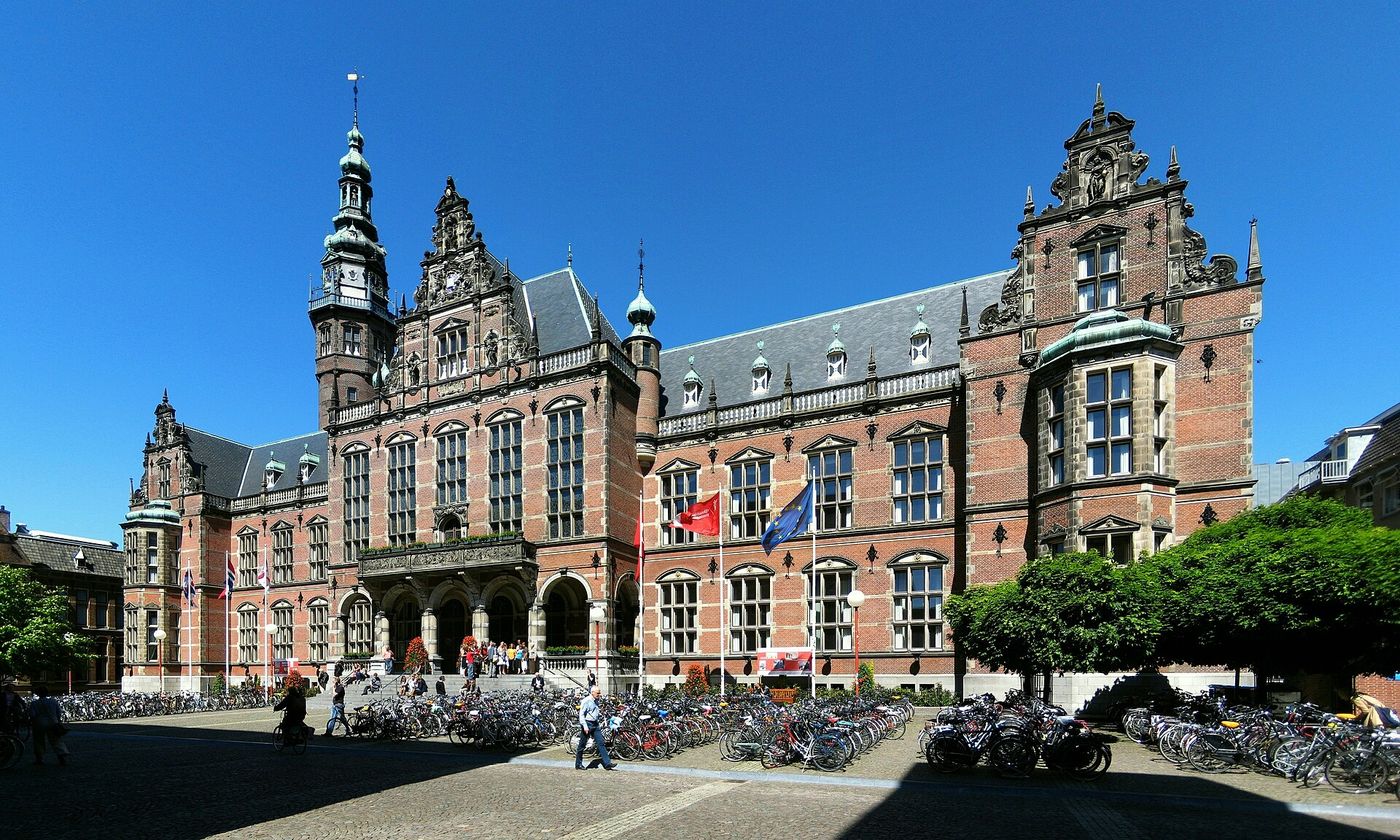
GRONINGEN, Netherlands — Two years after the Netherlands passed a law requiring universities to justify teaching in any language other than Dutch, the country’s 14 research universities have discontinued or converted 92 of the 440 bachelor’s programs they offered in English, and the number of first-year students from abroad has fallen 18 percent, according to figures released by the universities’ association on Friday.
The decline was steepest outside the Randstad. In Groningen, where international students made up a third of the student body in 2023, first-year enrollment from abroad dropped 27 percent. Maastricht, which built its identity on English-language teaching and a student population that was half German, saw a 24 percent decline. Amsterdam and Delft lost less than 10 percent.
“We asked for this,” said Marijke de Boer, the rector of the University of Groningen, with evident ambivalence. “Not this exactly. We asked for a way to manage growth. What we got was a law that manages it for us.” She said the university had switched psychology, its most popular program, to a Dutch track with an English-language minority stream and that applications from Germany, historically the largest source of foreign students, had halved.
The 2024 law, known as the Internationalization in Balance Act, was a response to a decade in which foreign enrollment tripled, student housing shortages became a national grievance, and lecture halls in some programs were two-thirds non-Dutch. Under the law, a program may be taught in English only if a university can show a specific need, such as a regional labor shortage or a field in which Dutch-language textbooks do not exist.
Joris Hendriks, a director at the Education Ministry, said the results were “in line with what Parliament intended.” He noted that the share of international graduates who remain in the Netherlands five years after finishing is about 30 percent, and said the government preferred fewer students who stayed to more who left. “A university is not an export product,” he said.
Students disagreed about whether anything had been gained. Lukas Weber, 20, from Munich, is in the final cohort of Groningen’s English-language economics program. “Half my friends are Dutch, which is the whole point of coming,” he said. “Next year’s Germans will go to Vienna instead.” Fatima El Amrani, who chairs the national student union, said the housing effect was real but small. “Groningen has 2,000 fewer international students and the waiting list for a room is still 14 months,” she said. “The problem was never the students. It was that nobody built anything.”
The universities’ association said it would ask the ministry to revisit the law in 2027. Ms. de Boer said the university would, in the meantime, keep its English-language signs. “Some things,” she said, “you do not undo just because the law lets you.”
A version of this article appears in print on Oct. 12, 2026, Section A, Page 14 of the European edition with the headline: Dutch Universities Cut 1 in 5 English-Taught Degrees, and Foreign Enrollment Falls.



