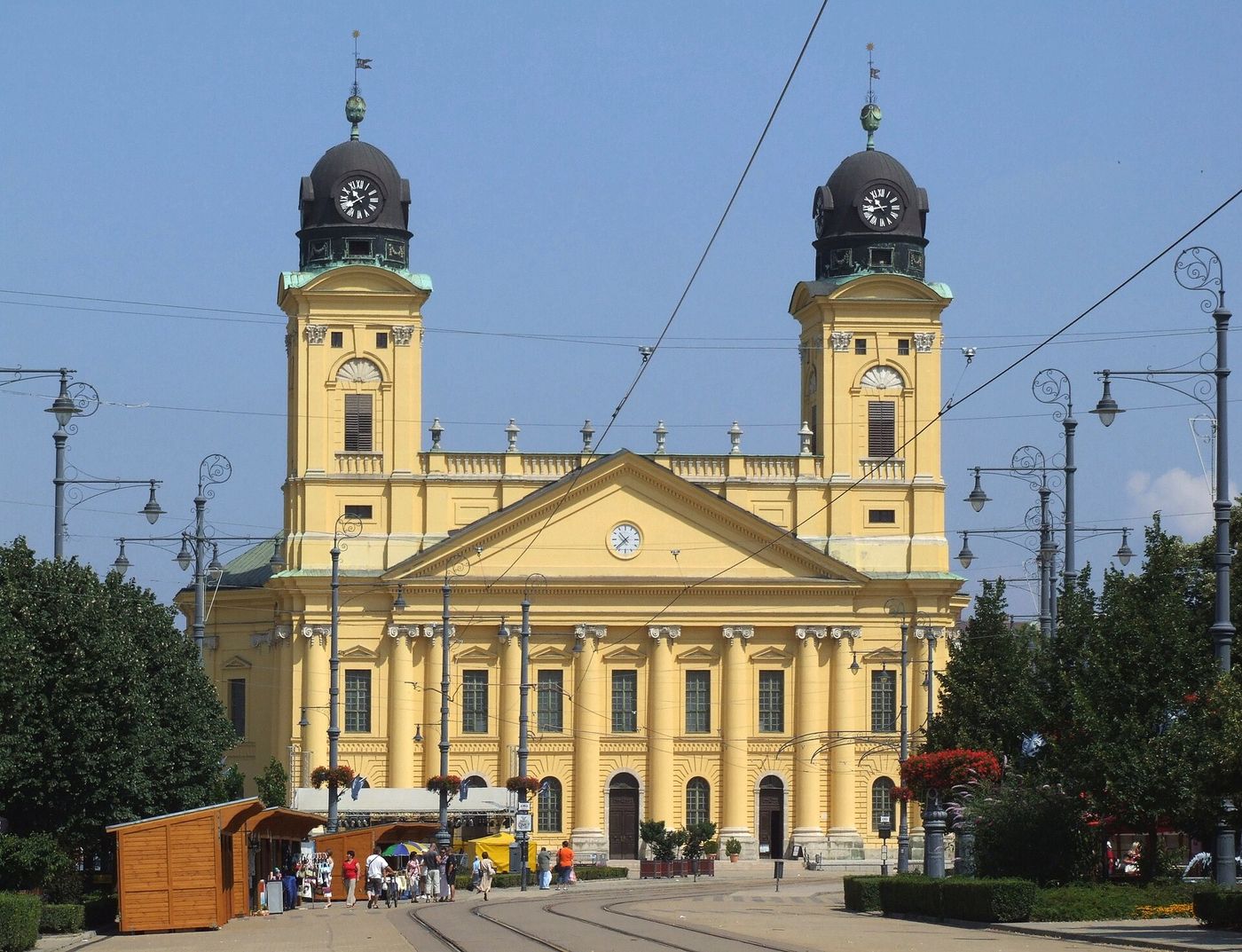
DEBRECEN, Hungary — The Reformed College of Debrecen has educated Hungarian Protestants since 1538. This autumn it also educates 310 children whose parents, by the headmaster’s estimate, have not set foot in a church since their own weddings, if then.
“They come for the discipline and the small classes and the fact that the roof does not leak,” said Gábor Szilágyi, who has run the college’s primary division for 11 years. “They stay, usually. Faith is not the entry ticket. We would be a much smaller school if it were.”
Figures published by the Education Ministry last week show that 21.4 percent of Hungary’s 1.4 million primary and secondary pupils are enrolled in schools run by churches, up from 7 percent in 2010 and 17 percent as recently as 2022. The share is higher in the east, where the Reformed Church dominates, and in small towns where a church takeover was often the alternative to closure. In Hajdú-Bihar County, which surrounds Debrecen, it is 34 percent.
The growth has two engines. Since 2011, the state has paid church schools the same per-pupil subsidy as public schools plus a supplement for maintenance that municipal schools do not receive, a difference that works out to roughly 15 percent more per pupil, according to an analysis by the Budapest Institute for Education Policy. And the transfer of public schools to central control in 2013, which stripped municipalities of their authority, left towns with a choice between a state-run school and a church-run one, and many preferred the church.
“It is not that Hungarians became religious,” said Zsófia Kertész, who studies education policy at Eötvös Loránd University. Weekly church attendance in Hungary is about 12 percent and falling. “It is that the church became the only institution allowed to run a school with a local board. Parents are choosing autonomy and a budget. The cross on the wall is the price of admission.”
Critics say the arrangement has produced a two-tier system. Church schools can select pupils; state schools must take everyone. An analysis published in September found that the share of Roma pupils in church-run primary schools was 4 percent, against 13 percent in state schools in the same districts. István Balogh, a state secretary at the ministry, said selection was limited to “a confessional preference, which is their right,” and that the ministry had no plans to change the funding formula. “Parents are voting,” he said. “We are listening.”
Eszter Varga, 39, whose two children attend the Reformed College, described herself as “culturally Protestant, in the way that most people here are culturally something.” Her daughter sings in the school choir and has learned the catechism. “I was worried she would come home and lecture me,” Ms. Varga said. “Instead she came home and could read a year before her cousin. I can live with the hymns.”
A version of this article appears in print on Oct. 12, 2026, Section A, Page 11 of the European edition with the headline: One in Five Hungarian Pupils Now Attends a Church School, and the Shift Is Accelerating.



