BADEN-BADEN, Germany — The spa town of Baden-Baden hosts the reinsurance industry every October, a week of meetings in hotel suites where the price of catastrophe is set for the year ahead. This year the catastrophe has a specific shape: water, falling in quantities that the industry’s models did not expect, on places they had assumed were safe.
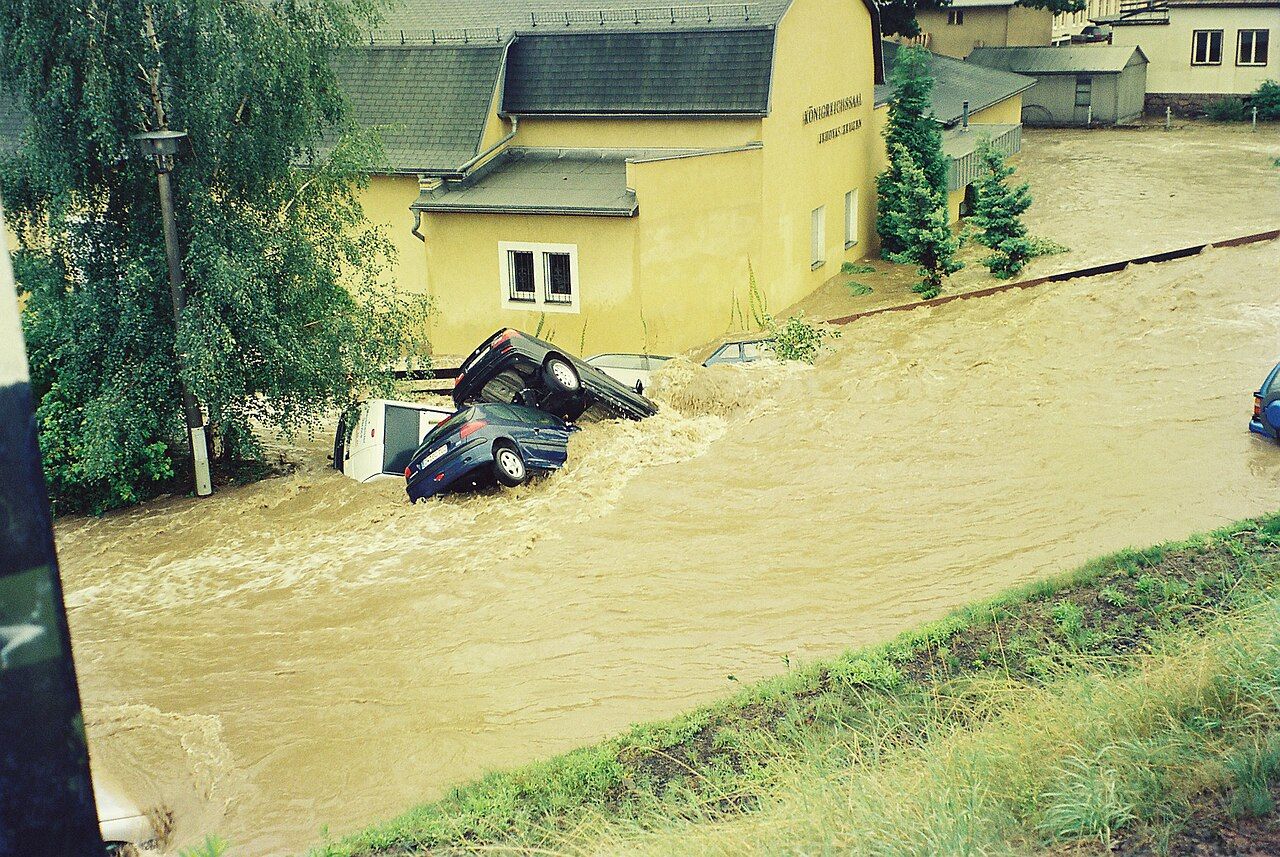
Insured losses from floods and hailstorms in Europe reached about 14 billion euros between June and September, according to figures circulated at the meeting, making it the costliest summer on record for the continent. The June floods on the Danube’s tributaries in Bavaria and Austria accounted for roughly 5 billion euros. A series of hailstorms across the Po Valley in July destroyed vineyards, solar farms and some 90,000 cars. Flash floods in the Carpathians and in eastern Spain did the rest.
Reinsurers, which take on the top layers of risk from the primary insurers that sell policies to households, are responding with their checkbooks. “We are asking for 10 to 25 percent more for flood exposure in Central Europe, and we are asking for it without apology,” said Helmut Scherz, chief underwriter at Rheinische Rück, a Cologne-based reinsurer. “For some river basins we are not asking at all. We are declining.”
The retreat is selective but real. Two reinsurers have told clients they will not renew coverage for new residential policies in parts of the Ahr Valley in Germany, which flooded catastrophically in 2021 and again this June, and in sections of Emilia-Romagna in Italy that have flooded three times since 2023. Primary insurers can still write policies there, but they must keep the risk on their own balance sheets, and several have begun quietly declining to.
“The reinsurers are telling us something we already knew and did not want to hear,” said Fabrice Guillon, who manages reinsurance purchasing for a French mutual insurer. “There are places in Europe where the honest price of flood insurance is higher than people can pay. In France the state steps in. In Germany and Italy, for now, the answer is that nobody does.”
France’s natural catastrophe regime, backed by a state guarantee, spreads flood costs across all policyholders and is itself raising its surcharge from 12 to 20 percent of premiums in January. Germany has debated compulsory natural hazard insurance for three years without resolving it; about half of German homes have no flood cover at all. Priya Nandakumar, a reinsurance broker in London who advises European insurers, said the market was effectively forcing the political question. “Governments can decide that flood insurance is a public good, or they can decide it is a private product,” she said. “What they cannot do any longer is pretend the two are the same thing.”
For homeowners, the arithmetic arrives in the mail. Annelore Pfaff, who has lived beside the Inn River in Passau for 31 years, received a renewal notice last week that doubled her premium to 2,400 euros a year, with a flood deductible of 15,000 euros. “The water came into the cellar in June for the fourth time,” she said. “I understand why they want more. I just do not know anyone on this street who can pay it.”
Renewal contracts take effect on Jan. 1. By then, the reinsurers say, their models will have been updated again.
A version of this article appears in print on Oct. 12, 2026, Section B, Page 17 of the European edition with the headline: After a Summer of Floods, Reinsurers Tell European Insurers the Price of Protection Is Going Up.