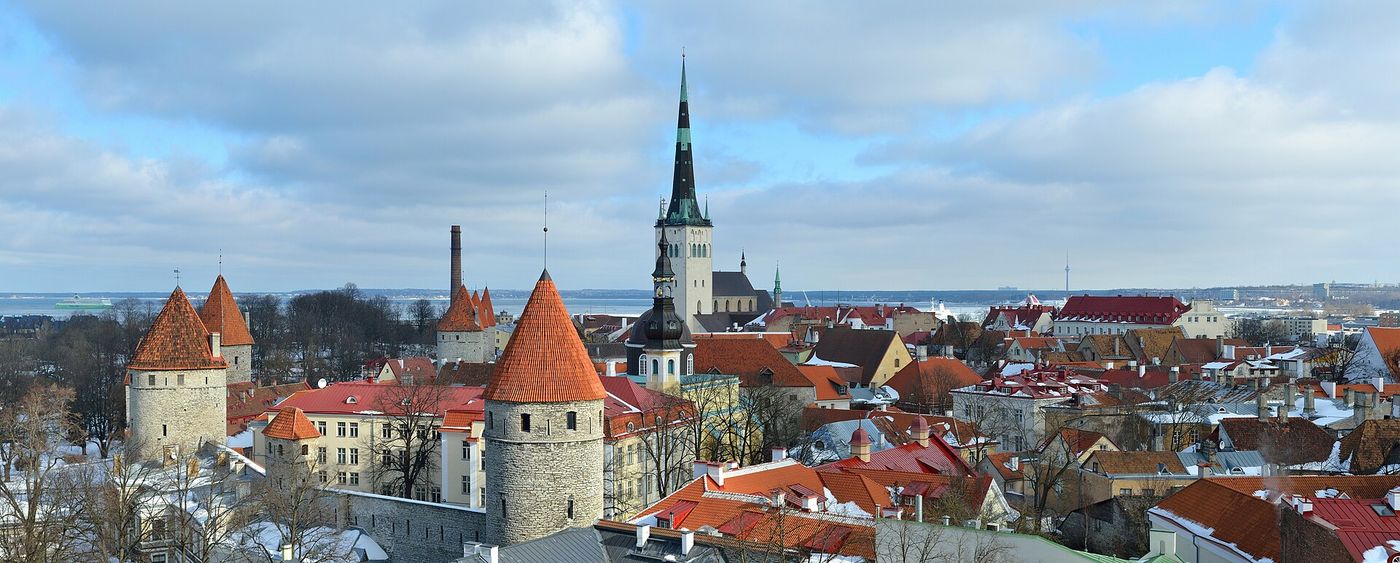
TALLINN, Estonia — Liisa Tamm registered her company at 9:04 a.m. on Oct. 1, four minutes after the portal opened, from a laptop in a co-working space overlooking Tallinn’s harbor. It took 11 minutes. Veskimaa, the logistics-software start-up she founded with two classmates, is now a European company, incorporated under a single E.U. statute rather than the law of any one country.
The statute, formally the European Innovative Company and informally “E.U. Inc.,” took effect this month after nearly a decade of argument among member states. It allows a start-up to register once, issue shares and stock options under one rule book, and raise money from investors in all 27 countries without reincorporating. By the end of the first day, 1,900 companies had registered. Six hundred and thirty of them were Estonian.
“We have been doing most of this digitally for 20 years,” Ms. Tamm, 28, said. “The difference is that now a fund in Munich does not have to ask its lawyers what an Estonian company is. It is just a European company. That sentence is worth more to me than any subsidy.”
The problem the statute is meant to solve is well documented. European start-ups raised about 48 billion euros in 2025, against roughly 190 billion for their American counterparts, and about 40 percent of European companies that reach a valuation of 1 billion euros have by then moved their legal headquarters to the United States, usually Delaware, to satisfy investors. Each of the bloc’s 27 company-law regimes has its own rules on share classes, employee options, notarization and shareholder approval, and a cross-border funding round can cost 200,000 euros in legal fees before a cent is invested.
Investors are cautiously enthusiastic. Henrik Dahlberg, a partner at a Stockholm venture fund that backs companies in eight countries, said the new form would shave weeks and tens of thousands of euros from every deal. “It will not make bad companies good,” he said. “But it removes a reason that good companies leave, and that is the most Europe has ever done for us in one go.”
The statute’s limits are also clear. Taxation remains national, so an E.U. Inc. still pays corporate tax wherever it is based and still faces 27 different treatments of stock options, which Brussels has promised to harmonize in a second phase. Germany, Austria and Italy insisted that registrations involving their residents pass through a notary, which Markus Feldhaus, a corporate lawyer in Munich, called “the price of getting it through at all.” He added: “The German notaries lost the war and won the armistice.”
Estonia’s dominance of the first day reflects its head start, not its size. The country has more start-ups per capita than any other in Europe, a digital-residency program that has given 120,000 foreigners access to its company registry, and a government that built the E.U. portal’s technical interface. Officials in Tallinn said they expected the share to normalize as other countries’ registries caught up.
Ms. Tamm has already sent her new registration number to a fund in Berlin that had told her in June to come back when she was “a real company.” She has not heard back. “They are probably asking their lawyers,” she said.
A version of this article appears in print on Oct. 12, 2026, Section B, Page 2 of the European edition with the headline: Europe Finally Has a Single Company Form. Estonia’s Founders Were First in Line..