ROME — Italy’s Constitutional Court ruled on Thursday that a provision of a 2025 security decree making it a crime punishable by up to two years in prison to block a road during a protest violated the Constitution, in a decision that reverberated through a government that had made the measure a centerpiece of its law-and-order agenda.
The court found that the provision, which turned what had been an administrative offense into a felony when committed by more than one person, was “manifestly disproportionate” to the harm of a delayed commute and improperly burdened the constitutional rights of assembly and expression. The accompanying fines of up to 1,000 euros were left standing, as were separate provisions of the decree on prison protests and the occupation of buildings.
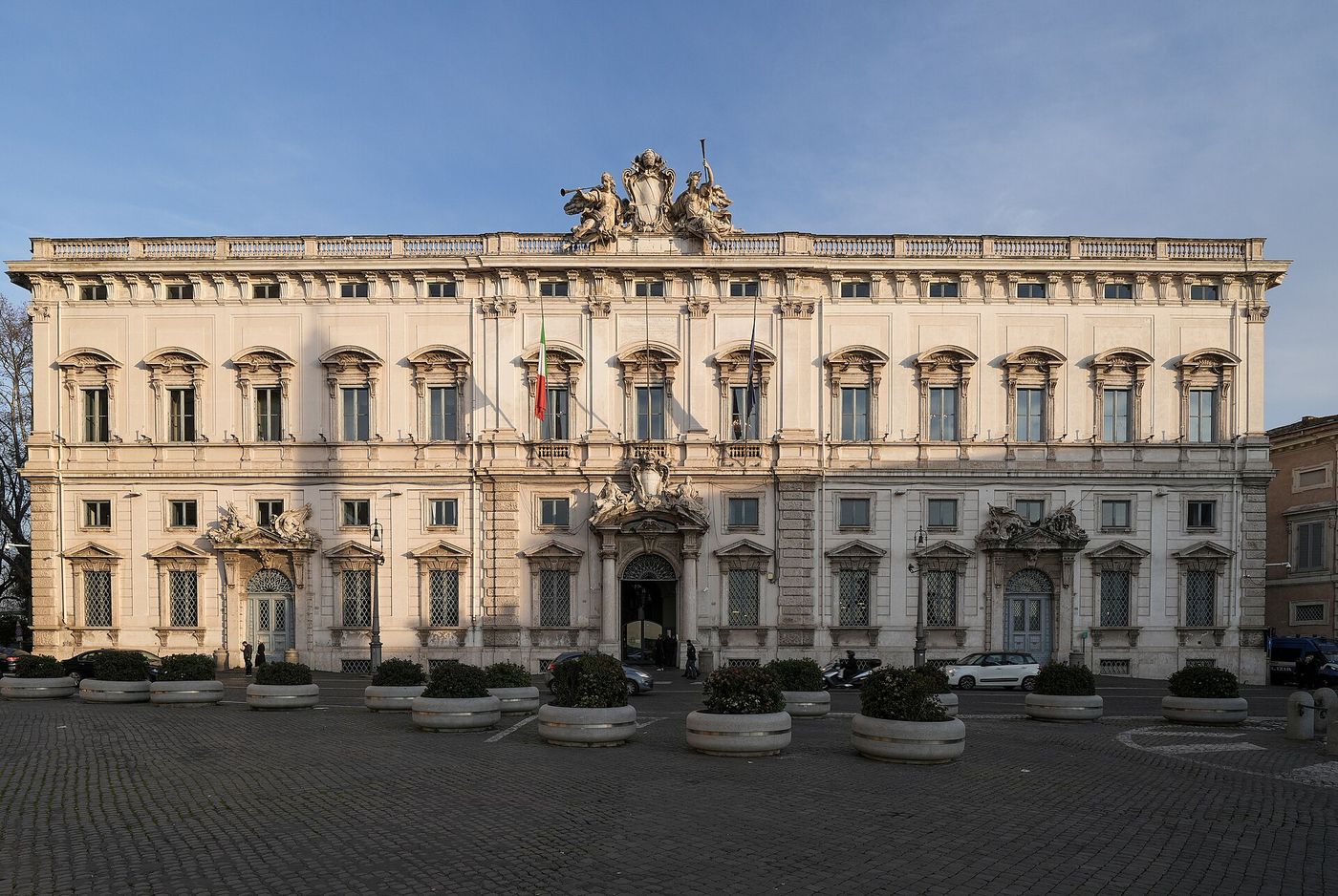
The case reached the court through the trial of Giulia Santoro, 24, a climate activist from Bologna who sat down with eight others on the A14 highway near Rimini in July 2025 and was convicted in March and sentenced to eight months. Her lawyer, Marco Benedetti, asked the trial court to refer the law to the Constitutional Court, which it did. “Giulia delayed traffic for 40 minutes,” Mr. Benedetti said on the steps of the Palazzo della Consulta. “The state wanted to take eight months of her life for it. Fifteen judges have just said that is not how a republic behaves.”
The Interior Ministry said in a statement that it “takes note” of the ruling and would study whether the provision could be redrafted. A ministry spokesman, Alessandro Greco, said the government’s aim had been to protect ambulances and commuters, not to criminalize dissent. “Nothing in today’s decision prevents the police from clearing a road,” he said. “It only changes what happens afterward.”
The decree, approved in the spring of 2025 after months of protests by climate groups and against a high-speed rail project in the Susa Valley, drew criticism at the time from the Council of Europe’s human rights commissioner and from Italian magistrates’ associations, which said it clogged courts with cases that previously ended in a fine. Prosecutors’ offices opened about 2,300 cases under the road-blocking provision in its first year, according to Justice Ministry data, and 140 people were sentenced to prison terms, nearly all suspended.
Federica Lanzi, a professor of constitutional law at Sapienza University, said the ruling fit a pattern in which the court had let the government’s security measures stand on the whole while trimming their edges. “The court is not telling the government it cannot be tough,” she said. “It is telling it to be tough with a scalpel. The decree was written with a hammer.”
Ms. Santoro, whose conviction will now be reviewed, said she planned to be on the road again. “Legally,” she added, after a pause. “On the shoulder.”
A version of this article appears in print on Oct. 12, 2026, Section A, Page 17 of the European edition with the headline: Italy’s Constitutional Court Strikes Down Prison Terms for Blocking Roads in Protest.



