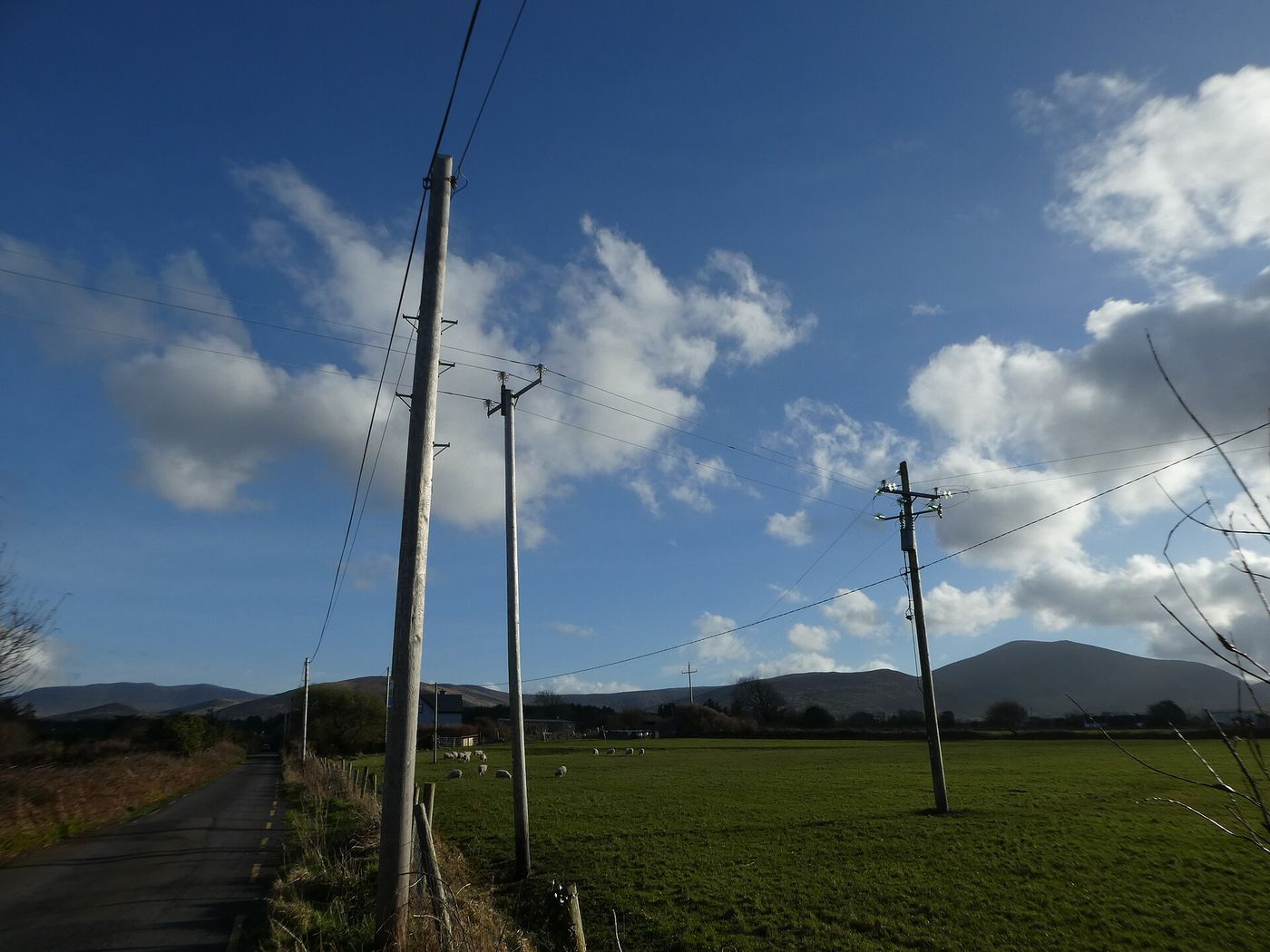
BELMULLET, Ireland — Pádraig Lavelle, 74, has had the same telephone number for 51 years. In August a letter told him that the copper line that carries it, strung on poles along the Mullet Peninsula since the 1970s, will be switched off next spring, and that he should arrange a fiber connection. Fiber has not reached his road. The letter did not say when it would.
Across Europe, telecommunications operators are retiring the copper networks that carried the continent’s telephone calls for more than a century. Copper costs the E.U.’s operators an estimated 2 billion euros a year to maintain, much of it for a shrinking base of customers, and running it alongside fiber doubles the expense of every repair truck and exchange building. Brussels has set a target of switching off copper across the bloc by 2030. Ireland’s operator plans to finish by 2029 and has already closed 400 of its 1,100 exchanges.
The trouble is the sequencing. Fiber now passes about 72 percent of European households, but the remaining 28 percent is concentrated in exactly the places where copper is most needed: thinly populated regions where mobile coverage is patchy, where the population is older, and where a landline is the connection for a home alarm, a lift emergency phone, a pharmacy’s card terminal or a farm’s monitoring system.
“The operators are switching off the old network on a schedule set by their accountants and building the new one on a schedule set by their engineers, and the two schedules do not match,” said Deirdre Mulvey, who heads consumer protection at Ireland’s communications regulator. “Our job is to make sure nobody falls into the gap. In some townlands the gap is two years wide.”
The business consequences are concrete. Tomás Geraghty, whose company maintains about 900 elevators in the west of Ireland, said roughly 300 of them still used copper lines for their emergency telephones and that each conversion to a mobile unit cost the building owner about 1,400 euros. “Nobody budgeted for it, because nobody told them,” he said. “I have a nursing home in Castlebar that found out from me.”
The experience elsewhere has been uneven. Sweden and Estonia completed their switch-offs with few complaints, in part because mobile coverage was already universal. Britain paused its program in 2024 after reports of elderly customers whose personal alarms failed, and resumed it only with a requirement that operators identify vulnerable customers before disconnecting them. Lena Hofmann, a telecommunications analyst in Berlin, said the lesson was being relearned country by country. “Copper is not sentimental,” she said. “It works when the power is out, and it is where the vulnerable customers are. Everyone knows this and everyone is surprised by it.”
Operators say they have no choice. The Irish operator said in a statement that it would not disconnect any customer without a working alternative and that it was accelerating fiber to the remaining areas, with government subsidy, under a national broadband plan now in its seventh year. It declined to say when the Mullet Peninsula would be reached.
Máire Ní Dhomhnaill, who runs a guesthouse in Belmullet, has a fiber line in the village and none at her mother’s house three kilometers out. “They are turning off the one thing out there that always worked,” she said. “And they are sending the letter by post, which, to be fair, still arrives.”
A version of this article appears in print on Oct. 12, 2026, Section B, Page 13 of the European edition with the headline: Europe Is Switching Off Its Copper Phone Lines, and Rural Villages Are Not Ready.